Orléans doesn't get the crowds of Tours or Blois, yet it's barely an hour by train from Paris and sits right on the doorstep of the Loire Valley's big-name châteaux. That makes it one of the smarter bases for a short break in Centre-Val de Loire — compact enough to wander on foot, with enough around it to fill a week.
The city's skyline belongs to Sainte-Croix Cathedral, one of France's largest Gothic churches. Building started in the 13th century, was interrupted when the structure was partly destroyed in the 16th century, and dragged on for hundreds of years — with Louis XIV insisting the transept stay strictly Gothic and adding a rose window stamped with his motto, 'no one compares to him'. A guided tour takes you into the 11th-century Romanesque crypt, then up 236 steps through a hidden door and across an open-air walkway: the only place to see the city from above, if you have the nerve. From mid-May to late August, the façade hosts a free sound and light show.
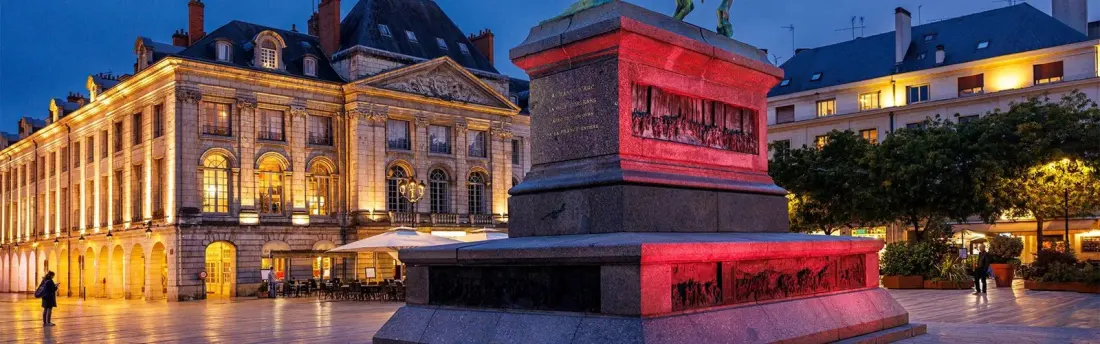
Orléans is Joan of Arc territory — she's the city's patron in every sense, having broken an English siege that lasted nearly seven months. Her bronze statue rears up in Place du Martroi, among many tributes around town. Also worth your time: the Renaissance Hôtel Groslot, a former royal residence, and the fine arts and archaeology museums.
Food lovers have reasons of their own. Martin-Pouret has been making vinegar since 1797 — matured for up to 20 years and served at the Élysée Palace — with tastings at its boutique. For dinner, Le Brin de Zinc does classic French fare (the duck cooked in a pot is the move), Chez Eugène leans modern, and Dionyses cooks with wild boar and fresh local produce. The Novotel Orléans Central Gare, four minutes from the station, makes a practical base.
Beyond the city, a car opens up the Loire's quieter corners. Saint-Jean-de-Braye has the Campanaire Bollée bell foundry museum — the Bollée family has been casting bells since 1715 and claims 35,000 worldwide, including Notre-Dame de Paris. The preserved canal village of Combreux is a pretty walk through bargemen's and lock keeper's houses, with a good lunch stop at Auberge de la Marine in an 18th-century building. Cyclists and walkers can also aim for Saint-Dyé-sur-Loire, Saint-Benoît-sur-Loire with its Romanesque abbey, medieval Beaugency and the troglodyte village of Trôo.
Then there are the châteaux. Chambord is the headline act — Francis I's extravagant Renaissance showpiece, with a double-helix staircase attributed to Leonardo da Vinci. But the lesser-known ones steal some thunder: Château de Beaugency now hosts immersive digital art shows, Meung-sur-Loire offers underground passages and animated dragons for families, and Cheverny is among France's most lavishly decorated, with 500,000 tulips blooming in its gardens in late spring.
For anyone wanting the Loire Valley without the coach crowds, Orléans is an easy, underused answer.