Dominican Vice President Raquel Peña has described restoring security in Haiti as an "urgent need" that demands international cooperation, speaking at the II International Conference on State and Democracy (CIED 2026) in San Salvador.
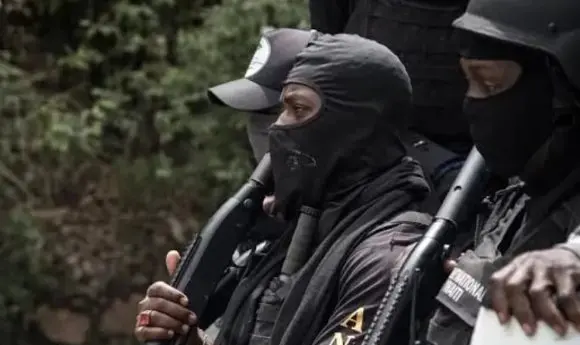
Her comments come as Haiti's security crisis deepens. Armed gangs control large swathes of the capital, Port-au-Prince, and other parts of the country, and the various forces fighting them — the Haitian National Police, a UN-backed Gang Suppression Force (GSF), and foreign contingents — have struggled to coordinate.
The Dominican government, aligned with President Luis Abinader's stance, is providing logistical and intelligence support to Salvadoran forces operating in Haiti. El Salvador has become a key player: after four of its soldiers went missing in an ambush on a GSF vehicle near Port-au-Prince on October 18, President Nayib Bukele deployed 2,000 military personnel, backed by special forces, armoured vehicles and air support. Bukele framed the move as a mission to recover the missing troops and pushed back on suggestions it amounted to an invasion.
The complexity of the situation was underlined by the recent operation to retake the Sylvio Cator Stadium in Port-au-Prince, which involved the Haitian National Police, government-aligned armed groups and Salvadoran soldiers fighting side by side — an unusual mix that shows how tangled the security picture has become.
For travellers, the practical takeaway is straightforward: Haiti remains effectively off the itinerary. Most foreign governments advise against all travel to the country due to kidnapping, gang violence and unreliable emergency services. The more relevant question for holidaymakers is the knock-on effect next door. The Dominican Republic, which shares the island of Hispaniola with Haiti and is one of the Caribbean's most popular destinations, has periodically tightened its land border and stepped up security measures in response to events across the frontier. Punta Cana, Puerto Plata and Santo Domingo are hundreds of kilometres from the border areas, and beach resorts operate normally, but anyone planning overland travel to the frontier — or hoping to combine both countries in one trip — should check the latest advisory before booking.
Anyone with trips booked to the Dominican Republic should monitor official foreign-office guidance rather than headlines, as the security situation in Haiti does not currently affect tourism zones. Those drawn to Haiti's culture — and it has plenty, from Citadelle Laferrière to Carnival — will need to wait for a genuine stabilisation; there is no realistic timeline for that today.