An economic think tank has drawn up a list of 28 cities it expects to rise over the coming years, and while the rankings are built on economics rather than tourism, they're a useful shortcut for anyone who likes visiting a place before the crowds catch on.
Oxford Economics published its Global Cities Index for 2026 in September, scoring cities on economics, human capital, quality of life, environment and governance. Alongside the usual heavyweight performers — New York, London, Paris and Tokyo — the 2026 edition added a new "Cities to Watch" section spotlighting five emerging cities in each region.
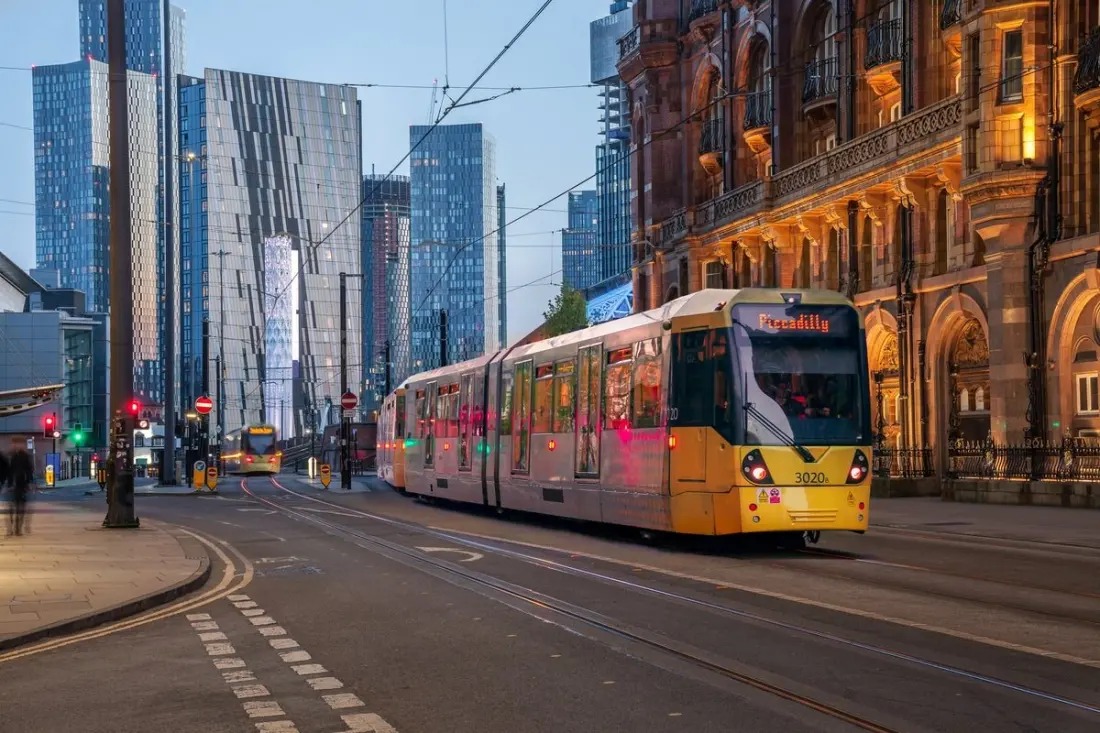
In Europe, the picks are Manchester, Warsaw, Tallinn, Toulouse and Eindhoven. Manchester ranked 90th overall, buoyed by strong economic growth, a lively cultural scene, popularity with young people and heavy infrastructure investment. The firm noted the city has seen some of Europe's largest employment gains since 2010 and outpaced every other UK city on GDP and productivity growth — the kind of momentum that tends to bring new hotels, restaurants and direct flight routes along with it.
Further afield, North America's list favours mid-sized US cities over the obvious coastal giants: Boise, Durham, Jacksonville and San Antonio, plus Canada's Edmonton. Latin America blends established capitals with rising metros — Brasília, Lima, Medellín, Monterrey and Santiago. Asia Pacific's five include Bengaluru and Shenzhen, alongside Ho Chi Minh City, Kuala Lumpur and Tashkent, while Africa is represented by Accra, Cairo, Dakar, Luanda and Nairobi. In the Middle East, the report singles out Abu Dhabi, Dubai and Riyadh, describing their rise on the global stage as "astonishing" over recent decades.
Oxford Economics' managing director for city services, Mark Britton, said the fastest risers share a common trait: a climb up the global value chain into technology, advanced manufacturing and business services, and the ability to turn that into better living standards. Translation for travellers: these are places getting richer, younger and better connected — often with a food, music and café scene expanding to match.
You don't need to treat this as a travel guide. But if your instinct is to go somewhere a year or two before everyone else does, a list built on growth, investment and quality-of-life data is a reasonable place to start. Medellín's transformation has been one of Latin America's great comeback stories; Tashkent is opening up fast along the Silk Road tourism trail; and Tallinn remains one of Europe's most compact and affordable medieval capitals. Manchester, for its part, has spent the past decade quietly becoming the UK's second cultural capital — no bad time to book a weekend.