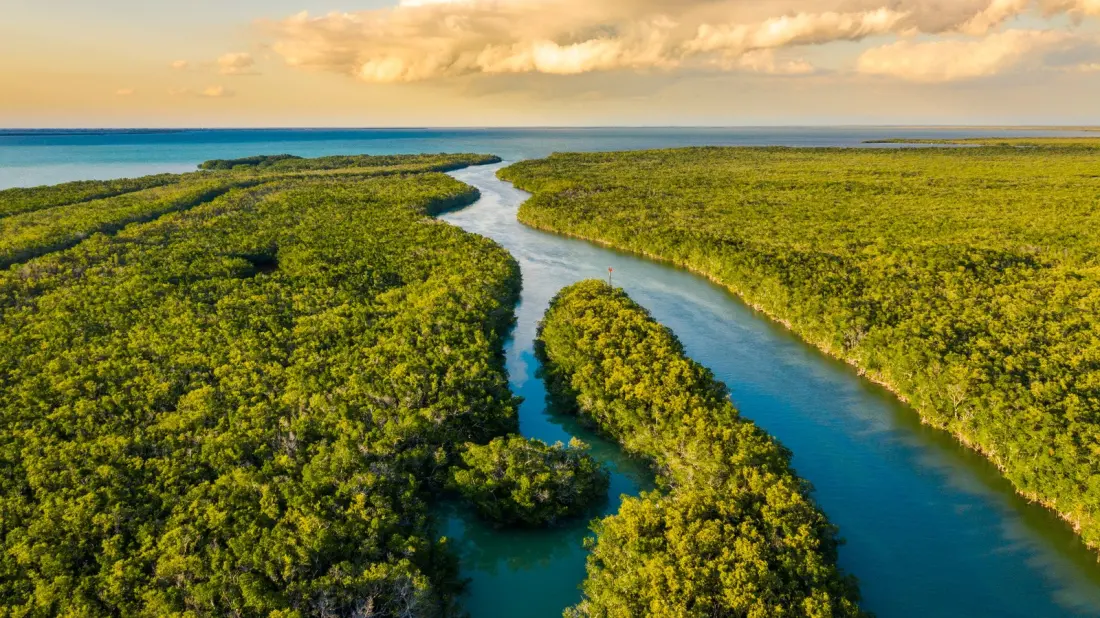
Everglades National Park covers 1.5 million acres of South Florida, and even frequent visitors barely scratch the surface. The people who know it best — the park's rangers — have plenty of practical advice, and their suggestions are refreshingly specific about when to go, where to walk and what to book.
Timing comes first. The best window is winter, roughly December through April, when South Florida cools down and the wet season's heavy humidity fades. Ranger Dylann Turffs explains the logic: as water levels drop in the dry season, wildlife concentrates around the remaining waterways, so sightings get dramatically better. Mosquitoes also ease off. If you go, the Anhinga Trail in the Royal Palm section is the classic pick — a short, paved, wheelchair-accessible boardwalk loop where alligators, turtles, wading birds and fish gather within easy view.
Once there, stop at a visitor centre before doing anything else. Maps, first-aid supplies, trail-condition warnings and free ranger-led walks and talks are all available, and a guided program adds context you'd miss alone. For paid options, the Everglades National Park Institute runs eco-paddle tours, photography workshops and more.
Nervous about alligators? Ranger Sandy Dayhoff sends newcomers to Shark Valley, one of the most reliable places in Florida to see wild gators. The guided, two-hour open-air tram tour follows a 15-mile paved loop, with a stop at the Shark Valley Observation Tower for panoramic views from a safe distance. It sells out often, so book ahead. But the tram isn't the only way: you can rent a bike, walk part of the flat loop, or take shorter side paths like the Bobcat Boardwalk and Otter Cave Hammock trails — all free, all with the same marsh views.
For a second visit, rangers recommend going further afield. Snake Bight Trail, about four miles north of the Flamingo Visitor Center, winds through tropical hardwood hammock and mangrove tunnels to shell beaches, with a real chance of manatees in the tidal creeks and even crocodiles in the canal. Birders should note that herons, storks and spoonbills frequent the area — but the trail is unmaintained, so check conditions first. Speaking of Flamingo, rangers single it out as the park's best birding zone in winter, with the West Lake and Eco Pond trails as top picks. Anglers will also find tarpon fishing here.
The most unusual ranger-endorsed experience is slough slogging — literally wading ankle-to-knee deep through open wetland prairie with a guide. The Everglades National Park Institute's Cypress Dome Wet Walk departs from the Ernest F. Coe Visitor Center and costs around $55, though you'll need to be at least 12 years old, 54 inches tall, and dressed in long pants and lace-up closed-toe shoes.
Whether you want a safe family introduction or a muddy, off-trail adventure, the Everglades rewards a bit of ranger wisdom — and winter is the season to use it.