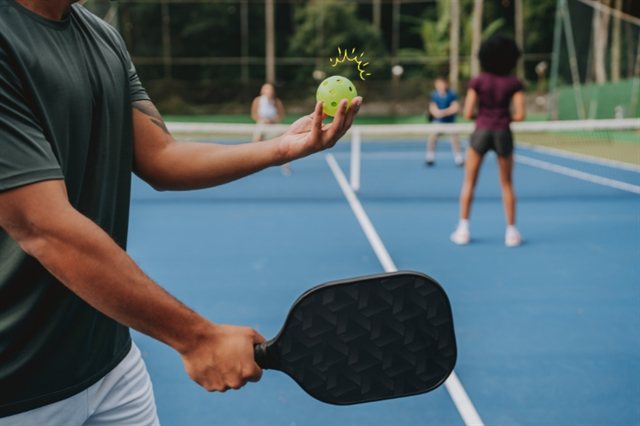
Pickleball has taken off in Hà Nội. Courts are popping up across the city, and after-work games with friends have become a regular ritual for thousands of new players. It is social, cheap to start and fun within minutes of picking up a paddle. But orthopaedic specialists in the Vietnamese capital say the boom has a shadow side: a steady rise in knee, ankle, shoulder, neck and lower-back injuries, some serious enough to need injections, months of rehab or even surgery.
Dr Andres Sosa, an orthopaedic surgeon and sports medicine specialist at Family Medical Practice in Hà Nội, points out that the problem is rarely the sport itself. It is the way people start — too much, too fast, with bodies that are not ready. Pickleball looks effortless, which is exactly the trap. The game involves sudden stops and direction changes, lunges, twisting knees, overhead smashes and repeated spinal rotation. A lifelong athlete may shrug these off; someone returning to sport after ten sedentary years may not.
There is a second, subtler issue. The sport often does not create an injury — it reveals one. Small meniscal tears, early cartilage wear, lumbar disc problems or rotator cuff degeneration can sit quietly for years. Then someone starts playing three or four times a week, an awkward pivot or rolled ankle inflames the underlying weakness, and a pre-existing condition becomes painful. Ankle sprains are a particular concern: a lateral sprain involving the anterior talofibular ligament, if not properly diagnosed and rehabilitated, can lead to long-term instability.
So how do you know when an ache is normal? Muscle soreness after a new activity is expected. Persistent joint pain is not. Warning signs worth investigating: pain that keeps returning, swelling in the knee or ankle, locking or catching sensations, a feeling the ankle is giving way, weakness lifting the arm, night-time shoulder pain, or numbness radiating down a limb. The most common mistake Sosa sees is players waiting months while continuing to play through the pain — turning a problem that could have been fixed with rest and rehab into something far more complicated.
His advice for newcomers is to treat the first few months as conditioning, not competition: learn technique from a qualified instructor, build up playing frequency gradually, strengthen legs, hips, core and shoulders, warm up properly and allow real recovery time. Enthusiasm, he warns, is not the same as physical readiness.
For travellers, this is worth remembering if you are packing a paddle for Southeast Asia. Pickleball's growth across Vietnam makes it a fun way to meet locals and other visitors, but the same rules apply abroad — especially in humid heat, where fatigue arrives faster and sloppy footwork follows. Build up gently, warm up, and know where the nearest reputable clinic is if something does not feel right.
Nobody is suggesting people quit. The goal, as the FMP team puts it, is to keep players on court for years rather than losing them to injury after a few overeager months. Their sports medicine and orthopaedic clinic operates from 298i Kim Mã Street in Hà Nội, with centres also in HCMC and Đà Nẵng.