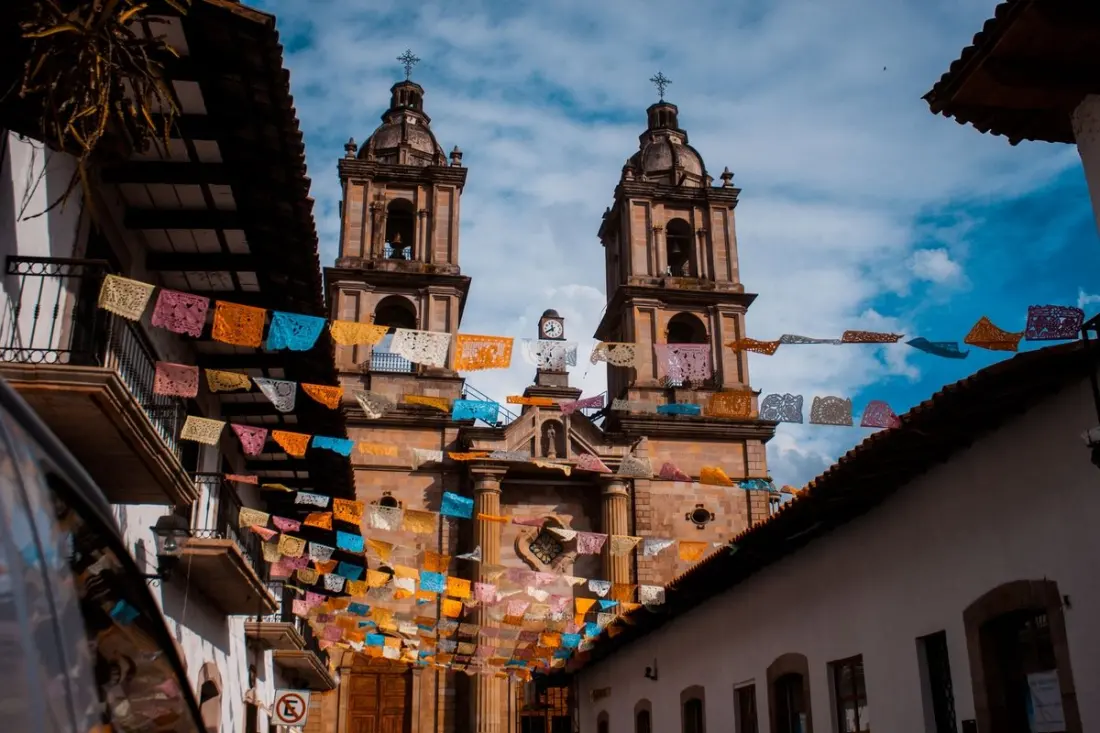
Move to a small town in Mexico and there's a decent chance you'll live within earshot of a church — and its bells. They can start at 6 a.m. for morning mass, return around midday, and ring again in the evening, with Sundays and religious feast days bringing extra peals, fireworks and street celebrations. Depending on your temperament, it's either the soundtrack of authentic Mexican life or a reason to look for a different neighbourhood.
The feast-day calendar is packed. Beyond Easter, Christmas and the Day of the Dead, there's Candlemas, the Virgin of Guadalupe on December 12, and countless local saints' days, each potentially adding bells, rocket explosions and traditional food to the mix. Anyone house-hunting in the provinces should factor the local church calendar into their decision as seriously as they would noise from a main road.
Bells run deep in Mexican history. In 1810, priest Miguel Hidalgo y Costilla rang the bells in Dolores, Guanajuato, to call insurgents to rise against Spanish rule — the moment remembered as the Cry of Dolores. Journalist and diplomat Alberto Barranco Chavarría records that the longest continuous pealing took place at Mexico City's cathedral on December 27, 1867, when, by the bishop's orders, the bells rang from four in the morning until nine at night to mark the Liberals' final victory over the Conservatives.
The lore gets stranger. One Spanish bell supposedly rang by itself at midnight, terrifying a town whose mayor eventually had the tower door broken down — finding only a cat on the staircase. The Royal Council declared the ringing void, ordered the clapper removed and the bell exiled to "the Indias," which is how it ended up in Mexico and caught the attention of a viceroy. In literature, José Rubén Romero's picaresque hero Pito Pérez hauls bells around Michoacán as keepsakes of his travels, with the big bell of Pátzcuaro supposedly rebuking its "younger sister" in Quiroga for showing its tongue to the lake.
There's a practical point buried in all this romance: not all bells are created equal. In Cuanajo, a village near Pátzcuaro in Michoacán, one traveller watched a boy lazily swing a clapper that produced a dull clang rather than a proper chime — hard on the nerves if you live next door. The quality of the metal can genuinely shape whether you fall in love with your new town's soundscape or start browsing listings elsewhere.
For travellers, this is a gentle reminder to embrace the bells rather than fight them. If you're staying near a colonial church in towns like Pátzcuaro, Tzintzuntzan or Quiroga — the latter worth a stop for its carnitas — expect early morning peals and lively feast days, and book rooms accordingly. Light sleepers should ask about a property's proximity to the parroquia; everyone else can treat the bells as a free, daily piece of living history. Source: Mexperience.