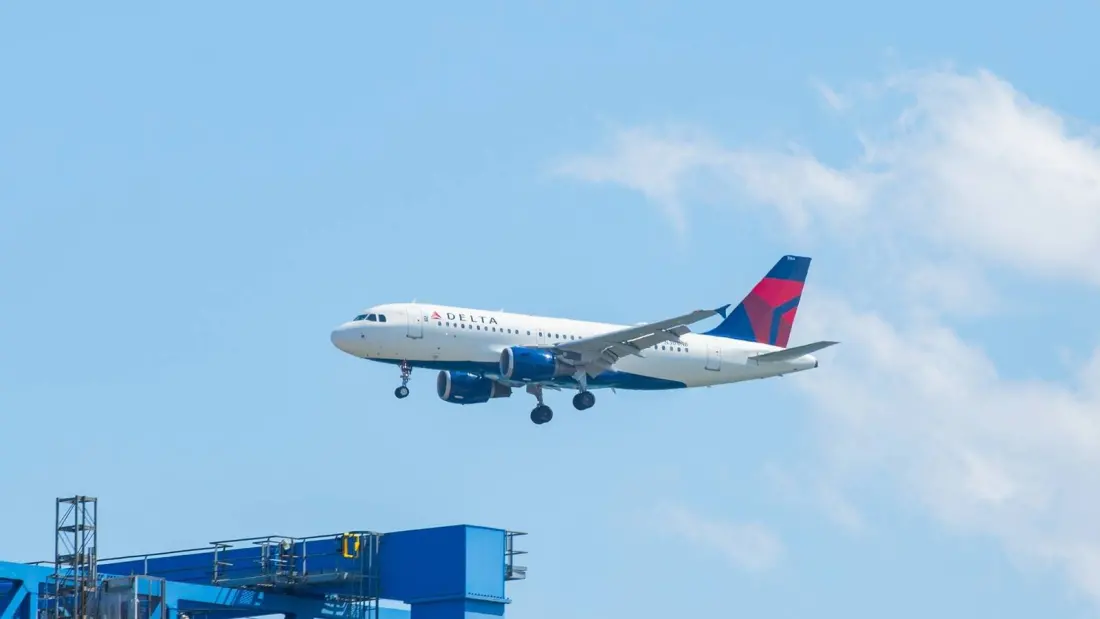
Saturday morning gave passengers on a Delta flight from Kansas City an unusual souvenir: a go-around at Los Angeles International, prompted not by weather or traffic, but by an earthquake. A magnitude 5.2 quake struck off the Southern California coast, jolting LAX for roughly 30 seconds just as Delta flight DL1972, an Airbus A319, was on final approach.
Air traffic controllers told the crew to abort the landing — a routine safety move, not a drama. Applying takeoff thrust and climbing away gave airport teams time to check runways, lighting and other infrastructure before the jet tried again. The detour cost only about 10 extra minutes, and the aircraft reached its gate at 10:01 AM, running 1 hour and 13 minutes late, most of that owed to a delayed departure from Kansas City. The plane, registration N362NB, is a 23.5-year-old A319-114 that has flown since 2003, first with Northwest Airlines and then Delta after their 2009 merger, seating 132 across two cabins. It carried on with its schedule later that morning, operating LAX to San Antonio.
On the ground, the effects were more visible. Ceiling tiles fell inside the terminal, though no serious damage or injuries were reported, and safety checks were rolled out across the airport and the wider city. Authorities note that aftershocks can continue for hours or days after a quake of this size. Live airport cameras caught both the shaking and the moment the Delta jet pulled up short of touchdown — footage that circulated widely on social media.
For anyone flying into or out of Los Angeles, the story is a useful reminder of how airports handle seismic events. A go-around is a standard, well-practised procedure: crews train for it constantly, and controllers use it whenever conditions on the ground make landing unwise. The practical impact on your trip is usually minutes, not hours. If you're travelling in California and feel shaking, follow airport staff instructions, expect possible delays while inspections happen, and keep an eye on your airline's app for rebooking options. Earthquakes can't be predicted, but the systems in place mean most travellers will experience only a brief pause in their journey.