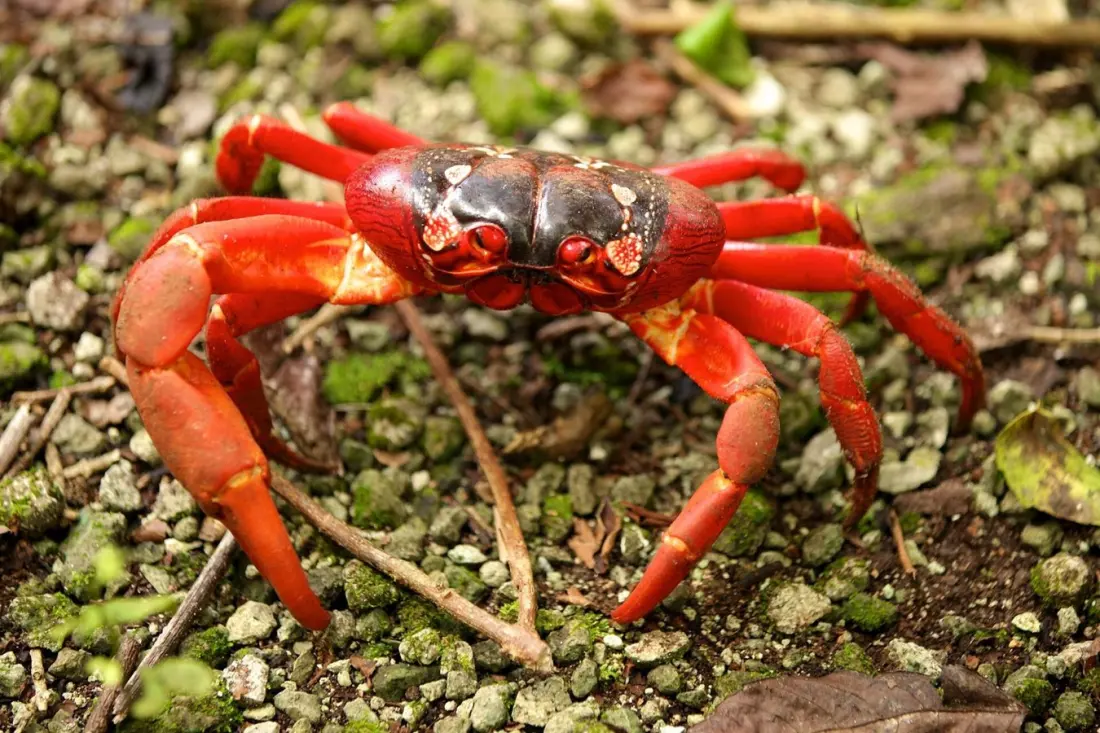
Tens of millions of red crabs began pouring out of the rainforest on Christmas Island around 14 November 2026, turning roads, barriers and specially built crab crossings into a moving red carpet. The Australian territory in the Indian Ocean hosts an estimated 100 million-plus red crabs (Gecarcoidea natalis), and their annual trek to the sea is one of the most spectacular wildlife events on the planet.
The timing is weather-driven: the migration kicks off with the first heavy rains of the wet season, typically October or November but sometimes as late as January. Males lead the way, digging burrows on the coastal terraces where mating happens. Females linger in the burrows while eggs develop, then head to the shoreline about two weeks later to release them — spawning happens before dawn, on the receding high tide of the moon's last quarter.
The biggest danger isn't the ocean; it's traffic. Christmas Island National Park tackles this with crab bridges, underpasses, roadside barriers, temporary road closures and regular updates on which routes are open. Rangers actively manage the crossings to keep casualties down.
If the Indian Ocean feels far, there are closer parallels. On Providencia, the Colombian island in the Seaflower Biosphere Reserve, black land crabs (Gecarcinus ruricola) descend from the forested hills to the coast each spring — females start moving in April, and the crabs are most abundant between May and July. In 2004, researchers documented a striking return leg: clouds of baby crabs in the megalopa stage emerging from the sea and crossing more than 50 metres of land over two to three days. The regional authority CORALINA enforces a closed season from 1 April to 31 July, banning capture, transport and sale, and monitors busy routes like the Circunvalar Road.
Cuba puts on a similar show around Playa Girón and the Bay of Pigs in the Ciénaga de Zapata region. Millions of the same black land crab species leave the forest after spring rains, generally from late March into July, crossing roads in the mornings and evenings. It's a draw for visitors but a hazard for drivers — crabs can puncture tyres, and officials estimated around 3.5 million crabs were killed by vehicles each season before local efforts ramped up.
Why should a traveller care? These migrations are among the few natural spectacles you can reliably time a trip around, but they come with a responsibility: slow down, follow ranger guidance and use the detours on offer. Christmas Island suits travellers chasing the famous red-crab imagery between October and January; Providencia and Cuba's Bay of Pigs offer the Caribbean take from roughly April to July. Either way, you're watching a life cycle that straddles forest and sea — and your behaviour on the road directly affects whether the next generation makes it.