The United States has lost its measles elimination status, 26 years after earning it in 1995. The trigger was not a single bad week but a sustained outbreak: one strain of the virus has now been spreading continuously inside the country for more than a year. According to reporting cited from the BBC, there have been roughly 5,400 US cases this year and ten measles-related deaths, seven of them in Pennsylvania. Mexico and Bolivia have also lost their elimination status, per the Pan American Health Organization, so this is a hemisphere-wide problem rather than an American quirk.
The maths behind the setback is simple. Measles is one of the most contagious viruses known, and herd immunity needs about 95% coverage with the MMR vaccine. US coverage has slipped to 92.4% — a figure that looks fine until you remember the bar, and until you notice that national averages hide pockets of towns and neighbourhoods where far fewer people are vaccinated. That matters most to the people who cannot be vaccinated at all: babies too young for their first jab, and anyone travelling with them.
The piece, written from Ecuador by a British expat in Cuenca, frames the story with some personal history: a childhood in 1950s England spent surviving measles, whooping cough, chicken pox and pneumonia, complete with a missed school semester and a recuperation by the sea. His point is that survivors tend to downplay how dangerous these diseases were — the children who died are not around to join the debate about whether measles was ever a big deal.
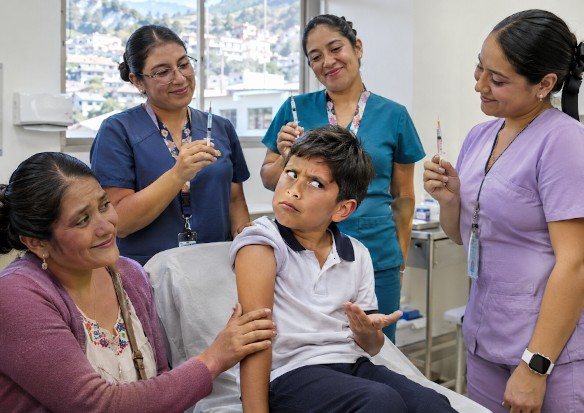
There is also politics in the mix. US health secretary Robert F. Kennedy Jr. notes that cases were climbing before he took office, which is fair given the outbreaks in neighbouring countries. But the administration's suggestion to split the combined MMR jab into three separate shots raises an obvious practical question: will small children really cope better with three injections instead of one? The author suspects part of the vaccine hesitancy story is plain fear of needles dressed up as concern about the technology.
Why should a traveller care? Because measles travels. The US outbreaks grew from imported cases, and unvaccinated or under-vaccinated visitors can catch the virus on a flight, in an airport or in any community where coverage has dipped. If you were born after the 1970s and are unsure of your status, it is worth checking your MMR record before a long trip — and definitely before travelling with an infant. The good news is that the vaccine is safe, decades old and highly effective; the bad news is that a preventable disease is once again rewriting the travel-health map across the Americas.