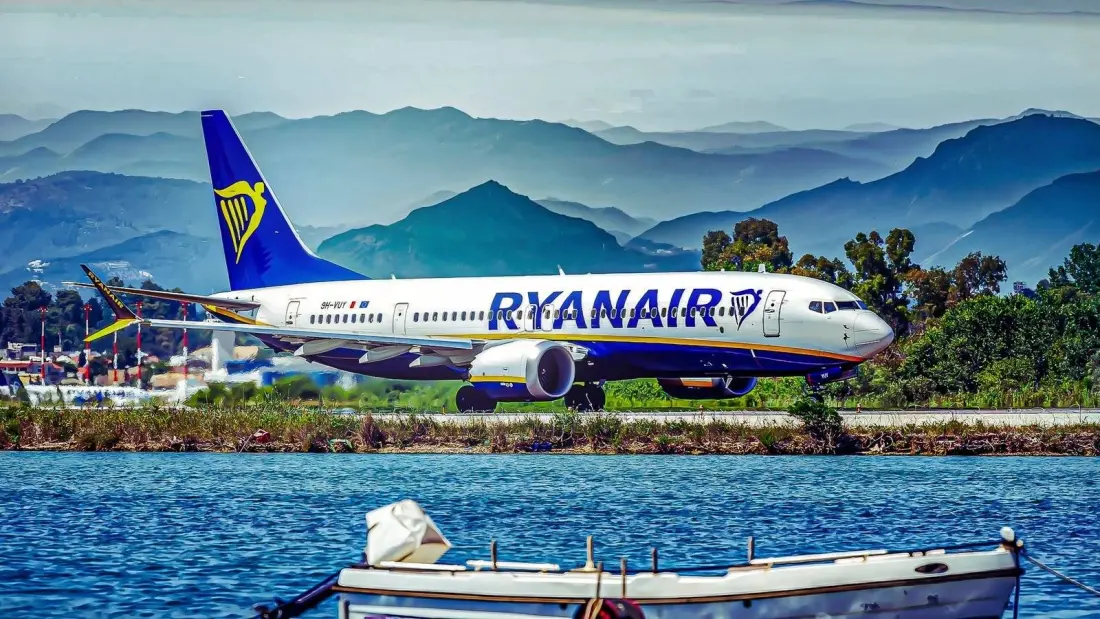
Europe's biggest airline is quietly redrawing its route map. Schedule data shows Ryanair will end all service to 13 airports between January 2026 and March 2027, a cull that affects destinations in Spain, Portugal, France, Greece, Turkey, Serbia, Jordan and Germany.
The headline numbers: Ryanair will operate a record 3,272 daily flights in 2026, up 4% on this year, giving it roughly one in six of Europe's short-haul services and 18% of short-haul seats. But the network is shrinking in places where costs don't stack up. Spain's Vigo and Asturias, France's Clermont-Ferrand and Rodez, the Portuguese Azores airports of Ponta Delgada and Terceira, Greek airports Kalamata and Volos, Serbia's Niš, and Turkey's Bodrum and Dalaman all drop off the map between January and October 2026. Most were small operations — often just one or two routes — where high charges squeezed already-thin margins. In Turkey, traffic rights were also a factor.
Amman, Jordan is the odd one out. Ryanair had grown to 18 routes there since 2018, but flights were suspended due to the regional conflict, reinstatement slipped from July to late October, and now nothing is scheduled through summer 2026. It's the one destination on the list that could plausibly return, since Jordan has open skies with the EU.
The biggest loss for travellers comes in Germany. Bremen loses all Ryanair service in late March 2027 — a symbolic exit, since Bremen was a base when Ryanair launched there and carried 18.3 million round-trip passengers over 19 years, about a third of the airport's total capacity. The airline had actually grown Bremen capacity 8% in 2026 with a new route to Lamezia Terme, but six routes remain by the end: Alicante, Lamezia Terme, London Stansted, Malaga, Palma and Zadar. The final flight, to Stansted, departs on 27 March 2027. After that, Bremen has no UK connections at all.
Ryanair's stated reason for Bremen: 'excessive' air traffic control, security and airport charges plus Germany's air passenger duty. But there's strategy beneath the surface. The airline runs famously tight margins and can redeploy aircraft anywhere in Europe within days, so walking away is cheap — and the warning shot travels far beyond the airport it leaves. By pulling out when fees rise, Ryanair discourages other airports and governments from doing the same, protecting the low-cost model its whole business depends on.
For holidaymakers, the practical takeaway is straightforward: if you live near or fly to any of these 13 airports, book alternatives early. Affected routes largely served leisure markets — Azores island-hopping, Turkish beach breaks, Greek regional escapes — and other carriers may not fill the gap quickly, especially in smaller markets like Rodez, Volos or Niš. Travellers from Bremen face the sharpest change, losing direct sunny-weather routes and all UK service from spring 2027, with Hamburg likely becoming the nearest alternative hub.