
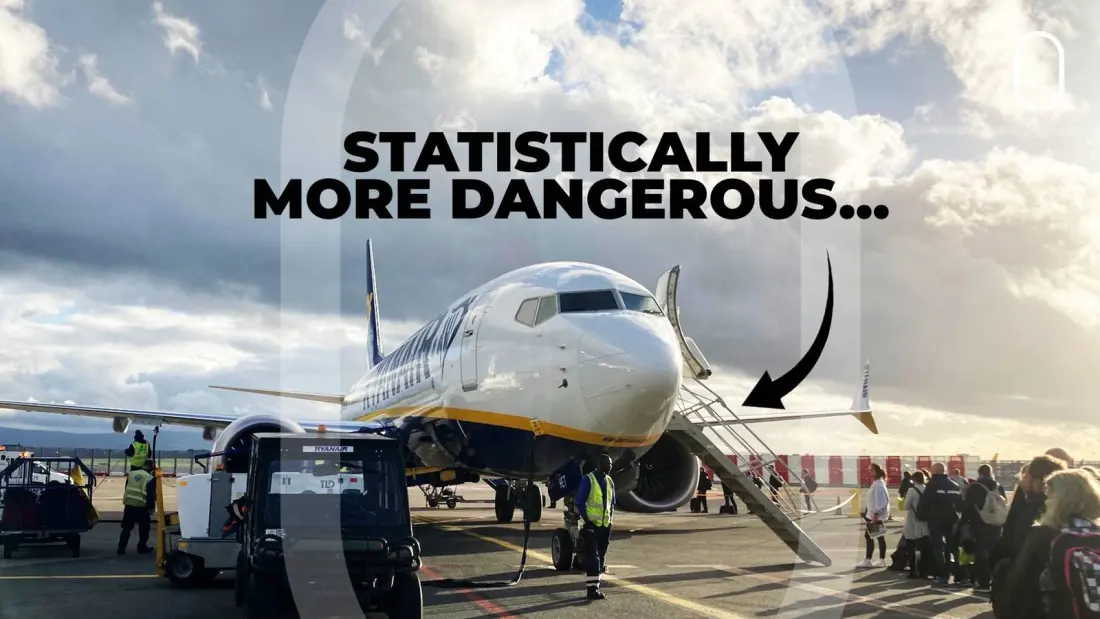
Anyone who has flown with Ryanair knows the routine: instead of a jet bridge, you walk down stairs folded into the aircraft's own door. Those retractable airstairs are a signature of the airline's Boeing 737 operation, and they help explain how the carrier turns flights around so quickly. But they may come with a small catch — a greater chance of taking a tumble.
A study by Italy's flight safety agency has concluded that passengers using aircraft-built airstairs face a significantly higher risk of falling compared with those using stairs supplied by airports. The findings matter because Ryanair and its wider group are among the biggest users of the feature in the world, meaning millions of passengers each year step down those built-in steps.
The appeal of retractable airstairs is operational, not passenger comfort. They let airlines board and offload at remote stands without waiting for ground crews to wheel a set of steps over, cutting turnaround times and helping keep fares and schedules tight. On a busy low-cost operation, that speed is part of the business model.
The trade-off, according to the study, is that the built-in versions appear to be less safe for the people using them. Factors often cited around airstair incidents include steep gradients, weather-exposed steps, passengers juggling bags, and the general rush of a quick turnaround — though the study's core finding is simply that the risk of a fall is measurably higher than with airport-provided stairs.
For travellers, this isn't a reason to change your plans, but it is a reason to change your habits. Take your time on the steps, keep a hand free, put your phone away, and be extra careful in rain, frost or strong wind — conditions common on winter flights into smaller European airports. Travellers with limited mobility, young children or heavy cabin bags may want to allow extra time or consider assistance services when a flight is likely to use remote stands.
The story is also a useful reminder of how budget airlines keep costs down: every minute saved on the ground is a minute the aircraft isn't earning. The airstairs are a small piece of that puzzle, and this study is one of the first to put hard numbers on the safety question surrounding them.
Credit: Simple Flying