Most visitors to El Salvador head for beaches or the better-known Maya ruins. But 36 kilometres north of San Salvador, in the municipality of Aguilares, sits Cihuatan — one of the country's largest pre-Hispanic settlements and one of its least crowded archaeological sites.
The ancient city flourished roughly between AD 900 and 1200, during the Early Postclassic period, after several older Classic-era centres declined. Archaeologists link it to the cultural shifts that swept Mesoamerica at the time, with architecture and artifacts showing clear connections to central Mexican traditions — though exactly who founded the city remains an open question. Even the name is a modern guess: it comes from Nahuat and is usually translated as "Place of Women," but nobody knows what residents actually called it.
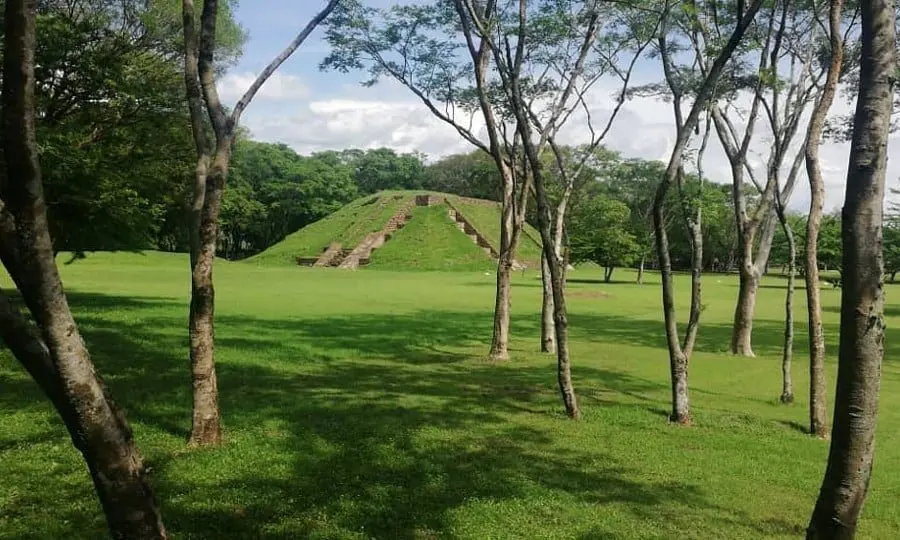
Cihuatan once covered an estimated 300 hectares, with ceremonial buildings, plazas, administrative structures and sprawling residential neighbourhoods. Today's archaeological park gives access to selected sections. The headline sight is Structure P-7, the main pyramid in the western ceremonial centre, which also frames views toward Guazapa Volcano. Nearby you'll find a walled ceremonial precinct with a large plaza likely used for ceremonies and markets, plus two Mesoamerican ball courts — the North Ball Court has been restored and is the easiest to picture in action. An acropolis with elite platforms and a sizeable palace complex rounds out the monumental core.
On site, the Antonio Sol Archaeological Museum adds context. Sol carried out excavations here in 1929, among the first official digs in El Salvador, and the museum displays ceramics and artifacts that connect the standing structures to daily life. Archaeologists are still working out how the city met its end — evidence points to destruction and eventual abandonment, but the details remain under investigation.
Practically speaking, this is an easy half-day trip. Take the Troncal del Norte highway toward Aguilares; the drive from the capital takes about an hour. The park, declared a National Archaeological Monument in 1976 and opened to the public in 2007, normally runs Tuesday to Sunday, 9 a.m. to 4 p.m. — check current hours and admission with the Ministry of Culture before you go. You can see the main accessible areas in a few hours, leaving time to explore elsewhere in the day.
Timing matters. The dry season from November to April is the most comfortable window, but the site gets hot, so aim for early morning. The rainy season turns the surrounding valley greener, though showers mean flexible plans and sturdy footwear.
Wear light clothes, a hat and proper walking shoes, and pack sunscreen and water — much of the site has no shade. Respect roped-off zones and skip climbing on fragile structures. Families will find open space and museum exhibits that work well with kids.
Cihuatan suits travellers who want substance beyond El Salvador's beaches: history buffs, slow travellers, or anyone happy to trade crowds for open countryside and the sense of walking through a city that peaked a thousand years ago.