On a test stand in Peebles, Ohio in November 2017, General Electric's GE9X turbofan produced 134,300 pounds of thrust — the most powerful output ever recorded for a commercial jet engine, later certified by Guinness World Records in July 2019. That beat the previous mark of 127,900 pounds, which GE's own GE90-115B had held for 17 years. Yet here's the twist: the engine built for Boeing's new 777X will spend its entire airline career throttled well below that record, certified at just 110,000 pounds of takeoff thrust — 5,000 pounds less than its predecessor on the 777-300ER.
That's not a compromise; it's the whole point. GE never set out to break a record. The test was a red-line stress run to prove structural limits, and the huge margin above what airlines actually need is deliberate. Instead of squeezing maximum thrust from a hot, overworked core, engineers prioritised fuel efficiency — and because the 777X's advanced wings generate better lift, the aircraft doesn't need brute force to get off the runway.
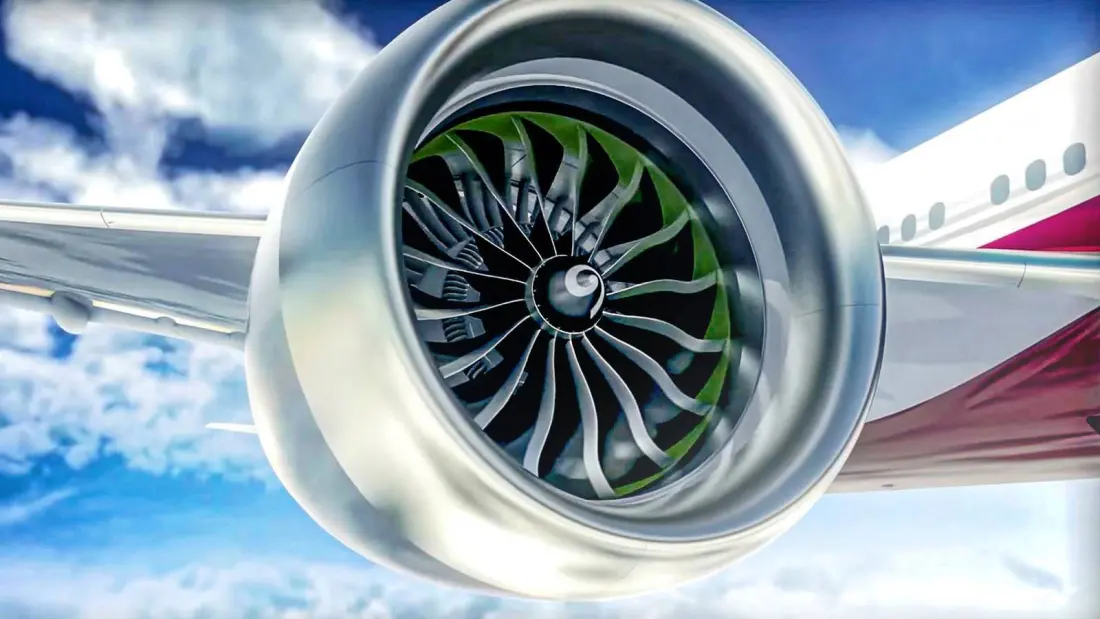
The efficiency story comes down to moving air cleverly rather than violently. The GE9X's front fan measures 134 inches across — as wide as a Boeing 737 fuselage — giving it a bypass ratio of 10:1, meaning most thrust comes from a giant volume of cool air pushed around the core rather than burnt fuel blasting through it. New carbon-fibre composite blades cut the count from 22 on the GE90 to just 16, shedding weight while resisting bird strikes. Inside, the compressor achieves a 60:1 pressure ratio — the highest in commercial aviation — and temperatures hot enough to melt conventional metals, so GE used Ceramic Matrix Composites that handle up to 2,400°F, plus 3D-printed fuel nozzles that are 25% lighter and each replace 20 separate parts.
Fitting such an enormous engine under a wing posed its own problems. Boeing raised the pylon mounts, reworked the 777X's landing gear, and gave the aircraft folding wingtips — 11 feet of wing folds up on the ground so the 235-foot wingspan still fits standard airport gates. GE even tilted a prototype engine five degrees outward on its 747-400 flying testbed to check takeoff clearance.
So why should a traveller care? Because this is the engine that airlines hope will make long-haul tickets cheaper and flights greener. GE says the 777X will burn 10% less fuel than the 777-300ER — significant when fuel is up to 30% of an airline's costs. The 777-9 will carry up to 426 passengers over 7,285 nautical miles, competing directly with the Airbus A350-1000. For flyers, that means more long-range routes and potentially lower fares as airlines chase those seat-mile savings. The real test comes when the 777X enters revenue service and the engine faces years of sand, moisture and thermal cycles — the true measure of whether the world's most powerful engine works best holding back.