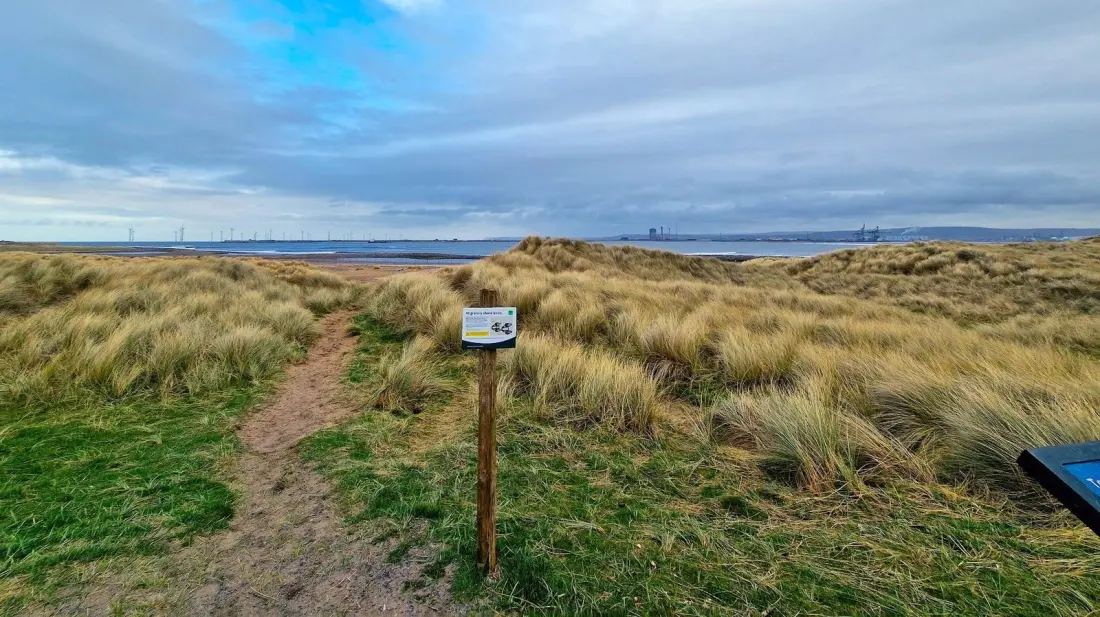
Middlesbrough earned the nickname "Ironopolis" in the 1800s for good reason — iron ore, steelworks and shipbuilding turned quiet meadowland into one of Britain's industrial engines. But on the edge of town, where the River Tees meets the North Sea, a wilder side of the area survives. Teesmouth National Nature Reserve covers 350 hectares of dunes, mudflats, salt marsh and rare coastal grassland, and it sits just 11 miles — about a 30-minute drive — from the city's central shopping hub at Hill Street.
The reserve is split in two by the Hartlepool Power Station site: Seal Sands and North Gare, each with its own character. Seal Sands is the wetland half, with one of the region's largest intertidal mudflat ecosystems. Wading birds probe the flats, kestrels hover overhead, and grey seals haul out on the banks. For the easiest wildlife viewing, there's a panoramic viewing hide at the end of the main car park, or you can follow a 1.5-mile paved trail linking several bird hides to the wetland basin at Greatham Creek. At low tide, seals lounging on the mudbanks there are the star attraction — and patient visitors may also catch harbour (common) seals.
North Gare is the coastal side. Grassy dunes support six species of marsh orchid, including the vivid purple marsh orchid, plus marram and lyme grass. A walk from the trailhead to the tip of North Gare Beach takes roughly 1.5 hours, and when the tide is out you can do a scenic two-mile loop around the dunes beside the dark sand. The views are memorably contradictory: wildflower dunes on one side, hulking industrial structures on the other, with dolphins occasionally visible offshore.
Birders have year-round reasons to come. In winter, knots and shelducks arrive from the Arctic to feed, and you'll have your best shot at estuarine curlews — Europe's largest waders — plus lapwings. Come spring and summer, terns, avocets, skylarks and meadow pipits breed or nest in the dunes. Mammals round out the list: otters, foxes, deer and hares all live here.
The practical bonus is accessibility. This is a proper day out in wild nature that doesn't require a long drive into remote countryside — the reserve sits halfway between the former industrial towns of Redcar and Hartlepool, both worth a stop for antique shops and fishing heritage. If you're exploring further up the North East coast, Teesmouth pairs nicely with Lindisfarne's coastal national nature reserve, which lies between Newcastle and Edinburgh. For travellers who assume you need a far-flung island for big wildlife scenes, this stretch of Teesside makes a strong counter-argument.