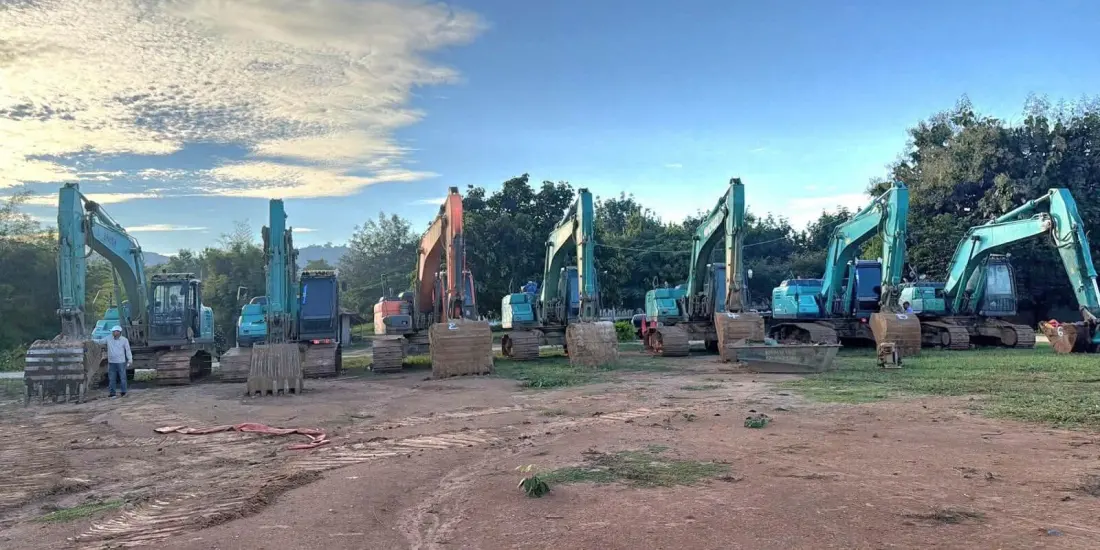
Laotian authorities have hauled away 23 excavators after back-to-back raids on suspected illegal gold mining operations in Sangthong District, on the outskirts of Vientiane Capital. The operations, reported by Lao Security Media, ran across 10 sites in two villages during two separate windows in late September and mid-October.
The seized haul went well beyond diggers: seven gold-filtering screens, three generators, two trucks, three air-conditioned containers and 127 gold-filter carpets used to extract gold from sediment. One site flagged by inspectors sat in Vangma village, close to Tad Vangma Waterfall, a spot popular with local visitors. No charges have been announced yet, and investigators are working out who financed and ran the sites, and whether local residents were involved.
The Sangthong raids are part of a much broader national sweep. In June, officials found suspected alluvial gold mining in Phonxay and Pak Ou districts of Luang Prabang province, detaining five people at the Pak Ou site, with two Vietnamese nationals arrested earlier in Phonxay. That prompted the Ministry of Industry and Commerce to order a nationwide crackdown in July and warn violators of legal action.
Enforcement has since spread to other provinces. In September, four companies in Xaysomboun came under suspicion for pulling alluvial gold under permits that only covered stone and sand processing. Around the same time, the ministry suspended Daochalearn Mineral Processing after unauthorised iron ore operations muddied the Nam Song River in Vang Vieng — the tubing-and-karsts town that is one of Laos's biggest traveller draws. At the start of October, President Thongloun Sisoulith called for tougher action on illegal mining, logging and unauthorised vehicle imports at a meeting of the 12th Party Central Committee.
For travellers, this matters mostly for what it says about the places on your itinerary. Vang Vieng's river is a case in point: mining runoff turning waterways muddy is an environmental issue that directly affects the scenery and swimming spots people come for. Laos is also under increasing scrutiny over how resource extraction overlaps with protected landscapes and heritage areas — Luang Prabang, a UNESCO World Heritage town, has seen mining sites uncovered in surrounding districts. The government's willingness to escalate enforcement, right up to presidential level, suggests more raids and permit reviews are likely, which could mean occasional checkpoints or closures around rural sites. If you're planning trips to Vang Vieng, Luang Prabang or the waterfalls around Vientiane, expect cleaner rivers as a potential upside, but check local conditions before heading to outlying natural attractions.
The story is also a reminder that Laos's headline attractions sit alongside an active and sometimes poorly regulated mining industry — a context worth knowing when choosing ethical tour operators who stick to licensed areas.