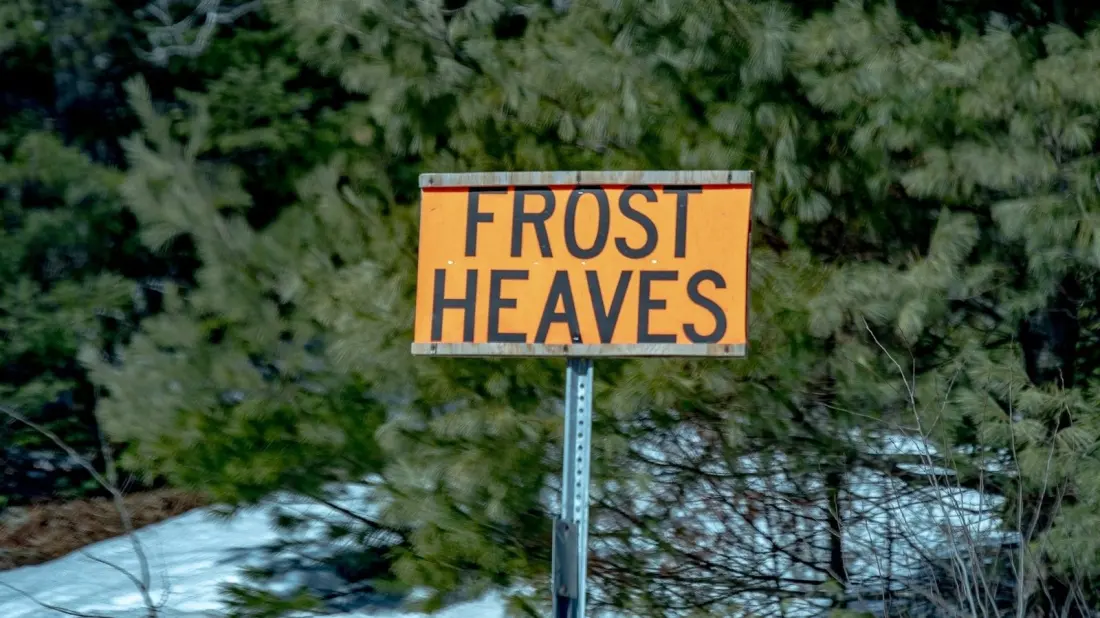
Yellow warning signs about frost heaves are easy to shrug off if you've never driven through a proper winter. But ignore one at speed and your car can pay the price. Weather-related hazards already cause roughly 1.2 million crashes a year in the US, according to the Department of Transportation, and frost heaves are one of the sneakier hazards on the list — especially on scenic northern road trips taken in late winter or early spring.
So what's actually happening under the asphalt? In soils that hold moisture well — silty or clay-rich ground — water seeps down and freezes when temperatures drop. Freezing water expands, lifting everything above it: sidewalks, tree roots, house foundations, and roads. A frost heave under a highway essentially becomes what one New Hampshire paper called nature's speed bump. The raised, cracked pavement can wreck tires, suspension components, ball joints, transmission mounts or oil pans if you hit it fast.
Frost heaves are cousins of potholes, since both start with water in the soil. The difference is scale: a pothole is a localised hole, while a heave warps a long stretch of roadway, which makes repairs pricier and more complicated. The silver lining is that minor heaves often flatten out on their own once temperatures stay reliably above freezing. Serious cracks, though, stick around until crews fix them.
Timing and location matter. Heaves form when temperatures swing around the freezing mark rather than staying deeply cold, so late winter and early spring are peak season — often from February in New Hampshire, a state that battles them annually thanks to its mountainous terrain and very old roads. Many New Hampshire routes date back to stagecoach days and lack the drainage and foundations that protect modern highways. Vermont deals with the same problem for the same reasons, and heaves also crop up across the Midwest and Pacific Northwest, plus Canada, Alaska, Russia and Scandinavia. Anyone driving the Alaska Highway in spring should expect bumpy, cracked stretches and take the warning signs seriously.
For travellers, the takeaway is simple: there's no gadget or trick that prevents frost heave damage. When you spot the sign, slow down, ease over the bumps, and stay alert on roads that are mid-thaw. A few seconds of caution beats a ruined suspension in the middle of a winter trip.