Caen just did something no other French city managed: it earned the fifth and highest star of the Ville Eco-Propre (Eco-Clean City) label in 2026, the only city in France to do so. It also ranked eighth among France's 50 biggest cities for greenness, which tracks — a quarter of the city is covered by parks and gardens.
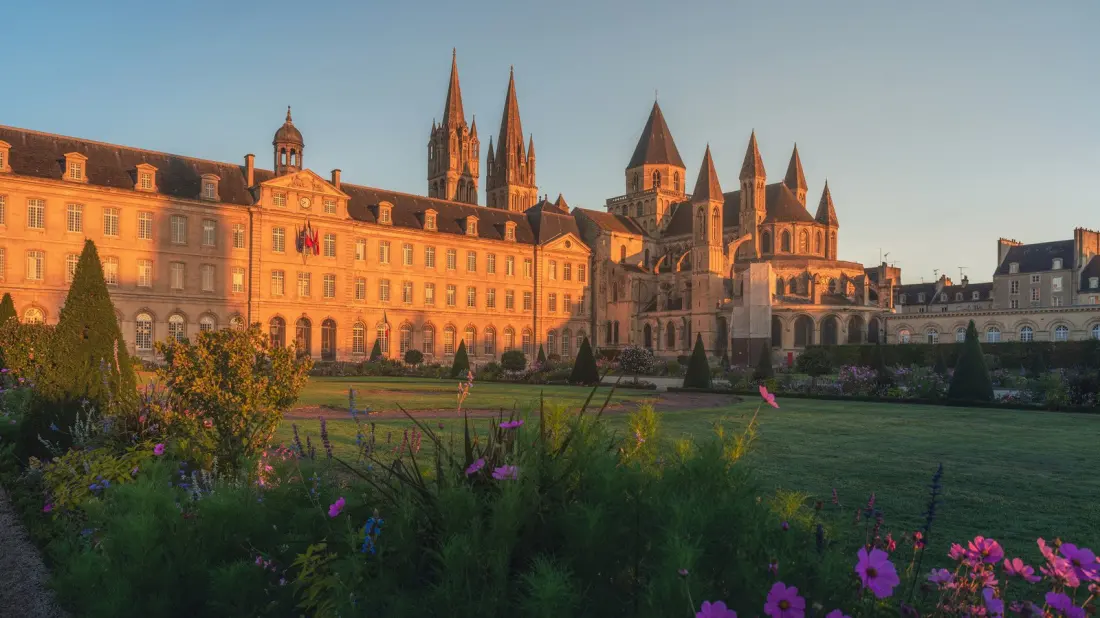
The green credentials are easy to verify on foot. The Jardin des Plantes botanical garden holds more than 8,000 plant species, while the 27-acre Vallée des Jardins gives joggers and picnickers room to breathe. Closer to the centre, the Prairie stretches across 220 acres, combining a bird reserve with one of France's oldest racecourses. For something more ornamental, the Michel d'Ornano Park spreads 12-plus acres of flowerbeds and a labyrinth beneath an 11th-century abbey.
That abbey is where Caen's history kicks in. The city is William the Conqueror's town — he took the English throne in 1066, and his remains rest in the Gothic choir of the Abbaye aux Hommes. His wife, Matilda of Flanders, commissioned the Abbaye aux Dames around 1060, complete with convent, church and crypt, a mile to the east. Caen Castle itself is one of Europe's largest medieval fortresses; entry to the grounds is free, with the Museum of Fine Arts and Normandy Museum inside the walls.
The Second World War left its mark too: 80% of Caen was destroyed during six weeks of fighting in 1944. The Caen Memorial Museum covers that history with immersive exhibits and guided D-Day tours. For atmosphere, head to the Vaugueux quarter, where cobbled streets of Caen-stone houses now hold bars, boutiques and restaurants around Place du Vaugueux.
Food is a serious business here. The local specialty is tripe à la caennaise, a slow-simmered dish credited to a 14th-century monk, and judged annually by an actual brotherhood of tripe enthusiasts since 1952. Try it at Le Mancel inside the castle, or Boeuf & Cow, the tourist office's pick. On Sundays, market stalls line the Bassin Saint-Pierre, and for a splurge the Michelin-listed À Contre Sens serves seasonal Normandy tasting menus. Thirsty afterwards? Rue Écuyère is nicknamed "rue de la soif" — thirsty street — for good reason.
Getting there is straightforward: Caen-Carpiquet airport is 20 minutes from town, direct trains from Paris Saint-Lazare take just over two hours, and ferries from Portsmouth dock at Ouistreham, a half-hour drive away. Arrive by train, bus or bike and Normandy's Low Carbon Rate gets you discounts at museums and attractions.
Caen suits travellers who want more than a D-Day whistle-stop: it works as a compact city break with genuine medieval sites, big parks and a proper food scene — plus an easy base for the Normandy beaches and Bayeux.