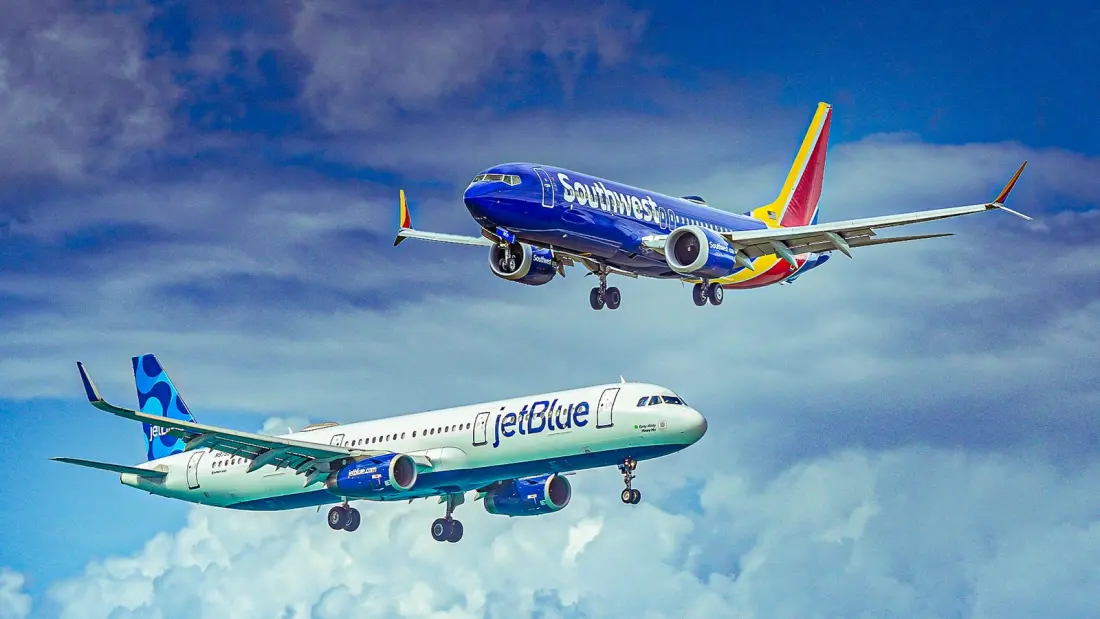
Neither Southwest nor JetBlue really counts as a budget airline anymore — and in 2026 the gap between them and the big US legacy carriers keeps shrinking. Both are now 'hybrid' carriers: cheap-ish fares wrapped around products and policies that increasingly mimic American, Delta and United.
Southwest finished retrofitting its entire fleet with extra legroom seats in January 2026 — 42 such seats on the 737-700 and 48 on the 737-800 and MAX 8. It has also scrapped the two traditions it was famous for: open seating and two free checked bags. Assigned seats and paid bags are now the norm, while a fleetwide upgrade adds USB-C ports, bigger bins and mood lighting. Rumours of a domestic first class cabin and even widebody long-haul routes are circulating, and a lounge network for elite cardholders is planned for late 2027. The changes came after Elliott Investment Management took a stake and pushed for a turnaround — and the airline, which flies an all-737 short-haul network out of 13 bases (Atlanta, Austin, Baltimore, Chicago Midway, Dallas Love Field, Denver, Houston Hobby, Las Vegas, LA, Nashville, Oakland, Orlando and Phoenix), remains one of the biggest domestic carriers in the US.
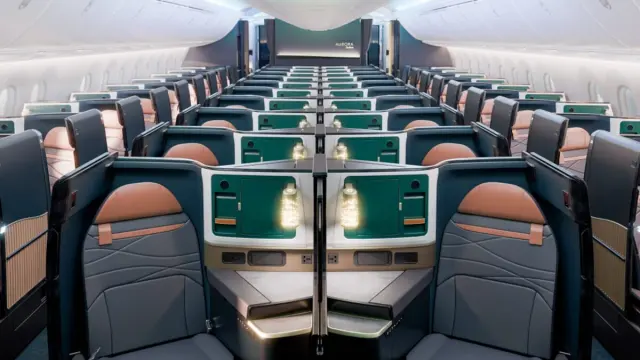
JetBlue's edge is the onboard product. Free Wi-Fi since 2013, seatback screens across the fleet, decent snack service and generous legroom have long set it apart. Its EvenMore extra-legroom brand predates the trend, Mint brought lie-flat business class to premium transcontinental routes in 2014 and now flies transatlantic on A321LRs, and two 'BlueHouse' lounges serve Mint passengers and top-tier TrueBlue Mosaic 4 members. A domestic first class cabin, BlueFirst, debuts in December and will be fitted to every non-Mint aircraft — though that means economy legroom drops to an industry-standard 30 inches.
The catch is where they fly. JetBlue's 300+ aircraft are concentrated in New York, Boston, Fort Lauderdale, Orlando and San Juan, where Delta in particular outguns it in the Northeast. Southwest, conversely, barely registers in the Northeast but dominates markets across the rest of the country, often with better schedules than the legacies. And JetBlue's finances are worrying: it has lost money every year since COVID despite its JetForward turnaround plan, with even founder David Neeleman speculating about a possible Chapter 11 filing.
For travellers, the practical read is this: if you're flying domestically almost anywhere outside the Northeast and value flexible schedules and a decent extra-legroom seat, Southwest's new fee-based model still works well. If you're in the Northeast or Florida — or crossing the Atlantic — JetBlue's onboard experience is genuinely the most pleasant of the US non-legacy carriers, so it may be worth booking while those perks last. Either way, the era of genuinely no-frills flying on either airline is over.