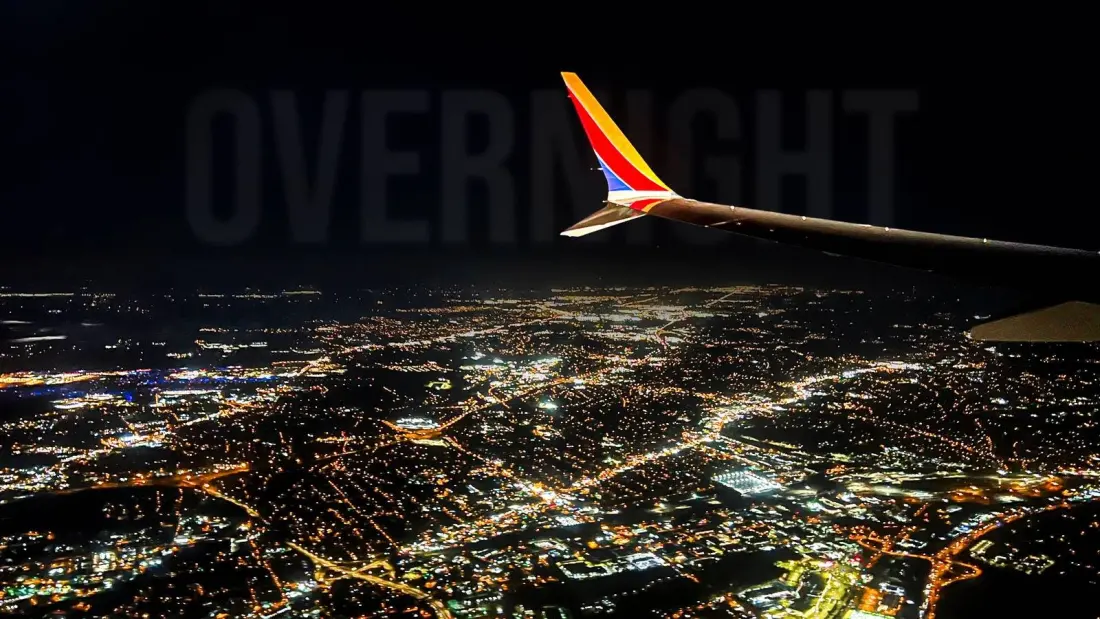
For 54 years, Southwest Airlines did something almost no other US carrier did at night: nothing. Every Boeing 737 in the fleet was parked from dusk to dawn, a daytime-only rhythm that became part of the airline's low-cost identity. That ended on 13 February 2025, when the first red-eyes lifted off, and by 2026 the transformation is complete enough to reshape how travellers book coast-to-coast trips.
The first overnight flights ran from Las Vegas, Los Angeles and Phoenix to Baltimore, Orlando and Nashville — five departures a night. Demand and aircraft-efficiency maths pushed rapid growth: Hawaii was added by April 2025, the schedule hit 33 nightly flights by June, and by autumn 2026 Southwest was operating 53 red-eyes a night, including longer transcontinental legs such as San Diego to Boston.
Why bother? Because a plane on the ground earns nothing. Southwest says red-eyes and quicker turnarounds deliver the equivalent of 18 extra aircraft without buying a single one. Flights average 780 miles, and the overnight legs feed passengers directly into early-morning departure banks at hubs like Baltimore, Nashville and Orlando. That last part matters most to passengers: roughly three-quarters of red-eye bookings are connecting travellers, which means a late departure from Las Vegas or Phoenix now carries the risk of misconnecting hundreds of people across the morning schedule.
The quirkiest development comes in spring 2027: a westbound reverse red-eye from Las Vegas to Honolulu, departing at 2:45 AM and landing at 6:10 AM — a rare east-to-west overnight that exists purely to park an aircraft in Hawaii at dawn, ready for a morning run back to the mainland. Adventurous, yes. Comfortable, less so: passengers go through security between 1 and 2 AM and land hours before hotel check-in. The upside is a full final day in Las Vegas before flying.
That points to the real trade-off. Southwest flies a single-aisle, single-class 737 fleet with no lie-flat beds or premium cabins, so a five-to-six-hour overnight in a standard seat with limited recline is a test of endurance, even with extra-legroom options and power outlets. Business travellers who want to cross the country without losing a workday will love these flights; light sleepers may land wrecked.
For holidaymakers, the practical takeaway is simple: Southwest red-eyes are now a genuine option for maximising time on the ground, especially if you're connecting onward in the morning. Just build in buffer for the tight pre-dawn margins, and think hard before booking the Hawaii reverse red-eye unless arriving at dawn in Honolulu is genuinely the plan.
Story first reported by Simple Flying.