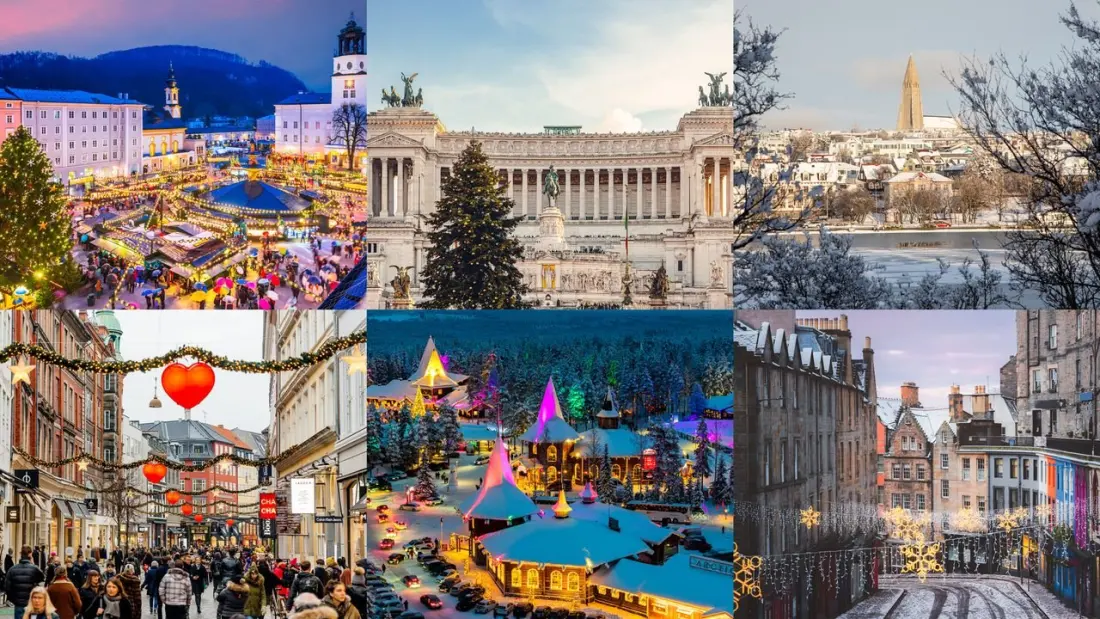
Christmas is one of the best times of year to be travelling, not just sitting at home. Cities go full sparkle: markets steam with mulled wine, ice rinks open under giant trees, and local traditions come out that you'd never guess at — in Iceland, books are traditionally given on Christmas Eve, and in Reykjavik children get presents in their shoes from 12 December, courtesy of 13 mischievous troll "Yule Lads" said to come down from the mountains.
If you want the definitive festive experience, head north. Rovaniemi in Finnish Lapland sits on the Arctic Circle and bills itself as Santa's official home. At Santa Claus Village you can meet Father Christmas for free, post a wishlist from the Arctic Post Office with a special Arctic Circle postmark, and — a serious draw for adults — stand a real chance of seeing the Northern Lights. The Glass Resort there has glass ceilings, so you can watch from bed.
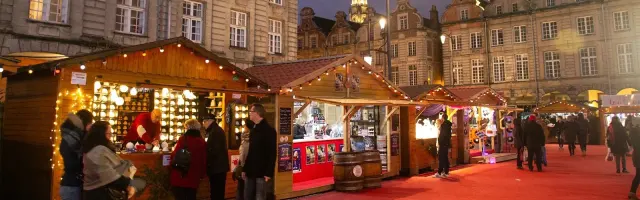
Market lovers are spoiled elsewhere. Strasbourg calls itself the Capital of Christmas, and it has history on its side: the first market, the Market of the Infant Christ, took place there over 500 years ago, and today more than 300 stalls spread across the UNESCO-listed Grande Île, with an ice rink by the tree at Place Kléber. Nuremberg runs Germany's biggest and longest-running market, with strict rules meaning only authentic handmade goods are sold — fuel up on lebkuchen gingerbread and three charcoal-grilled sausages in a roll. Gdansk's market was named Europe's best in 2024, with a Santa's grotto and concerts, plus zapiekanka toasties loaded with cheese, mushrooms and bacon.
Further south, Salzburg pairs its 500-year-old market and daily cathedral caroling with the wonderfully strange Krampus run on 5–6 December, when costumed figures in furs, bells and masks parade to scare off evil spirits. Zagreb has invested heavily in its market in recent years — look out for the live-animal nativity outside the Cathedral and concerts performed from balconies. Rome offers the religious heart of the season: the Vatican tree lighting outside St Peter's, Midnight Mass on Christmas Eve, and the Pope's Urbi et Orbi blessing, with ancient landmarks like the Colosseum strung in lights.
Copenhagen brings the hygge: the vintage fairground at Tivoli Gardens, a rink at Frederiksberg Runddel, and a floating Santa Lucia kayak parade on the canals — Nimb Hotel guests get unlimited free Tivoli entry and rides. Bruges runs its Winter Glow light festival alongside a small market, ice rink and hundreds of handmade baubles at De Witte Pelikaan. Edinburgh covers the outdoorsy end, with whisky pubs along Princes Street, skating at St Andrew Square and even skiing at Pentland Hills Regional Park.
Who's it for? Families with small children will get the most out of Rovaniemi and Nuremberg (which has a dedicated Children's Market and family shows). Couples after atmosphere should look at Strasbourg, Bruges or Salzburg. Anyone chasing winter drama — snow, auroras, folklore — should weigh Reykjavik or Lapland, while Rome and Zagreb suit travellers who want festivity wrapped around proper sightseeing and good food. Most of these cities are compact and walkable, so a two- or three-night trip in early-to-mid December usually catches the markets at their liveliest without peak-season prices.
Story based on a roundup by Condé Nast Traveller UK.