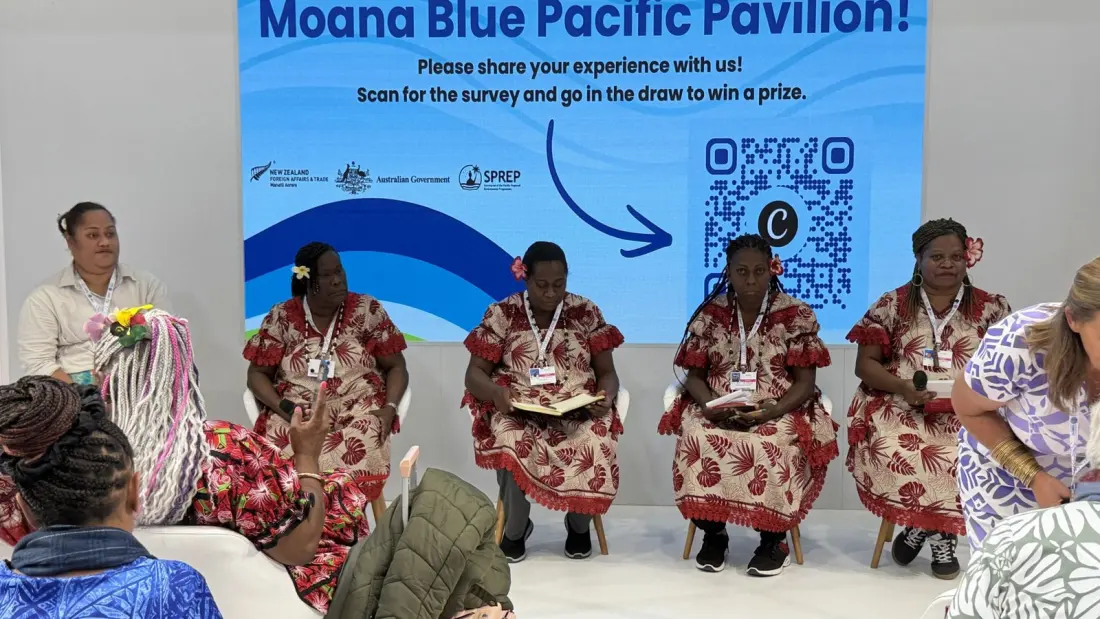
Vanuatu sits in one of the most disaster-prone corners of the Pacific, and official cyclone warnings have long had a problem: they arrive in technical language many villagers find impenetrable, and they only reach people with mobile phones. A grassroots programme called Women Wetem Weta is fixing both gaps at once, and it was showcased on the opening day of COP31 at the Moana Pavilion as an example of women leading climate adaptation.
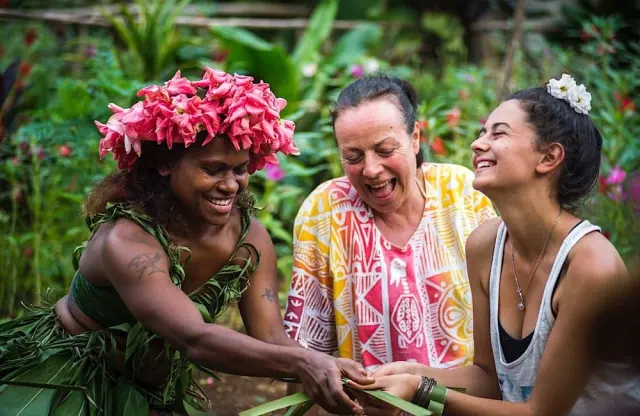
The numbers give a sense of scale. ActionAid Vanuatu coordinates the network, working with correspondents across five islands and roughly 5,000 women connected by mobile phone. Six trained correspondents draft SMS alerts of up to 160 characters, which go out to community taskforce leaders who then pass them on to households — including, crucially, women who don't own phones at all.
The real innovation is translation in both directions. Official forecasts often lose people in jargon, so the network works with the Meteorology Office, the Climate Change Department and the National Disaster Management Office to turn warnings into plain, practical instructions: secure the roof, move livestock, stock water. In the other direction, women report conditions back up the chain — garden damage, agricultural pests, emerging threats — often with photos attached. As coordinator Flora Vano puts it, government policy no longer just sits on paper; the women who know their terrain and crops make it real on the ground.
The model has stretched well beyond cyclones. During the COVID-19 pandemic it distributed public health information, and a dedicated strand called Women I Toktok Tugeta Sunshine includes women and girls with disabilities, under the banners of "nothing about us without us" and "leave no one behind". That group proved its worth during the Port Vila earthquake response, helping map where people with disabilities were and guiding relief efforts locally.
There's a financial argument too. Research presented at the session found every US$1 spent on multi-hazard early warning preparedness saves US$4.40 in humanitarian response costs. For a country repeatedly hit by overlapping emergencies, that economics matters.
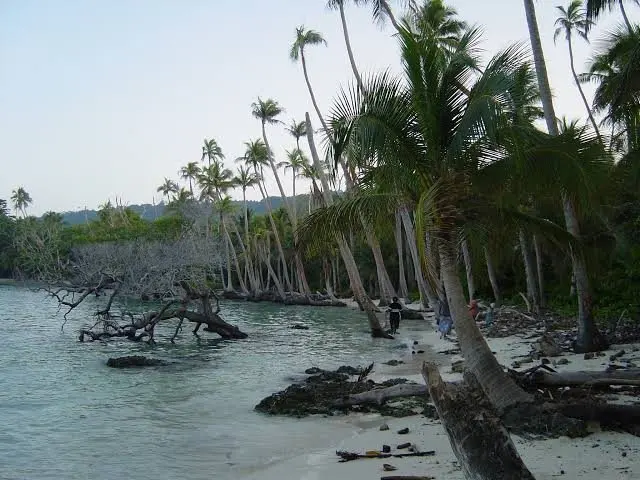
Why should travellers care? If you're planning a trip to Vanuatu — a favourite for diving, volcano treks and island-hopping — you're visiting a place where cyclone season is a fact of life and community-level preparedness is genuinely sophisticated. This network is part of why warnings now reach even remote islands quickly and in language people act on. Understanding that system, and heeding local advice when a storm is brewing, is simply smart travel. It's also a reminder that the best resilience stories from the Pacific are being driven from village kitchens up, not from boardrooms down.