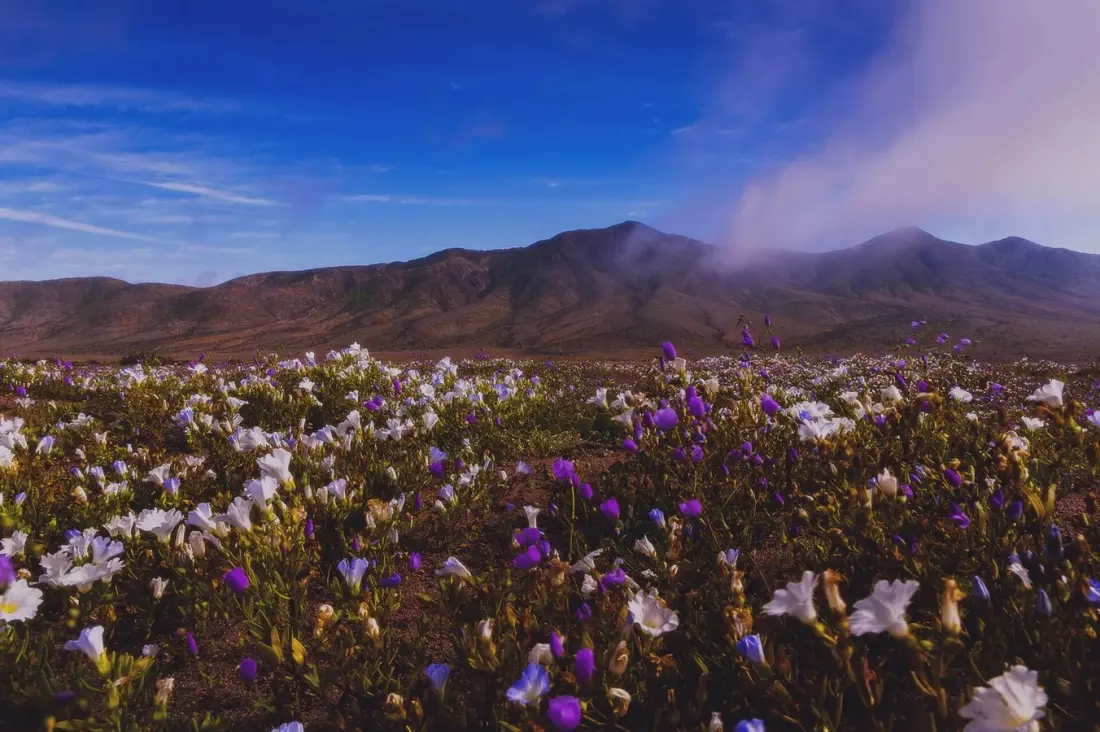
Every so often, the driest non-polar desert on Earth puts on a show that seems impossible. This year, Chile's Atacama has done exactly that: a Desierto Florido so widespread that researchers are still deciding where it ranks among the biggest blooms ever recorded there.
The trigger came in July and August, when parts of northern Chile received exceptional rainfall. Seeds lying dormant in the soil — some waiting years for exactly this — finally got enough moisture to germinate. The first flowers appeared in the second half of August, and by September larger patches were spreading across the region. As of 10 November, when Good News Network covered the display, the colour was still turning heads along the coast.
The scale is remarkable. Atacama's regional government expected more than 200 native plant species to flower over the season, with flowering conditions potentially covering roughly 17,700 square kilometres — close to a quarter of the entire region. The widest variety of flowers was expected around mid-October, though timing varied from spot to spot.
If you're heading there now, temper your expectations: by mid-November much of the display was expected to be winding down. The native garra de león — literally "lion's claw" — was forecast to hold on into the second half of the month. Anyone already travelling through the area should check what's still flowering locally before making a detour.
The standout places to see it have been Llanos de Challe National Park, where pink and purple wildflowers spread across the coastal ground near the Pacific, plus the area around Freirina and parts of the Totoral area. One plea from officials matters more than you might think: stick to established routes and trails. The desert bloom looks tough but is genuinely fragile, and trampling the plants — or the seeds that fuel future blooms — does lasting damage. There's plenty of room to stop and look properly without leaving the paths.
Why should this be on your radar? A full Desierto Florido is a rare, unpredictable event — some years pass without one at all, and this one is among the strongest in decades. It transforms a landscape most people associate with Mars-filming locations into rolling sheets of colour, and it pairs well with the Atacama's other draws: stargazing in the clearest skies on the planet, salt flats, flamingo lagoons and high-altitude lagoons near San Pedro de Atacama. If a bloom happens while you're anywhere in northern Chile, change your plans. Even in a quieter year, the desert's otherworldly scenery makes the trip worthwhile.
Timing is everything with this one. The bloom runs roughly from late August into November in a good year, so anyone dreaming of seeing it should watch Chilean weather news in winter and be ready to move fast when the rains come. Source: Getaway South Africa.