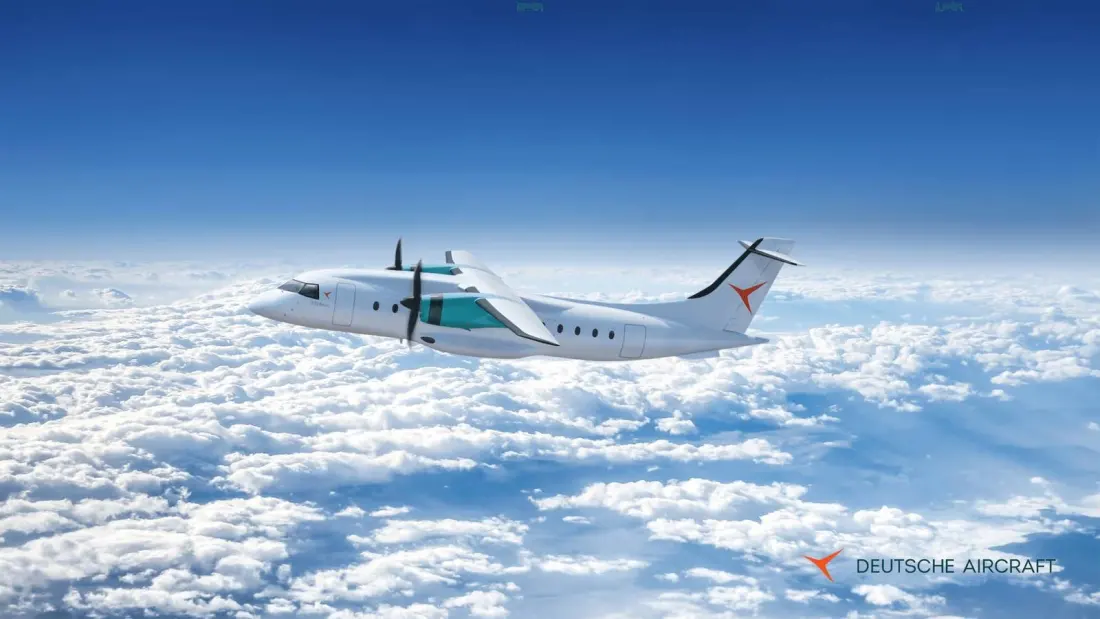
A regional aircraft that first flew in 1991 is getting a second life. Deutsche Aircraft, a German manufacturer holding the type certificate for the Dornier 328, is developing the D328eco — a stretched, modernised 40-seat turboprop that revives a design first conceived by aviation pioneer Claude Dornier. Around 150 of the original aircraft are still flying worldwide, a testament to how well the platform has aged.
The original Dornier 328 was ahead of its time: a jet-like fuselage, digital glass cockpit, pressurised cabin and genuine short-runway capability in an era when most regional turboprops were slow and utilitarian. Despite that, only around 220 were built (including roughly 110 of the jet-powered D328JET variant) before Dornier's economic troubles ended the programme.
Deutsche Aircraft — led on engineering by Thomas Ahn, who worked on the original 328 — is building the new version at Oberpfaffenhofen near Munich, and sees the project as more than one aircraft: a rebuild of Germany's regional aircraft-manufacturing capability.
So what's new? The D328eco stretches the fuselage by about two metres to 23.3m, squeezing in 40 passengers instead of the original 30-33. Pratt & Whitney Canada PW127XT-S engines cut fuel burn to roughly 480 kg per hour at cruise, and the plane runs on 100% sustainable aviation fuel — with claimed CO2 reductions of up to 95% using Power-to-Liquid SAF, and 22% less CO2 than its predecessor even on standard Jet-A1. Maintenance costs are expected to drop by up to 20%.
Performance-wise, it keeps the family's signature short-field chops: takeoff runs as short as 800 metres at partial load, unpaved-runway operations and steep approaches, opening up remote and constrained airports that jets can't reach. Cruise speed tops out around 324 knots with a 30,000-foot ceiling, and the range covers over 98% of today's turboprop missions. Passengers get a quieter cabin, a stand-up aisle, bigger overhead bins and faster turnarounds. There's also a multi-role sibling, the D328MR, configurable for medevac, search-and-rescue, surveillance and cargo — it can fly nearly 2,200 nautical miles in a medical evacuation setup or stay airborne for over eight hours on surveillance duty.
The catch? Timing. The first test aircraft isn't expected to fly until the first half of 2027, entry into service has slipped to late 2029, and no firm orders have been announced yet.
Why should travellers care? If you fly regional routes — especially to smaller islands, Alpine valleys or remote northern airstrips — aircraft like this are what keep those routes viable. A fuel-efficient turboprop that can land on short, unpaved runways while burning a fraction of the emissions is exactly the kind of plane that preserves air links to places bigger jets can't serve. Watch this space: by the end of the decade, the 328 name could be back on departure boards across Europe and beyond.