Alpinist magazine's autumn reading round-up covers three new titles that go beyond the usual summit-and-suffering formula — and each one doubles as armchair travel for anyone drawn to mountains, boulder fields and far-flung expeditions.
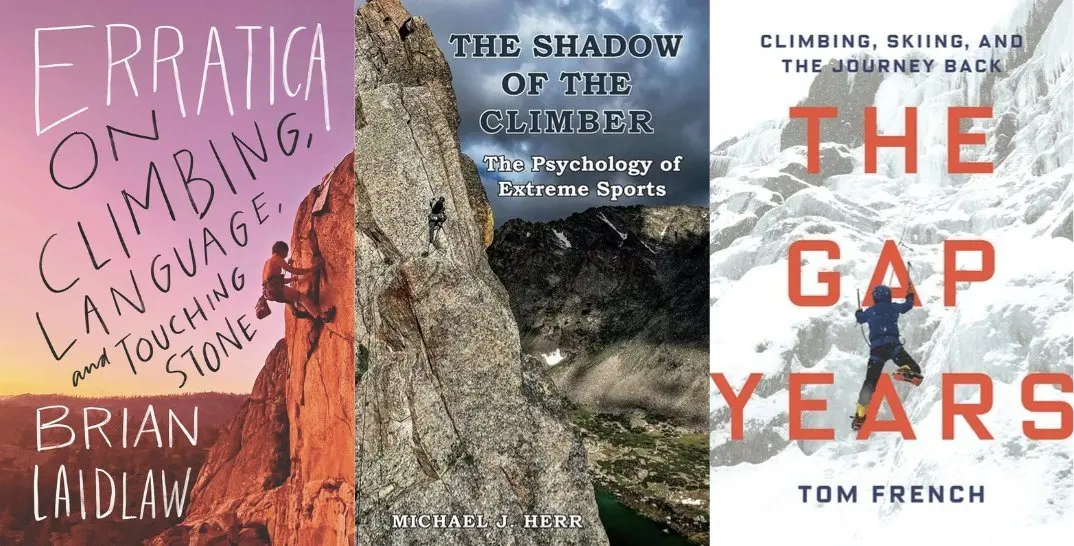
First up is Brian Laidlaw's Erratica: On Climbing, Language, and Touching Stone. Laidlaw is an unusual hybrid: strong enough to climb 5.13 routes and V10 boulder problems, yet also a creative writing professor and songwriter. Reviewer Sarah Boon admits the opening list of his climbing credentials nearly put her off, before she realised it reflected uncertainty rather than ego. What follows is less a memoir than an anthropological look at climbing culture — the jargon traded between boulderers, the gestures used to talk through a problem, the moonlit sessions with friends, and a punishing haul up El Capitan after losing most of a haulbag's contents. Laidlaw even packs a box of books on climbing trips and scribbles poem drafts between attempts. It's the pick for anyone who wants the why of climbing, not just the what.
The shortest of the three might cut deepest. Michael J. Herr's The Shadow of the Climber: The Psychology of Extreme Sports runs just 92 pages, but reviewer Derek Franz praises how efficiently it unpacks why people take big risks. Herr came to climbing from boxing and a social work career, climbed cautiously for a decade while training toward guiding certification, then watched a partner fall thirty feet onto the ground and helped with the bloody rescue. The partner recovered; Herr kept climbing, but started questioning his motives. The book leans on Carl Jung's idea of the "shadow" self — the unconscious drives that steer us until we face them — and argues that naming those motives is a form of freedom. If you've ever wondered what pulls you toward exposure and consequence, this is the pocket-sized version of that conversation.
Finally, Tom French's The Gap Years: Climbing, Skiing, and the Journey Back is the life-spanning memoir of the trio. Franz describes a man who studied and travelled widely, built a successful business career, raised three independent kids, met his wife along the way, and then returned to Himalayan expeditions and cross-country ski racing in his sixties. The title works on two levels: the classic gap year after school, and the later "gap years" that follow semi-retirement. There are colour photos and maps throughout, plus an insider's look at the commercial Everest scene — written from the rare perspective of a guided client who actually understands climbing. Franz calls it a road map for balancing adventure, career and family, even if French makes it sound simpler than it is.
Taken together, the three books span bouldering philosophy, risk psychology and a lifetime of expeditions — useful inspiration for travellers planning anything from a gym-adjacent bouldering trip to a first Himalayan trek. None of them are guidebooks, but all three might change what you pack for.