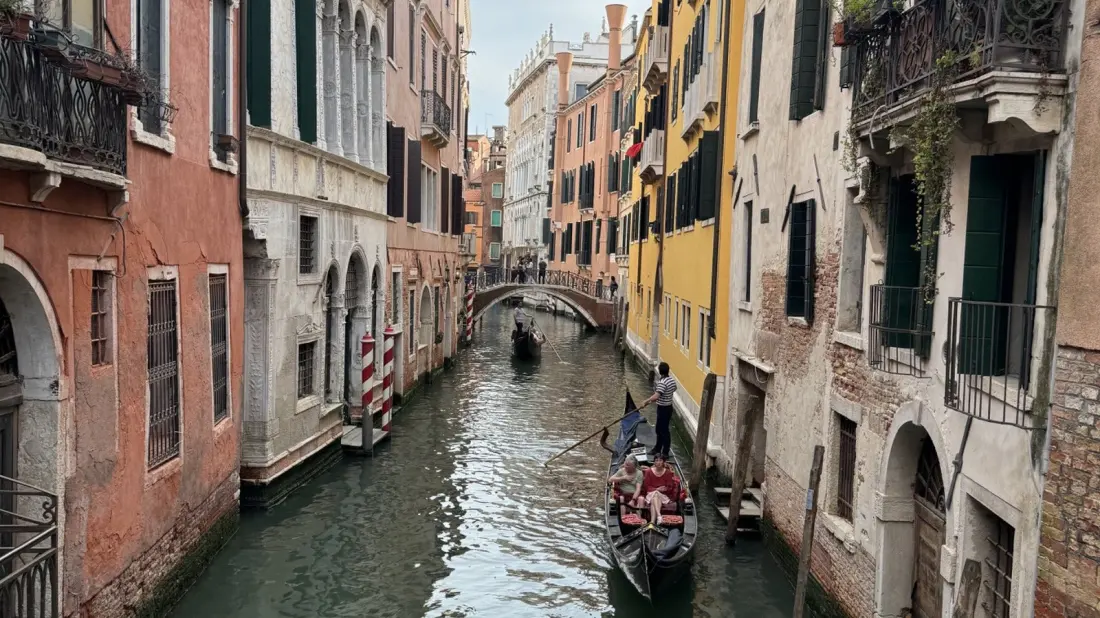
Venice pulled in close to six million tourists in 2024 — and its historic core is home to only about 49,000 actual residents. That imbalance explains why locals have developed a firm, if unspoken, code of conduct, and why American visitors in particular keep tripping over it. Here are the habits worth unlearning before you arrive.
First, mind the walkways. Venice has no sidewalks in the usual sense; people get around on narrow lanes called calli and covered passages known as sotoporteghi. Locals use them to commute, shop and pick up kids from school, so stopping mid-lane to check a map or snap a photo creates a genuine bottleneck — many are too narrow to pass. Calle Varisco, the city's tightest passage, is barely 19 inches wide. If you must pause, press against a wall, walk single file, and regroup in the next campo instead.
Vaporetti, the water buses that double as cheap Grand Canal sightseeing, are public transit first and views second. Let disembarking passengers off before boarding, don't rush the gate (the boat rocks — people fall), stow luggage in the designated racks rather than on seats, and make room for wheelchair users, who can buy a 75-minute accessible ticket. If you're hauling suitcases from the airport, a water taxi may be the kinder choice for everyone.
Eating on bridges, steps and canal banks is a fast way to meet the Municipal Police. Because these structures count as critical infrastructure, snacking on them can cost €100 to €200 — and in 2019 a German couple was fined €950 and banned from the city for brewing coffee on the Rialto Bridge. Buy your pizza, then find a proper spot.
Bacari — Venice's standing-room wine bars dating back to 1869 — have their own rhythm. Order cicchetti (small plates of meatballs, octopus, cheese, bread) and a spritz at the counter, eat quickly, and move on. Locals bar-hop rather than colonise one bar all evening; Arcicchetti Bakaro is a well-liked, non-touristy pick.
Shopping for glass? Don't assume every trinket is genuine Murano. A Murano glassmaker estimated on Reddit that over three-quarters of glass sold in Venice in 2018 was fake. Look for the official Vetro Artistico Murano sticker (blue or red), an etched maker's name, or trusted names like Venini, Barovier & Toso and NasonMoretti. Skeptical? Ask for a certificate, or take the day trip to Murano itself — the Wave Murano Glass factory tour rates five stars across 1,500-plus reviews.
Finally, remember this is someone's home, not a theme park — however much it resembles the Las Vegas Venetian. Don't block doorways, photograph through windows or wander onto private property. And slow down: hours are flexible, nothing moves fast, and the city rewards travellers who stop expecting American-style efficiency. Follow these unwritten rules and you'll blend in better, get friendlier service, and see a Venice the crowds miss.