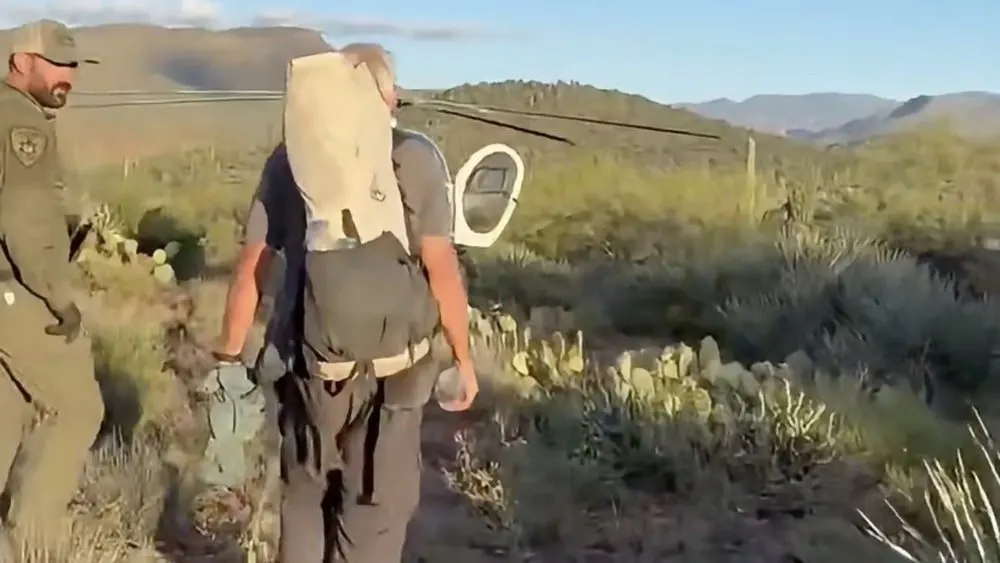
A solo backpacker spent a nail-biting night in central Arizona's backcountry after floodwaters on a normally quiet creek swept away nearly everything he was carrying. Rescuers from the Yavapai County Sheriff's Office found him the next morning, seven days into his trip, and airlifted him out from the area near Sheep Bridge off Bloody Basin Road. He was exhausted and scratched up, but otherwise healthy.
The sequence of events shows how quickly desert conditions can turn. On October 21, the National Weather Service put a flood watch over northern and central Arizona as a Pacific storm pushed in from the California coast, bringing damaging winds, large hail and heavy rain. Parts of Yavapai County took more than an inch of precipitation in 48 hours — enough to turn dry washes and low creek crossings into fast-moving torrents. The hiker's gear went into the water, and he only just managed to message family before his phone died.
The response was a coordinated effort: the sheriff's Aviation Team, Forest Patrol and search-and-rescue volunteers combed the rugged terrain before aerial crews spotted him on Saturday morning and brought him to safety.
He wasn't the only one caught out. Just a day earlier, deputies were called to the Wet Beaver Creek crossing near Dragonshead and Culpepper Ranch roads, where four people sat on the roof of a car as floodwater — murky and up to headlight height — carried the vehicle roughly 150 feet downstream. Everyone survived, but the images are a stark reminder that Arizona's biggest autumn hazard isn't heat; it's water.
October rain is routine in this part of the state, but flash flooding on this scale is not, and the region's popularity with fall hikers means plenty of people on trails when conditions shift. Sheriff's officials kept their advice simple: know your physical limits, check current trail conditions, and look at the forecast for your entire route before setting out — not just the trailhead.
For anyone planning a hiking trip around Yavapai County, the takeaways are practical. Flash floods can arrive from storms miles away, so never camp in a wash or attempt a flooded crossing, even if it looks shallow. Carry a way to communicate that doesn't rely on a single phone battery — a power bank or satellite messenger can be the difference between a rescue and a much worse outcome. And if a flood watch is in effect, treat dry creeks and low crossings as hazards rather than conveniences. The desert rewards preparation; this hiker got lucky that his family knew where he was.