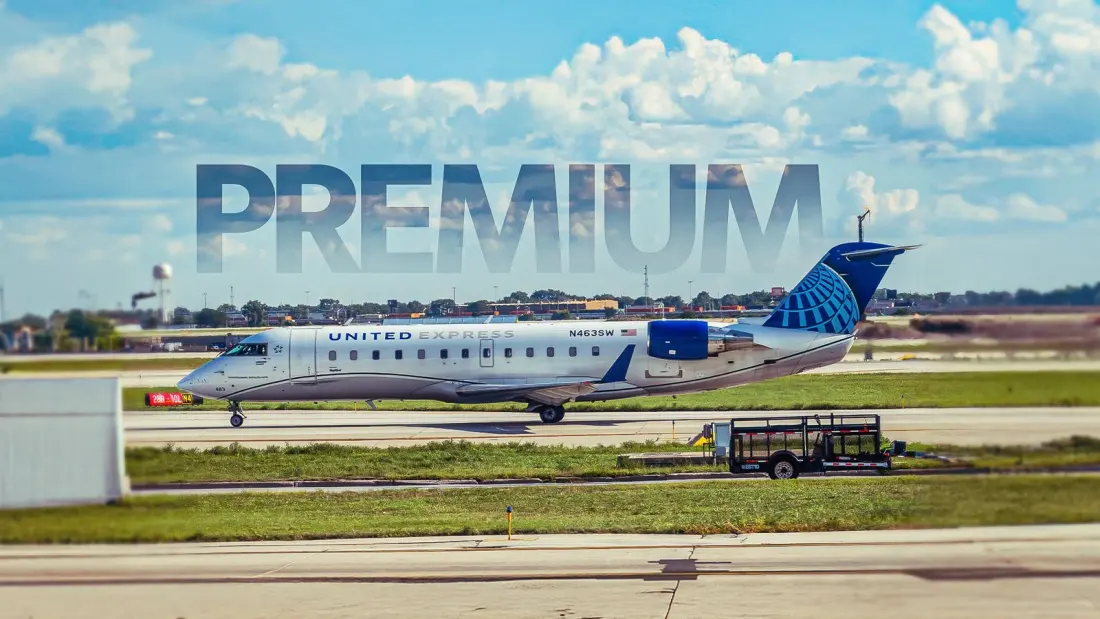
The Bombardier CRJ200 has worn plenty of unflattering nicknames from frequent flyers — cramped, bin-less, best avoided. United Airlines is now betting it can flip that reputation. Its United Express partner SkyWest is converting CRJ200s into the new CRJ450: a 41-seat, three-cabin jet with actual first class seats, extra-legroom rows and free Starlink WiFi for MileagePlus members. The first conversions were still in progress in November 2026, with passenger service expected through Chicago O'Hare from December 2026.
The redesign is all about perception. United is pulling nine seats out of the old 50-seat layout to make room for seven First seats, 16 Economy Plus seats and 18 standard economy seats. In First, the overhead bins disappear entirely, replaced by a dedicated luggage closet that opens up the cabin and makes the low ceiling feel higher. Three of the seven First seats are singles in a 1-1 layout, a rare privacy perk on any regional jet. Back in economy, larger bins finally fit standard rollaboard bags — the complaint that defined the CRJ200 for two decades.
Why bother with a 20-year-old airframe? The answer is contractual. Pilot scope clauses limit how many larger regional jets United's partners can fly, while 50-seat-class aircraft carry far more flexibility. United proved the concept with the CRJ550, a CRJ700 stripped down from 70 to 50 seats with three cabins in 2019. The CRJ450 applies the same trick to the smaller jet: fewer total seats, more of them premium, and no need to buy new aircraft. SkyWest targets roughly 50 conversions by 2028, taking about two to three weeks per plane, with United's agreement covering the first 40.
For travellers, the pitch is seamless premium itineraries from small cities. Routes like Akron-Canton and Fort Wayne into hubs such as Chicago O'Hare and Denver could let a business passenger fly United First on the regional hop, then connect into Polaris on a long-haul flight — all on one ticket. It's part of a broader United push: premium seats per North American departure are up 40% since 2021, with more than 250 new aircraft planned over two years.
Whether the maths works is the open question — seven First seats and 16 Economy Plus seats need to earn more than the nine lost economy seats cost. But for anyone who regularly connects through a smaller Midwestern airport, the days of dreading the first leg may soon be numbered.
Story via Simple Flying.