On a quiet road near Waitohi in South Canterbury, a farmer in a homemade flying machine supposedly lifted off on March 31, 1903 — over eight months before Orville Wright left the ground at Kitty Hawk. That farmer was Richard Pearse, and his story is one of aviation's most debated what-ifs.
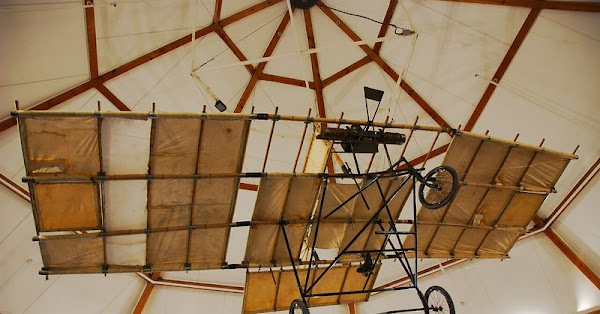
Pearse was a self-taught inventor who worked alone on a remote South Island farm, designing nearly everything himself: a lightweight two-cylinder petrol engine, an eight-bladed propeller with variable-pitch blades, a high-wing monoplane built from bamboo, tubular steel, wire and canvas, and a three-wheeled undercarriage with a steerable nosewheel. Many of these features anticipated ideas that later became standard in aircraft design. Local craftsman helped with bits and pieces — Timaru engineer Cecil Wood guided him on spark plugs and carburettors, blacksmith Billy Hayes forged the first crankshaft — but the machine was otherwise one man's work.
Eyewitness accounts collected decades later describe the machine rising a few feet, travelling perhaps 50 yards, then crashing into a tall gorse hedge. Around 55 witnesses with relevant memories were eventually identified by researchers, some dating flights to 1902 or 1904. Pearse himself never claimed priority. He wrote that his craft became uncontrollable at the low speeds it could reach, and that credit for the first successful powered flight belonged to the Wright brothers, whose sustained, controlled flights established practical aviation.
He kept inventing anyway. A patent for his flying machine was granted in 1907, and by the 1930s he was developing a 'Utility Plane' capable of vertical take-off — an early tiltrotor concept he hoped would become 'a private plane for the million'. That prototype never flew, but it survives at Auckland's Museum of Transport and Technology. Pearse died in relative obscurity in 1953.
For travellers, this is a genuinely offbeat corner of New Zealand to explore. A monument to Pearse stands at Waitohi, and a replica of his aeroplane is displayed at the South Canterbury Museum in Timaru — a worthwhile stop on any road trip through the Mackenzie Country towards the Southern Alps. It pairs nicely with the region's better-known draws: Caroline Bay in Timaru, the country towns of Temuka and Geraldine, and the rolling farmland that gave aviation one of its most stubborn underdogs.