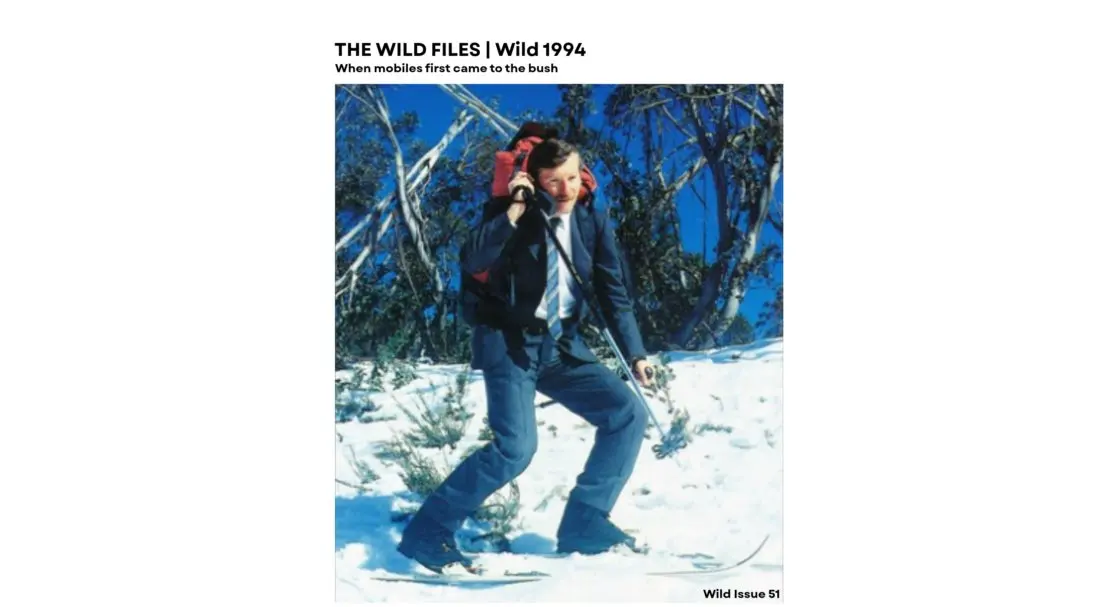
Picture a currency trader checking share prices from the summit of Mount Kosciuszko. That was the provocative image in a 1994 feature from Wild magazine, which wrestled with a question that still divides hikers today: should mobile phones belong in the wilderness?
The article, drawn from Wild #51 (Summer 1994), was written at the dawn of the mobile era. Phones back then ran on terrestrial systems — analogue or the newly arrived digital — meaning they only worked within range of base stations clustered around cities and towns. Bushwalkers and ski tourers heading into the alpine country of New South Wales and Victoria faced patchy reception at best, thanks to the obvious problem of mountains blocking the signal.
Still, the writer could see where things were heading. Telecom — the forerunner of Telstra — was already flagging satellite-based mobile technology expected later that decade, which promised coverage almost anywhere except underground. The author imagined the upside clearly: a walker with a broken femur after a cornice collapse could call police Search and Rescue directly, and overdue parties could tell rescuers they were fine to walk out on their own, avoiding needless callouts.
But the piece wasn't a tech celebration. It acknowledged that many readers would be aghast, seeing phones as another nail in the coffin of self-reliance in the outdoors. There was a sharper concern too: if rescue is just a call away, some people will attempt trips well beyond their skill level — a problem the author suggested could push emergency services towards 'user pays' charging.
The middle ground proposed is strikingly familiar to anyone who's followed the modern debate about smartphones and satellite messengers on remote trips. A leader could carry a phone, the article argued, as long as everyone agreed it stayed in the pack unless there was a genuine emergency — treated exactly like a first aid kit. Checking the football scores at every rest stop? That's what choosing your walking companions more carefully is for.
Reading it three decades later is a bit uncanny. Satellite communicators, PLBs and phones with emergency SOS features have delivered the coverage the 1994 author anticipated, and the etiquette argument — safety tool versus distraction — plays out on social media and in clubrooms every season. For anyone heading into the Australian bush now, the old advice still holds up: carry the tech, but treat it as a supplement to good planning, navigation skills and telling someone where you're going, never as a substitute.
It's a fun slice of outdoor history for gear nerds and bushwalkers alike, and a reminder that the debates we're having about gadgets in the wild started long before the smartphone. The full archive piece appears on Wild's website; the print magazine carries many more stories that never make it online.