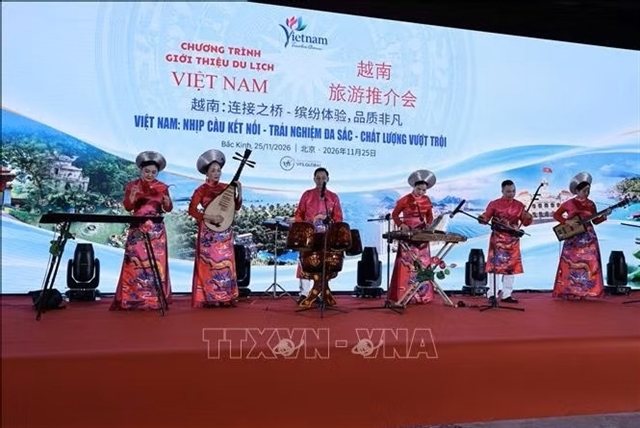
Vietnam's tourism authority has taken its sales pitch to China, running a promotion programme in Beijing on November 25 alongside the Vietnamese Embassy — part of a wider roadshow that also covers Shanghai and Chongqing. The goal: keep China among Vietnam's top international source markets and grow two-way travel between the neighbours.
The Vietnam National Authority of Tourism (VNAT) used the event to highlight how easy it now is to get there. Around 50 direct air routes connect five Vietnamese airports with 24 Chinese cities, and visa rules have loosened considerably: e-visas are available, Chinese tour groups can enter Nha Trang visa-free, and Phú Quốc island is open to all visitors without a visa. Officials framed tourism not just as an economic pillar but as a way of building people-to-people ties between the two countries.
The push sits within two bigger political frameworks. Vietnam's Politburo issued Resolution 26-NQ/TW on August 22, 2026, designating tourism a spearhead economic sector, while April 2026 saw the launch of the Vietnam-China Tourism Cooperation Year 2026-2027 by both countries' leaders. Vietnamese officials said these create room for deeper cooperation with Chinese partners on product development, service quality and destination promotion. Ambassador Phạm Thanh Bình added that the embassy will keep backing VNAT's promotion drives in the three major Chinese cities.
The events aren't all business talk — artists from the Vietnam National Academy of Music performed, tying the promotion to Vietnam Culture Day and showcasing the country's cultural identity alongside its beaches and cities.
Why should a traveller care? If you're a Chinese passport holder, the practical takeaway is clear: getting to Vietnam is cheaper and simpler than it's been in years, with Nha Trang's group visa exemption and Phú Quốc's blanket visa-free entry removing paperwork entirely, plus a dense web of direct flights to pick from. For everyone else, the signals point to a destination investing heavily in service quality and new tourism products ahead of the 2026-27 cooperation year — expect more routes, better experiences and heavier promotion in the next couple of years. Chinese interest tends to shape resort development and flight networks broadly, so the ripple effects reach other visitors too.