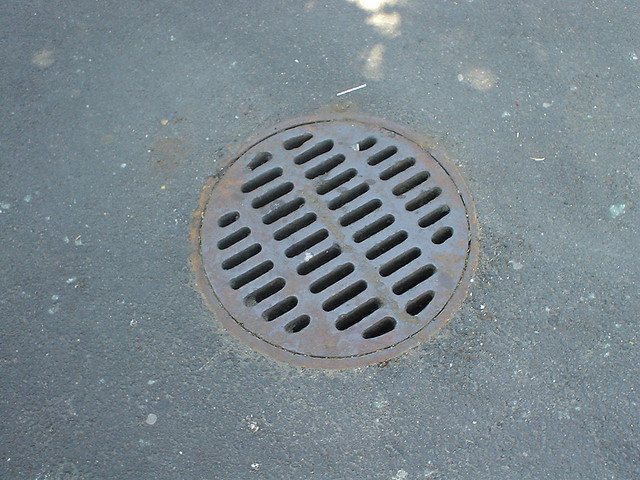
Stand near an ordinary-looking drain grate in central London and you might hear something surprising: moving water. That's the River Fleet, the biggest of London's buried rivers, still running its full course from Hampstead to the Thames — just entirely out of sight.
The Fleet's fall from grace is a story of urban growth in fast-forward. Its name comes from the Anglo-Saxon 'fleot', meaning tidal inlet, and for over a thousand years ships docked at its mouth on the Thames. In medieval times its waters ran clear. Then mills, tanneries and meat markets moved in along its banks, and the river became a dumping ground for blood, sewage and dead livestock. It slowed, silted up each summer and turned into an open sewer lined with slums and prisons.
There was one attempt at a rescue. After the Great Fire of 1666, Sir Christopher Wren reshaped the lower Fleet, and by 1680 it had become the New Canal — grandly dubbed the 'Venice of England'. It flopped. Ships barely used it, it still smelled terrible, and within a generation it was useless. The river was arched over from Holborn to Fleet Street in the 1730s (Fleet Street still carries its name), and the final stretch down to the Thames vanished beneath what is now New Bridge Street.
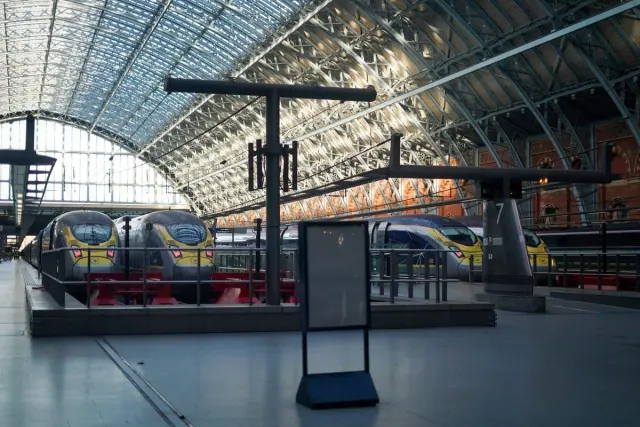
The last chapter came in the 1860s, when Joseph Bazalgette folded the sunken Fleet into his revolutionary new sewer network — a piece of Victorian engineering so ambitious it included massive iron conduits running under St Pancras station. The river's upper reaches in Hampstead and Kentish Town disappeared shortly after.
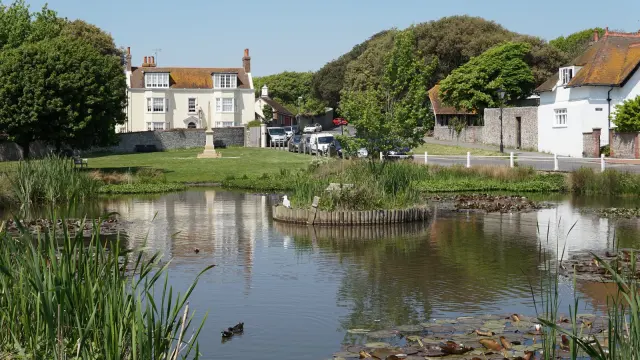
It hasn't stopped flowing, though. The buried Fleet is still tidal, and urban explorers who photograph its tunnels at low tide have to watch the clock: the water rises to the roof of the chamber in about half an hour, and even at its lowest it stands well above a person's head. This is not somewhere to wander into on a whim — the tide has drowned the unwary. For most of us, the safest encounter with the Fleet is at its source: the ponds on Hampstead Heath, where you can see it roughly as it looked before London swallowed it. Alternatively, trace its hidden route on foot above ground — Holborn, Fleet Street and New Bridge Street all follow its old course.
For travellers, the Fleet is a reminder that London is really two cities: the one you walk through, and the medieval one still lurking underneath. Names on the map, odd street levels and mysterious gratings all tell the same story — a river turned brook, then ditch, then drain. Anyone interested in hidden London, industrial history or a walk with a theme will find following the Fleet one of the more unusual ways to see the capital.