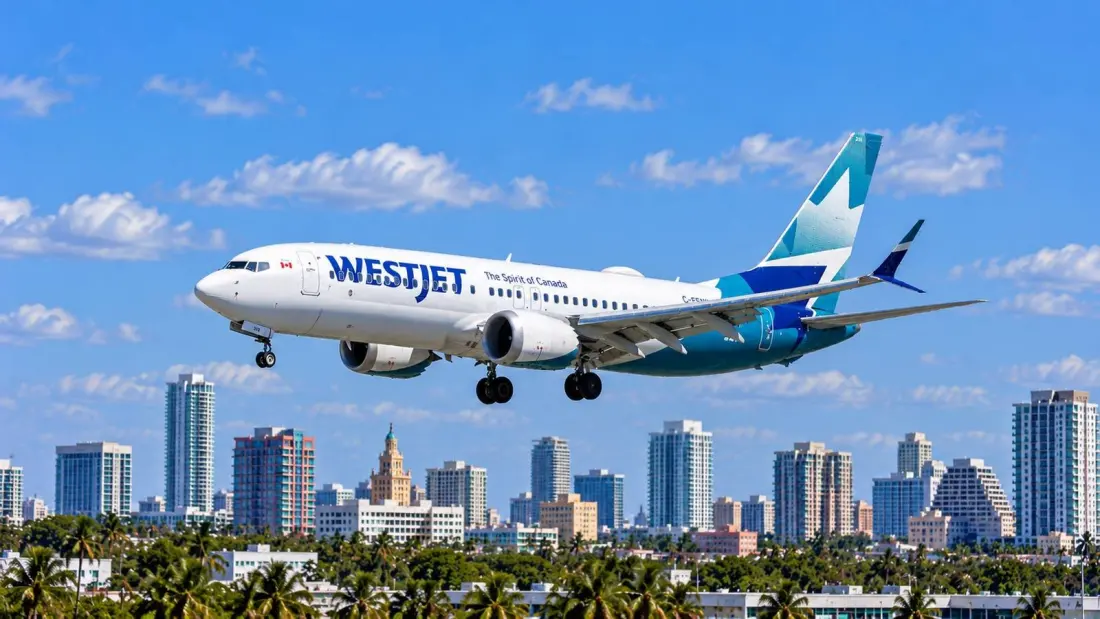
A WestJet Boeing 737 MAX 8 picked up fresh damage at Toronto Pearson International Airport on the evening of Tuesday, October 27, 2026, when its winglet struck a parked catering truck. Emergency crews were called out around 8:15 PM, but there was a key detail early social media posts got wrong: the jet wasn't taxiing under its own power. Both the airline and Canada's Transportation Safety Board confirmed the aircraft, registration C-FRYV, was being towed to an overnight parking pad at the time, with no passengers or crew on board and nobody hurt. The plane had landed about two hours earlier after flight WS2221 from Puerto Vallarta, Mexico.
The TSB says it is collecting information but won't deploy investigators, and neither the size of the repair bill nor any knock-on schedule disruption has been confirmed.
What makes this story bigger than one bent winglet is how routine these collisions have become. WestJet itself had a near-identical moment back in 2019, when an aircraft being pushed back at Vancouver reversed into a catering truck. Since catering vehicles work right up against wings, engines and doors using hydraulic lifts, the margin for error is thin. Recent examples read like a highlights reel of ramp mishaps: a United Airlines A320 hit at Washington DC in May 2026 was written off and sent for scrapping; a Singapore Airlines A380 had an engine cowling struck in April 2026, forcing a substitute aircraft; a LATAM 777 was pierced by a truck at Milan in March 2025 and sat out of service for nearly three weeks.
The numbers behind the trend are sobering. Data from the International Standard for Business Aircraft Handling programme, cited by AviationPros, puts vehicles and ground equipment in 26% of ground incidents, with towing and pushback accounting for another 25%. IATA's 2025 Annual Safety Report estimates ground damage costs the industry over $4.5 billion a year — a figure that could reach $9.7 billion within 15 years without better prevention. Consultant Steven Bentley puts a typical ramp accident at around $250,000 in direct costs, with indirect costs potentially ten times that: replacement aircraft, rebooking, hotels, crews, and lost flying days. The Singapore case shows the cascade effect — a delayed Frankfurt departure turned into a cancelled return flight because of the airport's curfew.
For travellers, the takeaway is that a collision you never see can still wreck your itinerary. Even an empty, parked aircraft being towed can end up grounded for weeks if a fuselage or engine cowling is damaged, and airlines often can't magic up a spare widebody at short notice. If you're flying during busy periods or on routes with limited aircraft availability, it's worth knowing your rights around rebooking and compensation, and keeping an eye on your flight status — especially after any incident at a major hub like Toronto Pearson. For now, WestJet's MAX 8 is out of action pending repairs, and the industry's most expensive everyday problem rolls on.
Simple Flying