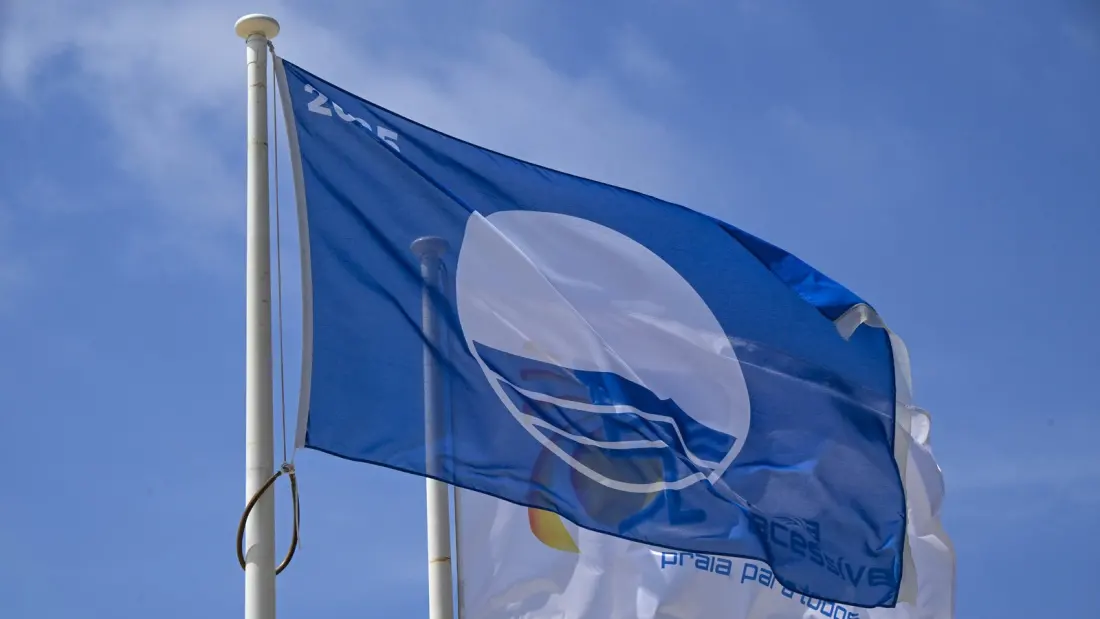
Spotting a Blue Flag flying at a beach is reassuring — but many travellers book trips without knowing what the award really stands for. The flag is handed out by the Foundation for Environmental Education (FEE), a Copenhagen-based body running one of the world's most recognised beach certification schemes, covering beaches and marinas across the globe.
To earn the flag, a beach has to tick boxes in four areas: environmental management, education, safety and accessibility. In practice that means regular water sampling throughout the season against strict bathing-quality standards, clear signage about the local ecosystem, robust safety provisions, and sustainable management that addresses everything from carbon emissions to pesticide and pollutant runoff. Beaches must also be kept clean and waste-free, with sensitive habitats openly protected.
Where do you find them? Europe dominates. Spain leads the world with 676 Blue Flag beaches, while Greece, Italy and Turkey each hold several hundred. But a flag is not a promise of the perfect beach day. It says nothing about water temperature, how crowded the sand will be, or whether the weather will behave. It also isn't a safety guarantee — a certified beach can still suffer an oil spill or a temporary water-quality warning, which suspends the certification. Playa Hermosa in Costa Rica is a useful cautionary example: it holds a Blue Flag yet is considered one of the world's most dangerous places to swim because of powerful surf.
The practical move is to use the flag as a starting point, then do a little homework. Cross-check current water quality on government or regional authority websites, since month-old test results don't reflect this week's conditions. Look at the Blue Flag Site Map before booking — it lists a beach's location, season length, facilities and geology, plus contact details for the local authority. On the ground, read the display boards for hazards like riptides, jellyfish or strong surf, and check whether lifeguards are actually on duty.
One common mix-up worth clearing up: Blue Flags are not the same as the coloured warning flags you see on the sand. A red flag signals dangerous currents, purple warns of harmful marine life, and similar colour-coded systems operate worldwide with regional variations. Learn them before you swim.
It's also worth remembering that the Blue Flag is not a ranking of the world's best or prettiest beaches. Some wild, remote stretches simply can't meet criteria like accessibility and waste management, and flying the flag costs money — authorities in Spain's Balearic Islands have let their numbers fall in recent years by redirecting funds elsewhere.
So who should care? If you're travelling with kids, have mobility needs, or just want confidence that the water is monitored and the beach is managed responsibly, the Blue Flag is a genuinely useful filter. Treat it as evidence of good management rather than a seal of perfection, pair it with a quick check of live conditions, and you'll pick your next beach with far more confidence. Story via Islands.