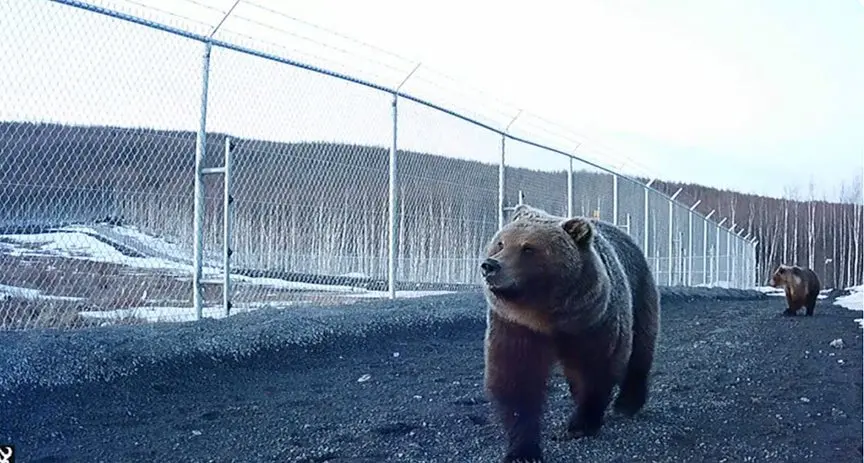
A wildlife management story from Canada's western Arctic has turned grim, and it carries a real lesson for anyone travelling north. Inuvik, a town of roughly 3,500 people in the Northwest Territories, had a dump problem — except the problem was bears. More than 40 grizzlies were regularly feeding at the town landfill in 2025, and not just any bears: wildlife officers estimate three to four generations had grown up on dump food, passed down like a family tradition.
This year, Inuvik became the first community in that part of the Arctic to tackle the issue with an electric fence around the landfill, at a cost of about $700,000. The idea was simple — cut off the free buffet and the bears would return to natural food sources. It didn't work. The animals had never learned to hunt or forage like normal grizzlies. Some began wandering into town itself, while others circled the fence endlessly looking for a gap.
Toby Halle, a Renewable Resources officer in Inuvik, described the scene to the CBC: bears doing laps around the perimeter, emaciated and sickly, with nowhere else to go. "We don't know what to do with them," he admitted. In the end, officials shot 28 grizzlies. It's a stark outcome, and local mayor Peter Clarkson acknowledged it was drastic — though arguably unavoidable given how deep the dependence ran. Officials now hope that within a couple of years, the surviving bears in the area will disperse and adapt to natural food.
Why does this matter to travellers? Anyone heading to Canada's Arctic — for the Dempster Highway drive, northern lights viewing, or a Mackenzie Delta visit — passes through or near communities like Inuvik, where wildlife and human infrastructure are inseparably linked. Open dumps and habituated bears are a long-standing issue across northern Canada and Alaska, and Inuvik's experiment shows how hard they are to unwind. It's also a reminder to treat wildlife encounters in the far north with caution and respect: a bear near town is not a photo op, it's a sign something has gone wrong in the food chain. For travellers who care about ethical wildlife tourism, this is exactly the kind of story worth following — how northern towns manage waste directly shapes whether bears live or die.
Story via ExplorersWeb.