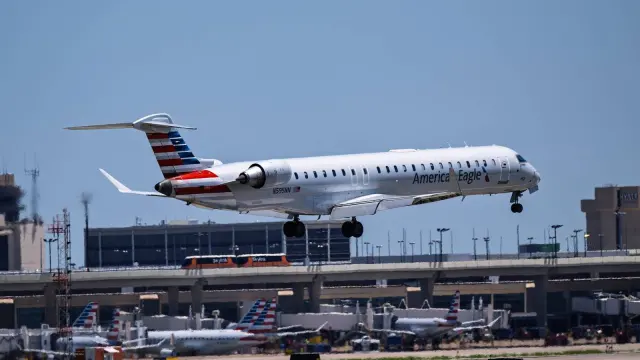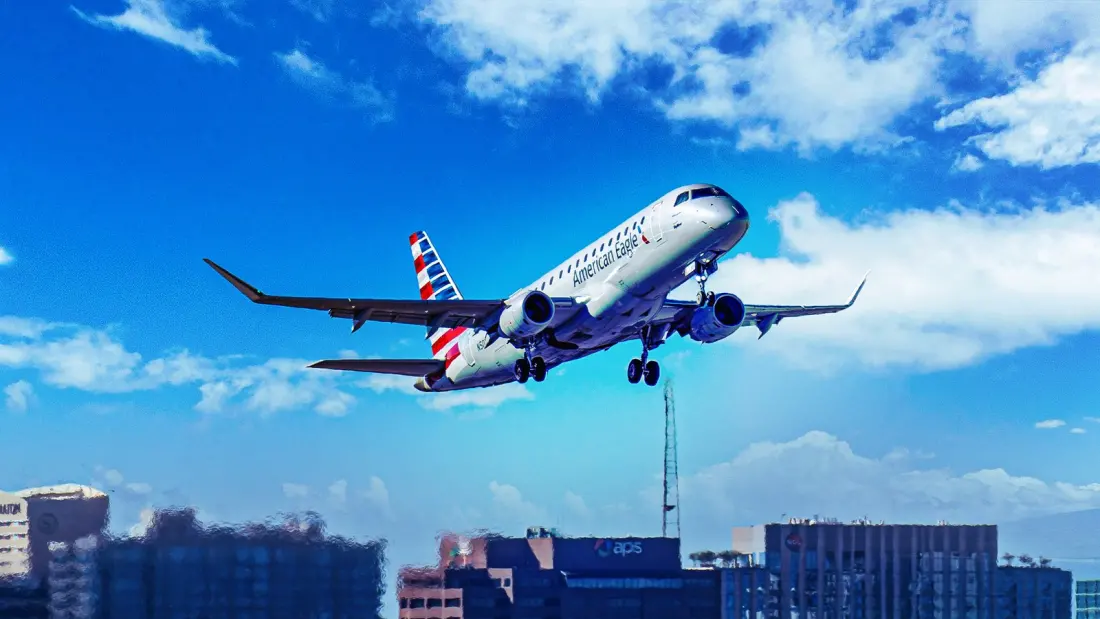
If you've flown from a small US city to a big hub lately, chances are you were on an Embraer E175 — a Brazilian regional jet that first flew more than 20 years ago and now holds roughly 80% of its market segment. American Airlines alone uses the type, flown by its partner Envoy Air, to serve 174 airports across 43 states.
The plane's dominance isn't really about engineering. It's about contracts. Pilot agreements at American, Delta and United — the so-called scope clauses — cap the regional jets flown by partner airlines at 76 seats and a maximum takeoff weight of 86,000 lb. The E175 slots neatly under both limits, while Embraer's newer, more efficient E2 variant is too big to qualify. Carriers like SkyWest, Republic and Envoy keep ordering the older jet because it's the largest, most comfortable aircraft the rules allow. Union caps on fleet counts matter too: United can outsource no more than 255 aircraft in the 51-76 seat class, and American's larger regional jets are limited to roughly 40% of its narrowbody fleet.
For passengers, the E175 is a genuinely pleasant way to fly short hops. In the standard US layout it carries exactly 76 people — 12 in first class, 64 in the main cabin — with two-by-two seating, so nobody draws the middle seat. The 'double-bubble' fuselage gives it a wider, quieter cabin with real overhead bins, closer to a mainline jet experience than the cramped CRJ200s and ERJ145s of the past. With Bombardier's CRJ line and Mitsubishi's SpaceJet both gone, no competing aircraft in this class is even in production.
The bigger story is what this aircraft keeps alive. Regional airlines operated a third of all US domestic flights in 2024 but carried just 14% of passengers — the vital feeder legs from small fields to hubs. That network has been shrinking for decades: departures from non-hub airports fell 47% between 2000 and 2018, and the pandemic accelerated the retreat. Pilot shortages made it worse, forcing regionals to nearly double starting first officer pay from $52 an hour in 2021 to $93 by 2024. More than half of today's certified pilots hit the mandatory retirement age of 65 within two decades, so pressure on small-community service isn't going away.
Embraer's would-be successor, the E175-E2, is a casualty of all this. With no US customers possible under the scope clauses, the programme is paused, with entry into service pushed to 2029 or later. The E2 does have fans abroad — it burns about 16% less fuel and cuts emissions roughly 30%, and European carriers use the larger E195-E2 on thin routes where an A320neo would be overkill. But as Embraer's own CEO Arjan Meijer admitted at a November 2024 investor day, the first-generation jet is so well suited to the US market that fuel savings can't justify the fight to rewrite union terms.
For travellers, the takeaway is simple: that unglamorous 76-seater is often the only thread tying a small city to the global network — and it'll be around for years yet. — Simple Flying