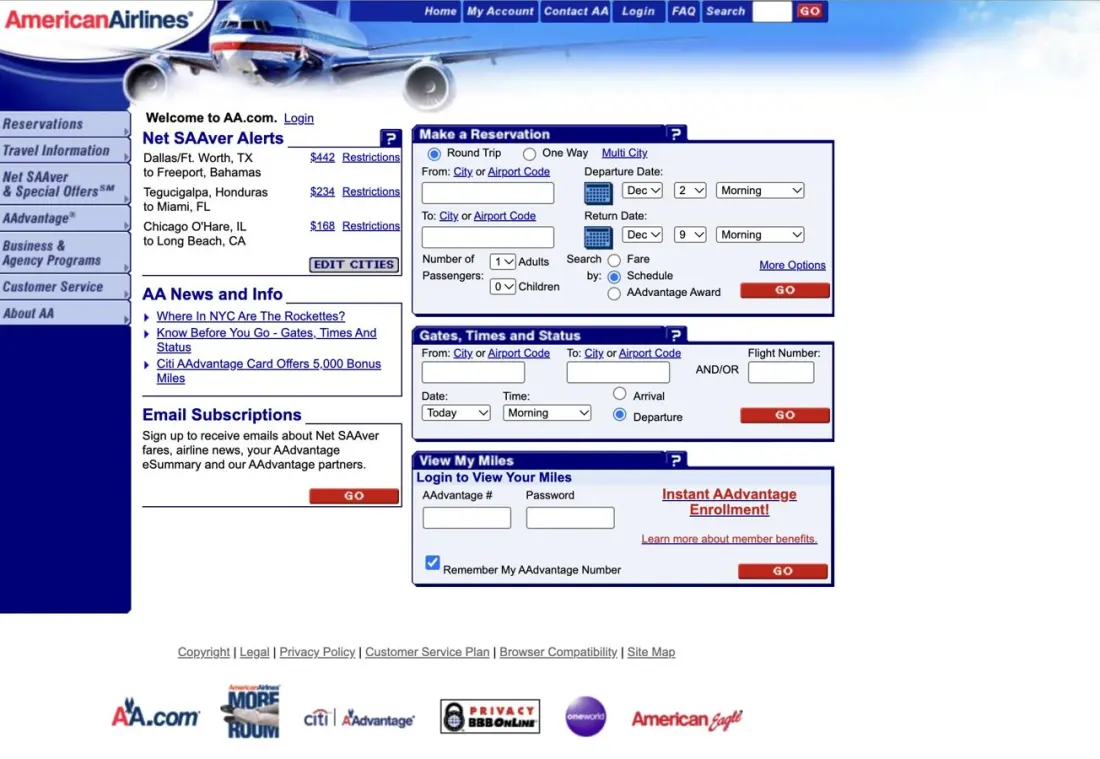
American Airlines used to charge AAdvantage members $75 for booking an award ticket within 21 days of departure. The fee vanished in January 2020, but a candid podcast appearance by the woman who ran the program has revived the question of why it existed at all — and why similar charges are still alive elsewhere.
On the Airlines Confidential podcast, Maya Leibman, American's former Chief Information Officer and one-time head of AAdvantage, admitted the awkward truth: the close-in fee had originally covered manual work, but long before it was scrapped, the ticketing process ran entirely on its own. Her words were blunt — the transaction was, in her recollection, all done automatically, and yet the charge persisted. In other words, the justification for the fee disappeared while the fee itself kept collecting $75 a pop from anyone without elite status to waive it.
That admission matters because airlines usually defend fees with functional arguments: processing costs, system maintenance, the burden of expedited service. Leibman's account punctures that framing. Keeping a reservation system running costs money whether you book five months out or five days out — it doesn't explain why an otherwise identical automated award booking suddenly costs $75 more inside three weeks. The honest answer is that American could collect it, so it did.
The spirit of that fee lives on at two other North American carriers. Alaska Airlines' Atmos Rewards program charges $20 per person, each way, for booking an award on a partner airline — up from $12.50 as of July 2026, though holders of the eligible Summit credit card get out of it. Air Canada's Aeroplan adds C$39 per ticket whenever a redemption includes a partner flight. These aren't government taxes, even though they're often bundled into the same charges section at checkout. You do the searching, pick the flights and complete the booking yourself; the surcharge is purely for the privilege of spending your points on a partner.
The practical cost adds up fast. A family of four booking a round-trip partner award through Atmos Rewards without the card waiver would pay $160 in fees alone — on top of the points already spent. That said, the article's author concedes one thing: at least these fees are disclosed. A savvy redeemer can factor the cash component into their valuation of a points currency, and a program with an annoying fee can still beat a fee-free one if it saves thousands of points or offers better availability. The fee doesn't become justified — it just becomes calculable.
Why should holiday travellers care? If you redeem points rather than pay cash, these charges directly affect what your miles are worth and which program you should credit flights to. Leibman's confession is a useful reminder to treat every airline fee with skepticism, to check whether a credit card waiver applies, and to compare total out-of-pocket cost — points, taxes and fees — before choosing where to park your loyalty.