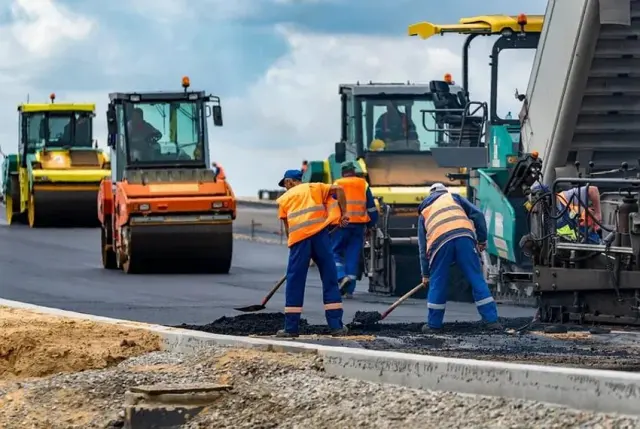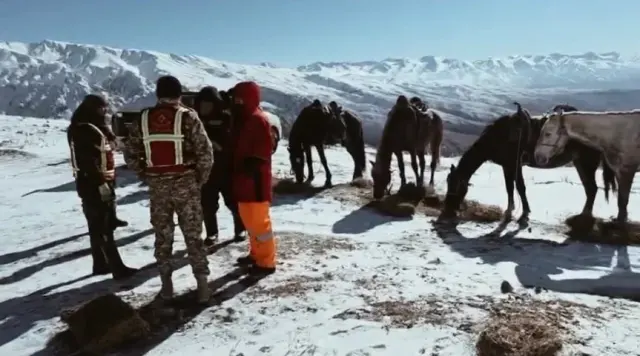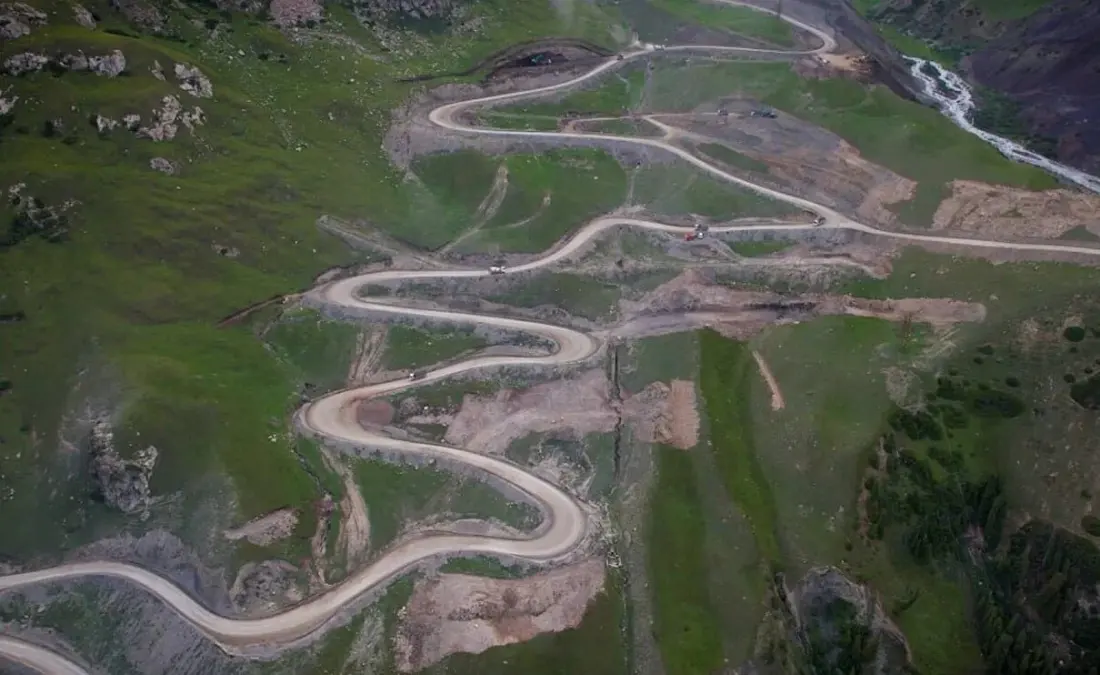
Kyrgyzstan is building a third road link to China, and it's an ambitious one: the Barskoon–Bedel road, a roughly 161-kilometre route running almost entirely through high-altitude terrain, much of it above 3,000 metres in the remote Tian Shan.
Transport and Communications Minister Talantbek Soltobaev explained the reasoning to 24.kg. Right now, freight between the two countries funnels through just two corridors — the Osh–Sary-Tash–Irkeshtam road in the south and the Bishkek–Naryn–Torugart road in the centre. With cargo volumes climbing sharply, both border checkpoints are getting clogged, with queues and congestion becoming routine. A third crossing is meant to relieve that pressure.
The numbers show why the new route makes sense. Once finished, trucks hauling goods from Aksu in China's Xinjiang region to Bishkek should arrive seven to eight hours faster than via Torugart, with the journey shortened by more than 500 kilometres. That's a serious efficiency gain for a route that has historically depended on winding mountain passes.
Construction officially kicked off on August 27, 2025, with completion and opening targeted for 2030. Kyrgyzstan is funding the project from its national budget, with a Chinese company acting as general contractor — a fitting arrangement given that the road's main job is to speed up trade between the two neighbours.
For travellers, the appeal is more long-term. The route starts near Barskoon, on the southern shore of Lake Issyk-Kul, one of Central Asia's most popular holiday spots, and climbs toward the Bedel pass on the Chinese border. When it opens, it could become a dramatic new overland corridor for the growing crowd of road-trippers and motorcyclists who cross between Central Asia and Xinjiang — though until then, Torugart and Irkeshtam remain the only options, and independent travellers should expect paperwork, permits and occasional waits at both.
It's also a signal of where Kyrgyzstan is heading. The country has been leaning hard into its position between China and Europe, upgrading roads and passes that were little more than tracks a decade ago. Even before 2030, the construction zone itself is reshaping access to some of the most remote valleys in the Naryn region, an area popular with trekkers and horse-tour operators. Anyone planning a self-drive loop around Issyk-Kul in the next few years should keep an eye on road status updates, as heavy construction traffic and works will affect the southern shore and the Barskoon valley.
Short version: a freight project now, but by the end of the decade it may open up one of Central Asia's most spectacular drives — and cut hours off any overland crossing between China and Kyrgyzstan.