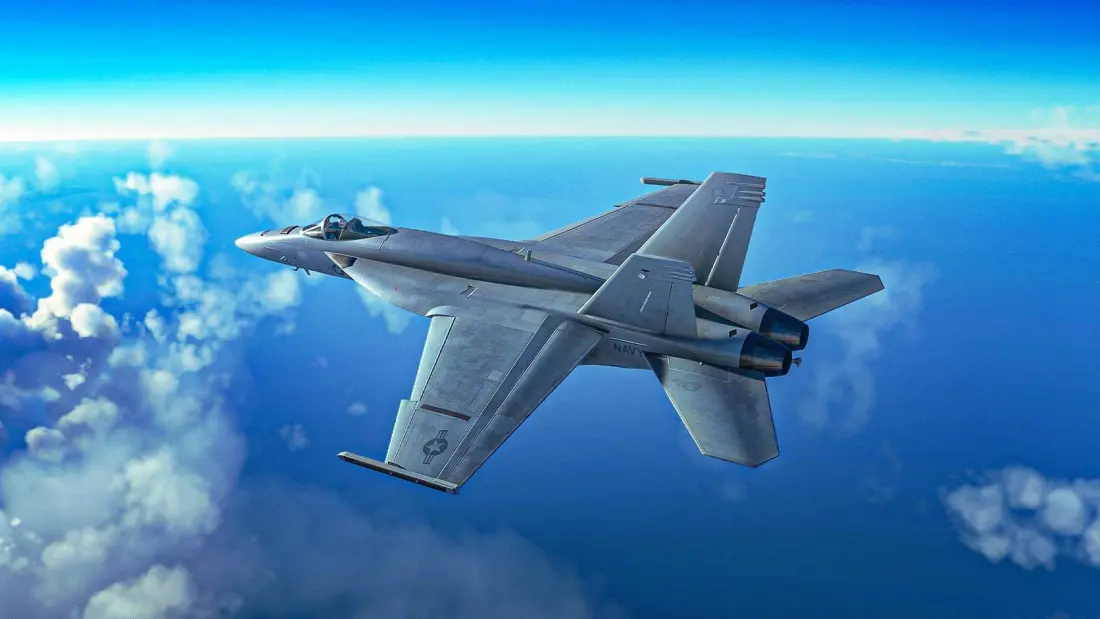
On paper, the trade still looks baffling. The Grumman F-14 Tomcat, the US Navy's flagship carrier fighter until 2006, could hit around 1,544 mph (2,485 km/h) at altitude — comfortably above Mach 2. Its replacement, the Boeing F/A-18E/F Super Hornet, tops out at roughly Mach 1.8, about 1,190 mph (1,915 km/h). The Navy deliberately handed its carrier decks to an aircraft some 350 mph slower. The reasons say a lot about how military priorities shifted after the Cold War.
The Tomcat's speed existed for one job: racing out to intercept Soviet bombers before they could threaten the carrier. Built around the powerful AN/AWG-9 radar and the AIM-54 Phoenix missile — which could engage targets beyond 100 miles under the right conditions — the F-14 could track two dozen targets and attack six simultaneously. It was a fleet-defence specialist, and a superb one. But when the Soviet Union collapsed, so did the threat it was designed for.
What replaced that single-minded intercept capability was versatility. The Super Hornet carries its weapons on 11 stations, handling air-to-air combat, laser-guided bombs, JDAMs, HARM anti-radiation missiles and standoff weapons. It can even act as an airborne tanker for other aircraft using a buddy-refuelling store. One airframe covering fighter, strike and refuelling duties meant fewer specialized types to train for, supply and maintain at sea.
Money did the rest. The Tomcat's signature variable-sweep wings — swept back for speed, forward for slow carrier approaches — were a mechanical marvel and a maintenance nightmare. According to figures cited by Simple Flying, the Super Hornet cost roughly half as much to buy and about a third as much to maintain, while being more reliable and easier to land on a moving deck. Grumman fought back with the Super Tomcat 21, an upgraded proposal with better engines and avionics, but the Navy chose the lower-risk, multirole option. Critics, including Vietnam ace and Congressman Duke Cunningham, argued the Navy was giving up too much air-to-air edge; a 1993 GAO report examined exactly that question.
The Tomcat's story didn't quite end there. Fearing that spare parts would reach Iran — one of the few countries still flying the type — the Pentagon ordered most retired F-14s destroyed in Arizona, with the last scrapped in 2009. Hollywood then softened attitudes: after Tomcat's starring role in Top Gun: Maverick, the Senate unanimously passed the 'Maverick Act' on 28 April 2026, which would move three surplus airframes from the Arizona boneyard to the US Space and Rocket Center in Huntsville, Alabama, at no cost to taxpayers, provided they are demilitarized. It's a narrow exception to a two-decade scrapping policy — and could even put one flying Tomcat back over the US.
Why care? Aviation history like this shapes the museum visits and airshow moments travellers actually plan trips around — and Huntsville's rocket centre may soon have a genuine Tomcat to see. The Super Hornet, meanwhile, now faces its own successor question, proving that even the most versatile aircraft eventually meets the same fate as the legend it replaced.