For years, Hà Nội expats have treated Tây Hồ — the lakeside district on the city's northern edge — as a punchline: the soft landing of imported sourdough, yoga studios and bars where the only Vietnamese faces belong to the staff. Columnist AF Reeves was one of the loudest mockers, having spent the better part of a decade ribbing newcomers about the district's bubble. Then, in a twist he admits was a long time coming, a tuk-tuk carried everything he owned from Văn Miếu to a small house with a garden on Tứ Liên street. Tây Hồ. He now lives there.
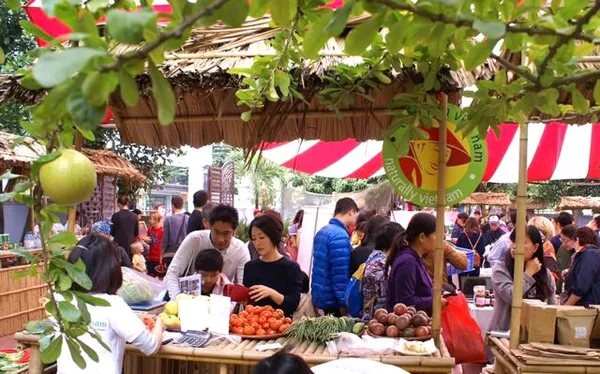
The move has forced a reappraisal. Far from the stereotype, his corner of the district turns out to be surprisingly local: a meat market nearby, old-school corner grocery shops (tạp hoá), and a bia hơi — a draught beer joint — where, two months in, he's still the only foreigner, with locals drinking there rather than serving him. Food delivery from around the world arrives at his door fast enough to beat him to a restaurant, a convenience he calls dangerous.
He draws a distinction, though. The energy does change as you head up Xuân Diệu towards the lake, the stretch he still sees as the home of the sunrise-salutation crowd that turns into DJs after dark. He's happy to be past that scene.
There's a bittersweet backdrop. Big parts of the area have already been demolished, and since July 2025 Tây Hồ technically no longer exists as a district — his address is now officially in Hồng Hà ward, lumped in with parts of the old Hoàn Kiếm area. On paperwork, he jokes, that makes him practically an Old Quarter resident.
The expat ecosystem is shifting too. Rule changes affecting English teaching in state schools are squeezing the work that kept most foreigners in the city, and as hours dry up, many long-term residents may leave — taking with them the community projects and businesses that gave the area its character. Reeves arrived with what he calls a misplaced arrogance about the 'authentic' expat experience, and is only now committing to the neighbourhood just as its lights seem to be coming up.
For travellers, this is a useful corrective. Tây Hồ is genuinely two places at once: the polished lakeside strip of Western cafés and nightlife, and quieter backstreets with wet markets, corner shops and beer halls where foreigners are a rarity. If you're staying in Hà Nội for more than a few days, it's one of the few districts where you can have both within a short walk — and where a side street can still surprise you.