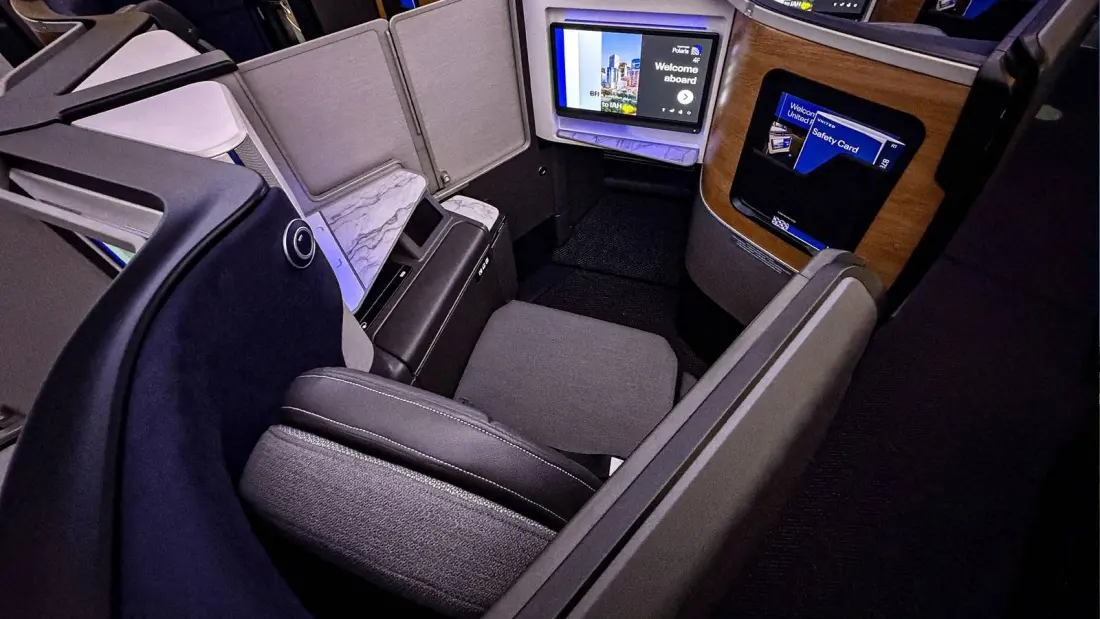
That sliding privacy door on a new business class suite looks like a simple luxury add-on. In regulatory terms, it is anything but. Aviation authorities treat a suite door as a potential obstacle between a passenger and an emergency exit, which means every design has to clear a demanding certification process — one that can trail months behind the aircraft itself.
The baseline rule comes from the FAA: any commercial aircraft must be fully evacuable within 90 seconds, in total darkness, with half the exits blocked and passengers simulating panic. A door that jams, latches awkwardly or disorients a half-asleep passenger could eat into that window, so regulators require extensive documentation of latching mechanisms, breakaway features and egress paths before signing off.
Then there is crash testing. Every seat model with a door is put through 16g dynamic sled tests replicating a survivable crash landing. The door, its locking pins and its track must stay structurally intact — and crucially, airframe flexing must not jam the door shut with someone inside. Rapid decompression adds another layer: tightly sealed suites can disrupt pressure equalisation and oxygen mask deployment, so engineers must prove air flows freely between the enclosed suite and the rest of the cabin.
Because standard airworthiness rules never anticipated partial-height sliding doors, airlines and seat makers routinely need special exemptions or tailored conditions. These approvals are slow. When Qatar Airways developed its Adient Ascent seat for the 787-9, compliance work on the sliding door contributed to a two-year delay, with FAA certification only landing in January 2021.
Even once approved, the door's use is restricted. It must be locked open during taxi, takeoff and landing, giving cabin crew clear sightlines to every passenger and exit. Doors can only close once the aircraft reaches stable cruise — and crew can slide any door open instantly from the aisle. Privacy, in other words, is strictly a cruise-altitude amenity.
The certification lag produces an odd sight familiar to frequent flyers: brand-new aircraft flying with their headline feature disabled. United's 787-9 Polaris suites entered commercial service on 22 April 2026 with doors locked open; the FAA only signed off the mechanisms about three months later, in August, after which United unlocked them plane by plane. American Airlines hit similar delays with its 787-9 and A321XLR suites, and KLM has occasionally blocked off premium seats pending clearance.
For travellers, this matters in two ways. If you are booking a premium fare specifically for a closed-door suite, check whether the route's aircraft has full door approval — airlines increasingly publish disclaimers and notify passengers when doors are locked open. And if you find the whole thing absurd, the logic at least holds: a fully airworthy plane can still be legally required to fly with its privacy doors open until the specific exemption clears. What marketing sells as a cocoon is, to regulators, a carefully engineered evacuation variable.
Credit: Simple Flying.