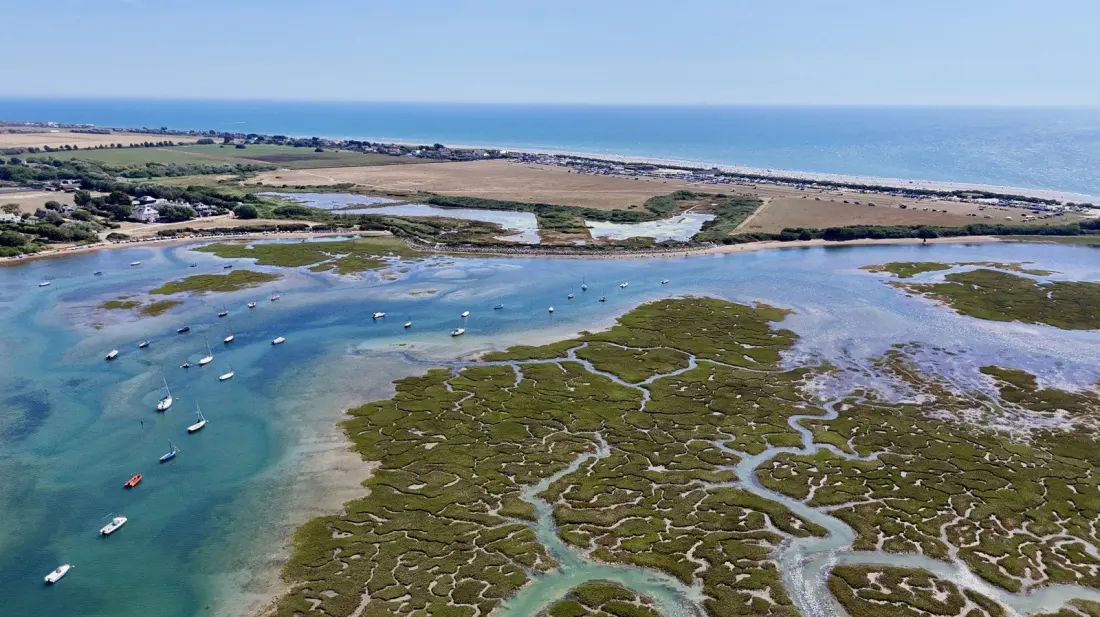
A short drive east of Portsmouth, Chichester Harbour packs a surprising amount into 29 square miles. It's the largest natural harbour in south-east England and, by mooring count, the biggest recreational harbour in Europe — home port to more than 9,000 boats. Yet it's also the second-smallest of England's national landscapes, and when the tide comes in, up to 41% of it disappears under water. That tidal rhythm is the whole character of the place: salt marshes, mudflats and winding creeks that flood twice a day, with a tidal range of around 15 feet.
The water is the main event. There are 11 square miles of navigable water and 17 miles of boatable channels, plus straightforward access to The Solent and the English Channel. Sailors can hop between small towns along the shore — Bosham, Birdham, East Wittering with its quiet coastal feel — and Itchenor is the practical hub, home to Fluid Adventures for kayak and paddleboard hire or guided trips. Chichester Harbour Water Tours, also based in Itchenor, runs fishing trips, seal-watching cruises and general harbour cruises, and has picked up a Tripadvisor Travelers' Choice Award.
Anglers get both shore and boat fishing here, with fly fishing and kayak fishing growing fast in popularity. Bass and mullet are the usual catches, with bream, eels, mackerel and the odd wrasse or tope also showing up. Even at low tide, fish linger in the shallow pools. One rule worth knowing: bait-digging is restricted, so check the Conservancy's hand-gathering bylaws before you start digging.
The tides dictate your day. Shallow creeks can empty completely at low water, so boaters and anglers need to check tide tables before planning anything. If you'd rather stay on land, there are more than 60 miles of walking and cycling paths circling the harbour, and the city of Chichester itself — about six miles from Portsmouth — makes a good base, with its cathedral, parks and a pleasantly artsy streak.
For UK travellers, this is an easy weekend escape that feels far more remote than it is: under two hours from London by car or train, yet with landscapes you'd normally associate with somewhere much wilder. It suits sailors, kayak anglers, birdwatchers drawn to the wetlands, and anyone who wants a photogenic stretch of coast without crowds or hype. Just build your plans around the tide, and you'll quickly see why so many visitors start plotting a return trip before they've left.