Wizz Air is back in growth mode. The Hungarian low-cost carrier carried a record 8.7 million passengers last August, up 26% year on year, with planes 95.6% full. Quarterly traffic hit 21.2 million, and just a few years after dozens of its jets sat idle over Pratt & Whitney engine problems, only 27 aircraft remain grounded — a number the airline expects to reach zero by the end of 2027.
But the expansion looks different this time. Wizz has walked back its earlier ambition of around 500 aircraft by 2030, now targeting a fleet of roughly 335 by financial year 2030, along with €10 billion in annual revenue and a 10% EBIT margin. That would mean nearly doubling passenger numbers from 69.7 million to about 127 million a year.
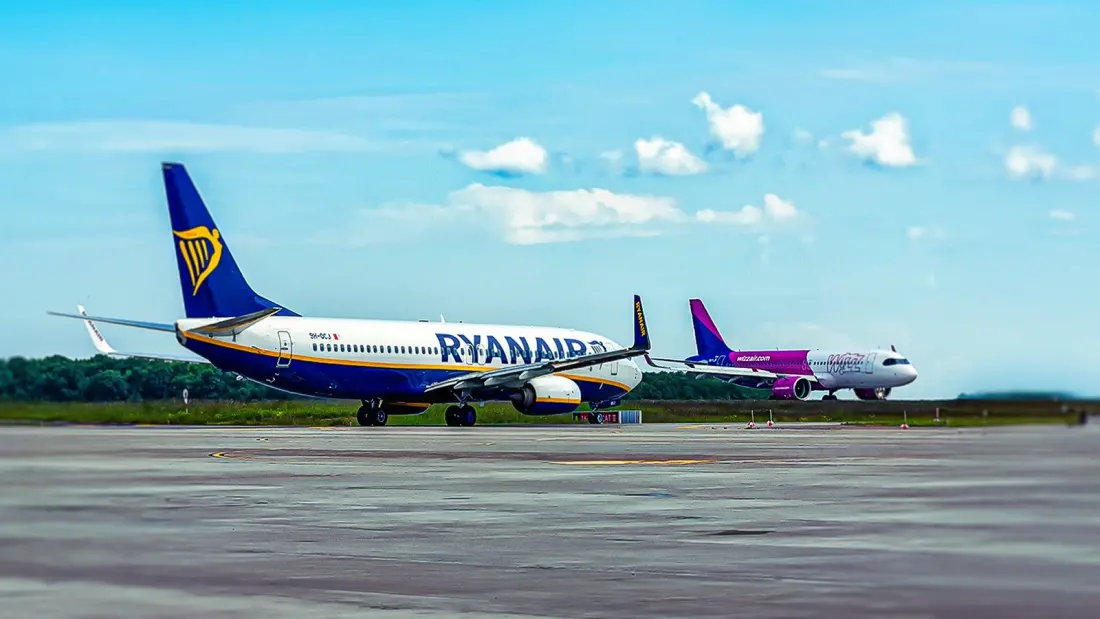
Here's the catch: filling seats isn't the problem — making money from them is. In the second quarter of 2026, Wizz posted a net loss of €198.2 million while Ryanair made €537.7 million. Fascinatingly, both carriers earned almost identical revenue per passenger (around €71), and Wizz actually squeezed more from extras like bags and seat selection — €33.04 per passenger versus Ryanair's €23.97. The gap is cost: Wizz spent €79.75 per passenger to operate each trip against Ryanair's €62.13, leaving Wizz with a loss of roughly €8.65 per flyer while Ryanair banked €9.39.
Both airlines are trimming for winter, too. Wizz cut planned second-half capacity by 5%, while Ryanair lowered its annual passenger target from 216 million to 214 million, estimating the restraint could reduce winter losses by €70–100 million. Neither is short of demand — they're just refusing to fly marginal routes when fuel is expensive and yields are soft.
Ryanair holds the stronger hand going forward. It repaid its last €1.2 billion bond this year and sits on about €2.7 billion in net cash, while Wizz carries €5.13 billion of net debt. Ryanair also has up to 300 Boeing 737 MAX 10s on order — aircraft with 228 seats that burn 20% less fuel per seat than the 737-800s they replace — underpinning its goal of 300 million annual passengers by 2034. Wizz, meanwhile, is concentrating on its Central and Eastern European heartland, with selective pushes into Italy, Spain and London Luton, and can even pick up routes Ryanair has abandoned, such as Santiago de Compostela.
For travellers, this means cheap fares aren't going anywhere on either airline, but route maps may shift. Wizz's grounded aircraft returning to service will add capacity without new planes, especially in Central and Eastern Europe, while Ryanair's winter discipline could see some thinner routes reduced or dropped.