With the 2026 Nobel Peace Prize announcement due on Friday, Latin America's tally of laureates tells an oddly lopsided story. Eighteen individuals conventionally linked to the region have won Nobels since 1901 — around 2% of the 997 individual laureates the Nobel Foundation counts worldwide. Almost all of them are writers or peace figures. Just five are scientists, and nobody from the region has ever won the Physics or Economics prize.
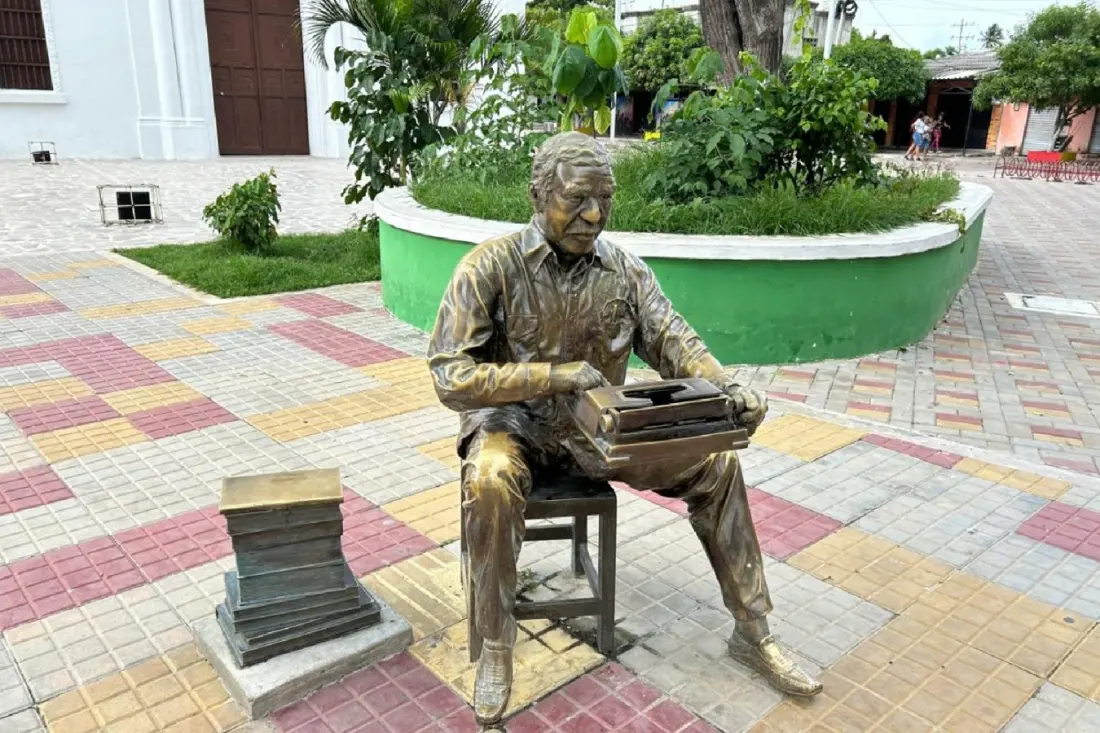
The literary record is the strongest. Six Latin American writers hold the Literature prize: Gabriela Mistral (1945, the first), Miguel Angel Asturias (1967), Pablo Neruda (1971), Gabriel Garcia Marquez, Octavio Paz and Mario Vargas Llosa. Two of those six came out of the Latin American Boom of the 1960s and 70s, when the region's novel broke into international publishing networks and European reception cemented it in the global canon. For travellers, that legacy is still on the ground: Garcia Marquez's Cartagena and Aracataca in Colombia, or Neruda's houses in Chile, are working literary pilgrimages.
The seven Peace laureates map directly onto the region's political history. Argentina's Carlos Saavedra Lamas won in 1936 for mediating the Chaco War; Adolfo Perez Esquivel was recognised in 1980 for human-rights activism under Argentina's dictatorship; Alfonso Garcia Robles (1982) worked on nuclear disarmament; Costa Rica's Oscar Arias (1987) on Central American peace; Rigoberta Menchu (1992) on Indigenous rights; and Maria Corina Machado took the 2025 prize for Venezuela's democratic struggle.
Colombia's Juan Manuel Santos is perhaps the most dramatic case. He won in 2016 — just five days after Colombians narrowly rejected his FARC peace deal in a referendum — with the Nobel Committee explicitly aiming to bolster the process. A revised agreement was signed on 24 November 2016 and ratified by Congress a week later. The committee cited over 220,000 deaths and up to seven million displaced; Colombia's National Centre for Historical Memory later documented 262,197 conflict-related deaths between 1958 and 2018. The country's peace-era reopening is a big part of why Colombia has become one of South America's fastest-growing destinations.
Science is the glaring gap. The region's five laureates — Argentines Bernardo Houssay, Luis Federico Leloir and Cesar Milstein, Venezuela's Baruj Benacerraf and Mexico's Mario Molina — represent only about 0.5% of all Nobel laureates. The most recent, Molina's 1995 Chemistry prize for ozone-depletion research, came more than two decades ago. Low investment is one explanation: UNESCO figures show Latin America spent just 0.56% of GDP on research and development in 2022, with Brazil the only country above 1%. Careers also drifted abroad — Molina did his prize-winning work largely at Berkeley and MIT, Milstein at Cambridge. Argentina is the exception, with Houssay founding CONICET in 1958 and mentoring Leloir, his Nobel-winning student.
Whether the 2026 season shifts the picture remains to be seen, with Peace on Friday and Economic Sciences on Monday still to come.