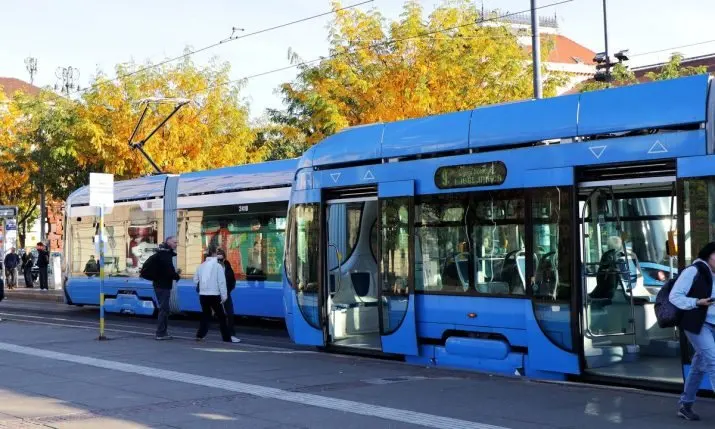
Zagreb's tram and bus network carries hundreds of thousands of passengers a day, but for many women the ride has come with an uncomfortable risk. A large new survey has put numbers on the problem — and the city is planning to do something about it.
The study, commissioned by the Zagreb City Assembly's Gender Equality Committee and carried out by the Institute of Social Sciences Ivo Pilar, surveyed 5,671 public transport users between March and November 2026, roughly three-quarters of them women. The results were stark: over 75% of women said they had been harassed on public transport at least once, one in four within the past year, and two-thirds said it had happened to them repeatedly. Half of those affected said their first experience happened before they turned 18.
The reported incidents ranged from unwanted staring and invasion of personal space to unwanted touching and sexualised comments. Just as telling was the response around them: in half of the cases from the previous year, women believed other passengers had noticed but said nothing, and only a small share of incidents were ever formally reported.
In response, the city and ZET, the public transport operator, have announced a package of measures rolling out through 2027 and 2028. These include a sustained awareness campaign aimed at encouraging bystanders to act, a dedicated system for reporting harassment, driver training on handling incidents, expanded video surveillance on vehicles and at stops with clearer signage, and better lighting inside vehicles and at terminals. Extra focus will go on late-night and overnight travel, and the city plans to track cases more systematically and work more closely with police. The findings were presented at the City Assembly, with Deputy Mayor Danijela Dolenec among those attending.
For travellers, the takeaway is mixed but useful. Zagreb's trams and buses remain the easiest way to get around the capital, and the city is openly acknowledging and addressing the safety issue rather than glossing over it. If you're visiting — especially if you're a woman travelling solo or out late — it's worth knowing that Bunker buses and night trams run during the hours when discomfort is most commonly reported, and that staff training and reporting channels are improving. As in any big city, sitting near the driver, staying in well-lit stops and trusting your instincts at night all still apply.
The reforms are some years off full rollout, so awareness is still the best protection in the meantime. But Zagreb is now one of the few European capitals measuring the problem this thoroughly — and using the data to reshape how its network handles it.