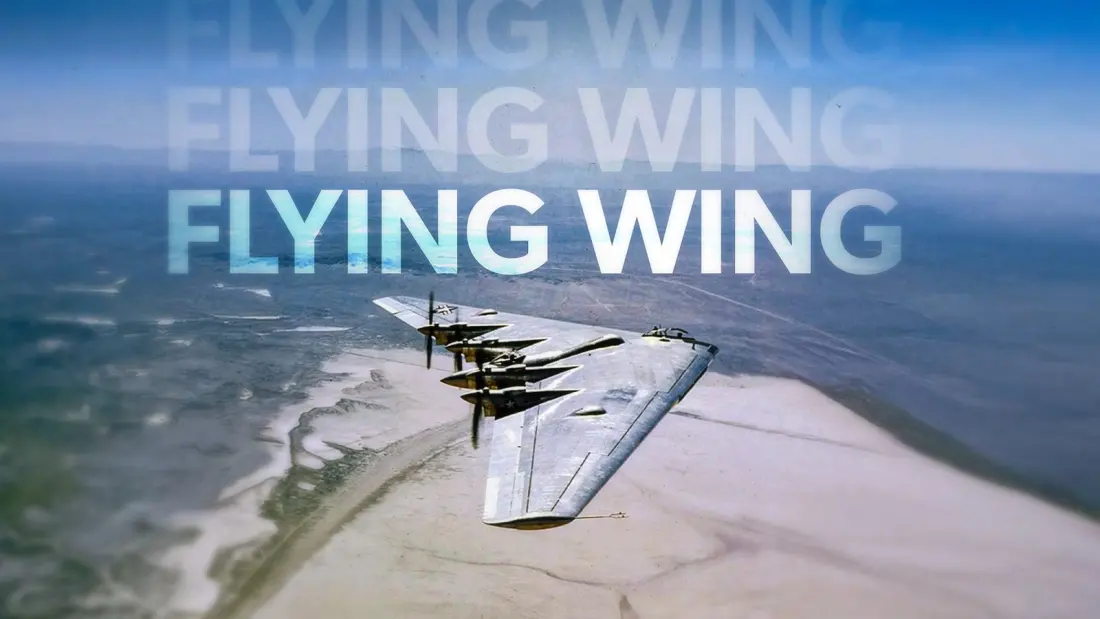
In October 1947, Jack Northrop's YB-49 lifted off over the California desert: a 172-foot tailless wing with no fuselage and no vertical fin, powered by eight buried turbojets and promising far less drag than any conventional aircraft. It hit nearly 493 mph. But the concept was ahead of its tools. Without a tail, the aircraft was twitchy in yaw and prone to dutch-roll oscillations that crews had to fight manually. The second prototype crashed on June 5, 1948, killing all five aboard, and by 1950 the program was dead and its airframes scrapped.
That instability problem is what kept flying wings out of airline service. Commercial jets kept their cylindrical tubes because those shapes pressurize cleanly, handle predictably and fit every gate. Only when digital fly-by-wire arrived did tailless flight become practical — the B-2 Spirit and now the B-21 Raider prove computers can manage an unstable wing all the way to landing. Yet military success didn't translate into an airliner cabin.
That's the gap JetZero is trying to close with its Z4, a blended wing body designed for around 230-250 passengers. The startup holds a $235 million US Air Force award for a full-scale demonstrator targeted to fly in late 2027, plans manufacturing in North Carolina, and has drawn support from Japan Airlines and United Airlines. The FAA is even funding a study into top-mounted engine airflow, a layout that cuts noise but must keep engines fed with clean air in all conditions.
The remaining hurdles are less about aerodynamics and more about everything around the wing. A flattened, non-circular cabin fights pressurization loads, needing extra structure that adds weight. Evacuation rules demand getting everyone out in 90 seconds using half the exits — straightforward in a tube, genuinely tricky in a wide open hall where passengers far from the walls need engineered paths to doors. On the ground, a 65-meter wingspan has to squeeze into existing gates, and jetbridges, de-icing rigs and baggage carts all have to work around an unfamiliar shape. Even the passenger experience needs thought: people seated far outboard feel banking more sharply, while those in the middle lose any window at all.
If JetZero clears certification, entry into service could come in the early 2030s, with rival ventures like Nautilus also in the field. The prize is real: noticeably lower fuel burn per seat than today's tube-and-wing jets, plus a cabin that airlines can brand as something genuinely different. For travellers, the blended wing could eventually mean quieter, more spacious long-haul flights — but first the concept has to prove it can be evacuated, certified, parked and turned around like an ordinary airliner. The late-2027 demonstrator flight will be the moment to watch.