Europe's capitals have had their moment. A new ranking from World of Wanderlust makes the case that the continent's real magic now lives in its small towns — the ones with a lake at their feet, a castle overhead and streets unchanged for centuries. The list covers 25 towns grouped by region, arranged so you can link several into a single route rather than ticking off scattered one-offs.
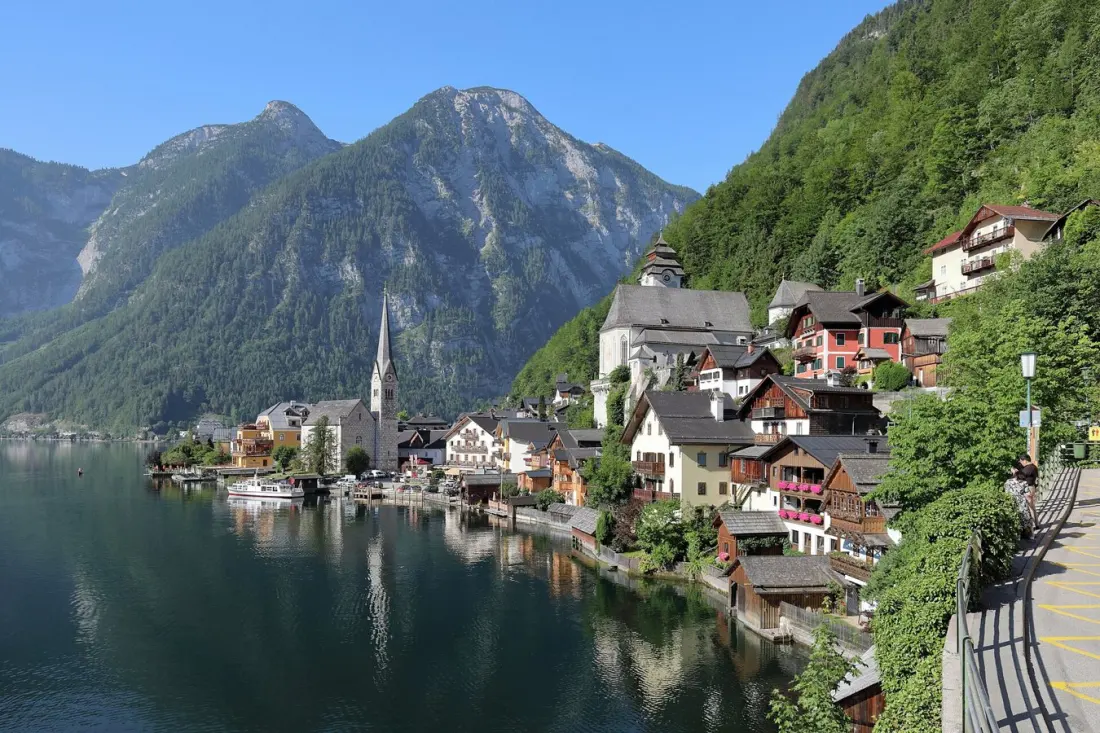
The Alps and Central Europe section is the densest cluster, and the easiest to string together from Munich or Vienna. Hallstatt in Austria takes the classic-postcard crown: a former salt-mining village of pastel houses wedged between mountain and lake, best seen at dawn before the Salzburg day buses roll in. Slovenia's Lake Bled, with its island church and cliff castle, is the pick for mountain scenery — and apparently even better in October. Add Český Krumlov's river-loop old town in the Czech Republic, Germany's Rothenburg ob der Tauber (the walled medieval town Disney used as a model for Pinocchio's village) and Moselle wine town Cochem, plus two Swiss entries: car-free Gruyères, of cheese and fondue fame, and Lauterbrunnen, a waterfall valley said to have inspired Tolkien's Rivendell.
Western Europe runs from the Netherlands to Ireland, ideally split into two trips. Giethoorn is the standout oddity — an old centre with no roads at all, just canals, 176 wooden bridges and thatched farmhouses, where even the post arrives by boat. Bruges makes the cut despite technically being a city; its walkable Gothic core earns it. France contributes three: walled Dinan in Brittany, Alsace capital Colmar (the supposed template for Beauty and the Beast's village, and home to one of Europe's best Christmas markets), and Èze, a hilltop lane-village perched 430 metres above the Mediterranean with what the ranking calls the finest view on the Riviera.
The quick-picks table is genuinely useful if you're choosing by trip style. Ravello for a honeymoon, Rovinj in Croatia for beaches, Reine in Norway for Arctic scenery, Cochem for Riesling country, and — if crowds are the enemy — Monsaraz in Portugal, flagged as the quietest of the lot. Sighișoara in Romania is the wildcard for something different, and the northern and eastern entries overall are where you'll meet the fewest other tourists.
A few patterns worth stealing: nearly every entry rewards an overnight stay, because most of these towns empty out by late afternoon when the day-trippers leave. Summer dominates in the Alps, while Bruges and Colmar arguably improve in the cold months. And the practical detail is there too — each town comes with its own recommendations, from Heritage Hotel Hallstatt on the lakeside to Château de la Chèvre d'Or in Èze, plus train times and which airport to aim for.
Who is this for? Anyone planning a second (or fifth) Europe trip beyond the capitals, or travellers who'd rather slow down in one pretty place for two nights than sprint between museums. The regional grouping does most of the planning work for you — pick a cluster, rent a car or a rail pass, and go.