A restaurant named after two chefs is showing Tuscany — and everyone else — how little of a fish deserves to end up in the bin. At Paca, chef Niccolò Palumbo and his partner Lorenzo Catucci build their tasting menu around whole-ingredient cooking: the fillet, the trimmings, the liver, even the skin of the fish all make it onto the plate.
The story picks up where the fish begins. Molin di Bucchio, an aquaculture project raising trout in the Tuscan countryside, supplies the kitchen. From there it's Paca's job to waste nothing. Palumbo's philosophy is simple: start with the ingredient and the producer behind it, then let the menu follow whatever arrives. That's why the tasting menu shifts with the seasons and the catch rather than being fixed in stone.
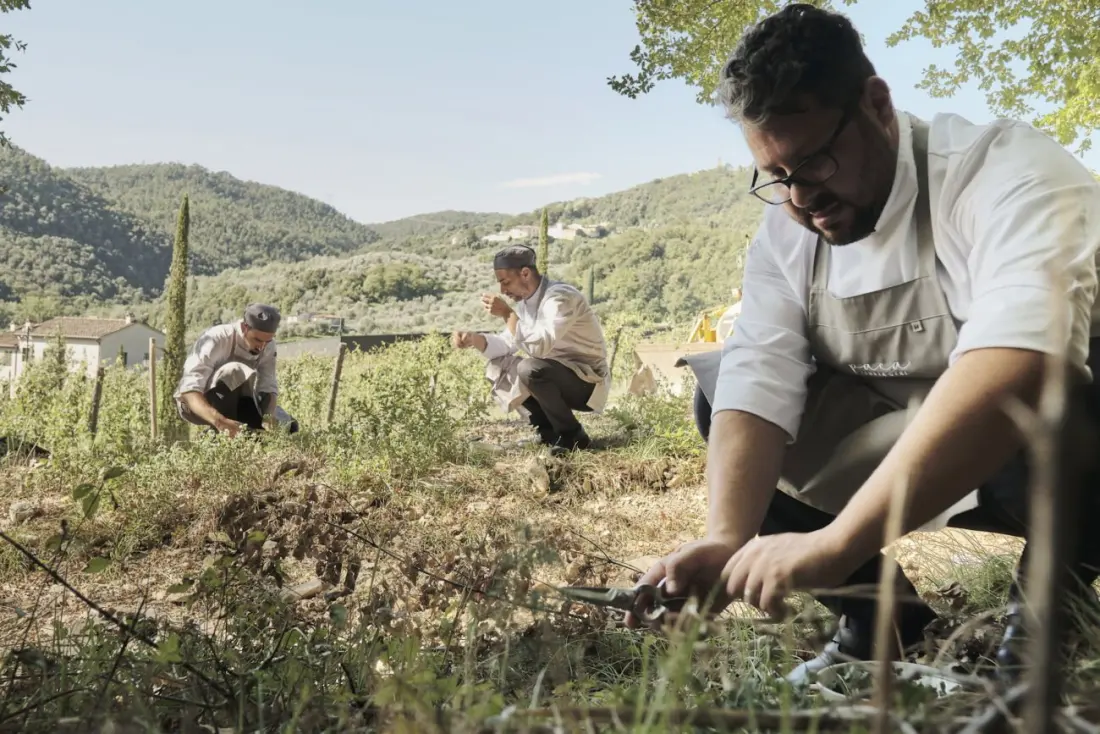
Paca has an interesting recent history. Palumbo and Catucci opened the restaurant near Prato's historic centre in 2019, welding their surnames into the name. Three years later it earned a Michelin star — the first in the city in a decade. Now, as of September, the restaurant has a new setting: Tenuta Ceri, a wine estate in the hills of Carmignano, established by architect Luca Ceri and run today by his son Edoardo. The property spans roughly 40 hectares, with 15 under vine, plus olive groves, orchards and woodland. Dinner here comes with wine-country views and, presumably, a decent poured glass from the vines just outside.
For food-focused travellers, this is a compelling reason to look beyond Florence and the Chianti postcard route. Carmignano sits just west of Florence and is one of Italy's smaller, less crowded wine zones — a DOCG area with real history and none of the coach-tour crush. Pairing a wine-estate dinner with a producer-led trout menu is the kind of experience that's hard to book anywhere else in the region.
It also fits a wider shift diners are noticing at high-end kitchens across Europe: sustainability expressed not as a slogan but as a menu that uses every part of what arrives. Eating liver and crisped skin alongside the prime cut isn't a stunt here — it's the whole point of the cooking, and it makes the meal a window into how Tuscany's small producers and chefs work together.
Practically speaking: Paca is now an estate destination rather than a city-centre table, so plan for a short drive from Prato or Florence and consider making an evening of it — arrive for a vineyard walk, stay for the full tasting menu, and have a designated driver or a car service arranged if you're drinking Carmignano's reds. Reservations will matter; a Michelin-starred restaurant moving to a scenic estate tends to fill up fast, especially in the autumn harvest season.