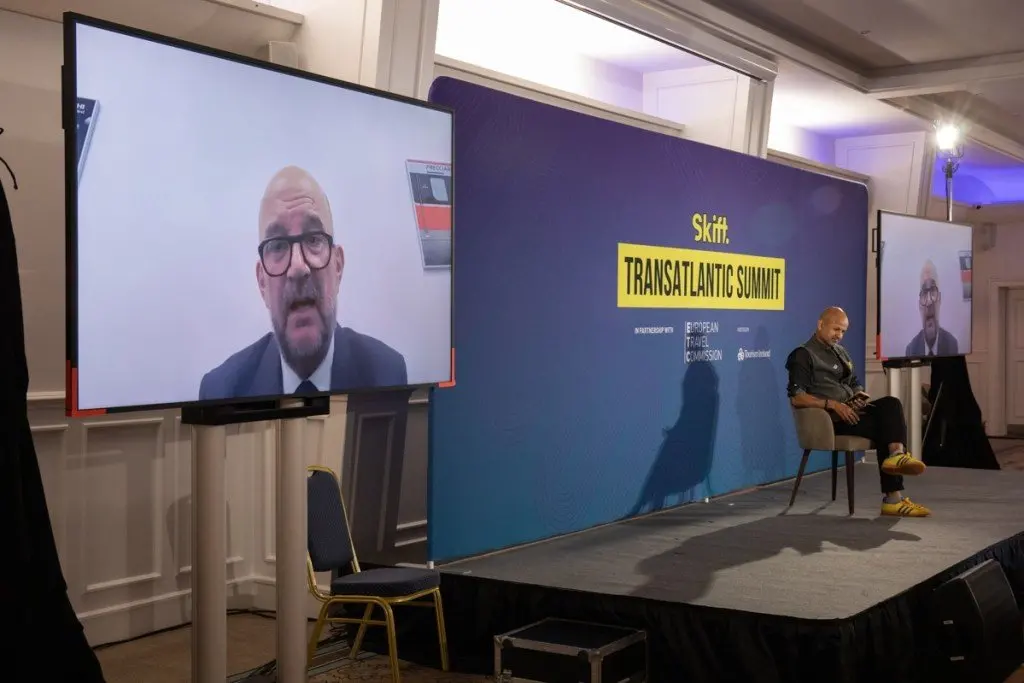
Private equity firm Certares has put roughly $2.3 billion into European and UK rail, and its founder expects governments across the continent to keep pushing travellers off short flights and onto trains. Greg O'Hara laid out the thesis at the Skift Transatlantic Summit in Dublin, arguing that France's aviation restrictions are a template other countries will copy.
The French precedent is already in force: domestic flights are banned where a direct train journey takes under 2.5 hours, with some connecting flights exempt. O'Hara's logic is straightforward — if more countries adopt similar rules, demand for high-speed rail will climb, and owning rail assets becomes a strong position.
The centrepiece of the bet is a challenger to SNCF, France's state rail operator. Certares, working alongside Italy's state railway company Ferrovie dello Stato and train manufacturer Hitachi, is backing a competing high-speed service in France — a market long dominated by the national champion. O'Hara, who lives in Milan, spoke via video from Hitachi's Italian offices, underlining how cross-border the venture is: American capital, Italian operations, Japanese train-building technology, all aimed at the French market.
For travellers, the practical upshot is competition. High-speed rail in France has historically meant one operator and one pricing structure. A well-funded rival on major routes could mean more frequent services, sharper fares and better options on corridors like Paris-Lyon or Paris-Marseille. And if O'Hara is right about regulatory copycats — Spain, Germany and others have all debated flight restrictions — the shift from gate to platform could accelerate across Western Europe in the next few years.
Who should care? Anyone planning European trips in the coming years. Rail travel on the continent is getting faster, greener and increasingly the default option for shorter journeys, whether by law or by choice. Money on this scale heading into rail is a signal that the infrastructure and services travellers will actually use are about to get more investment — and possibly more competitive pricing.