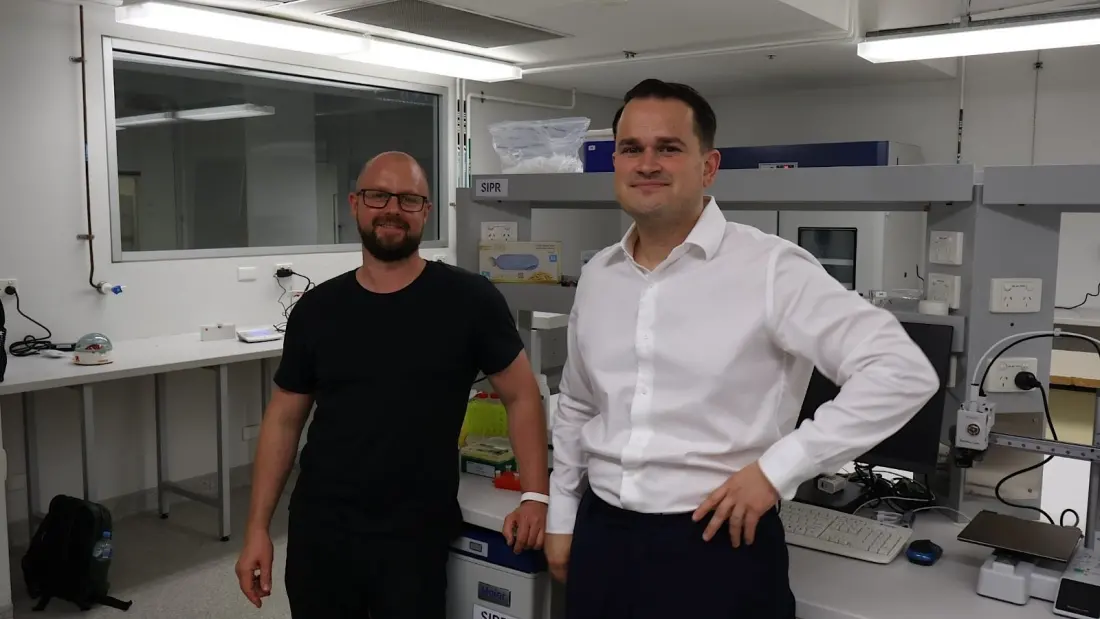
You can't smell or taste methanol in a cocktail. That's the problem two Sydney founders are trying to solve with SiPR, a startup developing a single-use straw that changes colour within seconds if a drink contains methanol — the toxic alcohol behind a string of traveller deaths across Asia and the Pacific.
The chemistry has already checked out. Dr Sergey Tumanov, who leads the company's research, validated the reaction at Macquarie University's Deep Tech Incubator in October. Co-founder and chief executive Callum Brophy says the team is months away from a functional prototype and is currently raising funds to build it. The pitch is simple: the result shows up in the straw itself, no app or gadget required.
It wouldn't be the first methanol test on the market. Researchers at ETH Zurich showed a handheld detector back in 2020, and a commercial version aimed at distillers passed a six-country trial in 2024. The difference is the audience — SiPR wants something a backpacker can actually carry to a beach bar.
The push comes two years after one of the most shocking travel safety stories of recent times. In November 2024, six travellers died from methanol-laced drinks in Vang Vieng, Laos, including Melbourne friends Bianca Jones and Holly Morton-Bowles, both 19. Australia's Prime Minister raised the families' concerns with his Lao counterpart in Manila this November; Lao authorities say evidence-gathering is ongoing, with input from Thailand. The families are now fronting awareness campaigns, including a Smartraveller and DrinkWise push aimed at school leavers heading overseas.
The scale of the risk is bigger than most travellers realise. UK travel advice now lists methanol warnings for 29 destinations, up from eight in March 2025 — and five of those (Indonesia, Thailand, India, Vietnam and Fiji) sit among Australia's ten most popular overseas destinations, together drawing just over four million Australian trips in 2025–26. Worryingly, UK advice records cases linked to drinks bought in licensed bars, shops and hotels in tourist areas, not just dodgy street stalls. In Indonesia, counterfeit spirits have even been sold under well-known brand names.
Official guidance currently favours low-tech precautions: Smartraveller suggests sealed branded beer or cider as the safer option, notes that symptoms can take 12 to 24 hours to appear and feel like a severe hangover, and flags blurred vision and breathlessness as red flags requiring immediate medical care. For Laos specifically, it says to avoid Tiger Vodka and Tiger Whisky, both banned by Lao authorities.
Worth keeping in mind: even if it ships, the straw only screens for methanol. A drink could still be unsafe in other ways even if the colour never changes. And there's no product to buy yet — this is a funding-stage project, not something you can pack for a Bali trip next month. For now, the real takeaway for anyone heading to Southeast Asia, Fiji or India is awareness: stick to sealed drinks where you can, know the symptoms, and talk to younger travellers before they fly.
Karryon