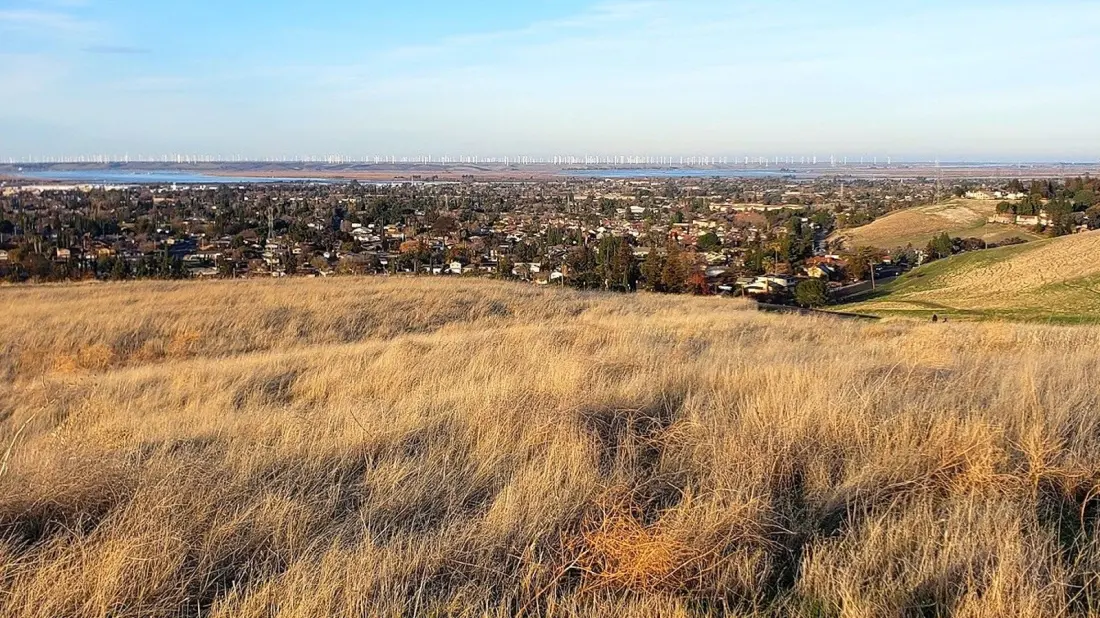
Forty-odd miles northeast of San Francisco, one of the Bay Area's largest park projects is taking shape on ground with a heavy history. The Concord Naval Weapons Station covered roughly 12,800 acres of rolling grassland for about half a century before the Navy vacated it in the 1990s. Now, after years of negotiation, 5,038 acres are being repurposed into Thurgood Marshall Regional Park — Home of the Port Chicago 50, a major addition to the East Bay's park system.
The plan splits the site between nature and community need. Around 3,000 acres will be open space, with habitat protection a stated priority, plus trails and facilities for hiking, biking, camping and picnics. New transit routes, entrances and staging areas will link the park to Concord's neighbourhoods. The rest of the acreage carries an ambitious civic agenda: 12,272 housing units (about 3,000 of them affordable), a first responder training facility, a veterans' community centre, a sports park and services for vulnerable residents. The full build-out could take around 30 years, though construction jobs start flowing immediately.
You don't have to wait for the ribbon-cutting to visit. The public already gets onto the parkland for guided tours, naturalist-led youth programmes, birding outings, and Veteran's Day and Juneteenth events — and those activities are expected to continue throughout development.
The park's full name is deliberate. In 1942 the military built the Port Chicago Naval Magazine on the Concord coast to stockpile explosives for the Pacific war effort. In July 1944, a catastrophic blast killed more than 320 people, over 200 of them Black sailors assigned the dangerous loading work. When 50 surviving Black sailors refused to return to unsafe conditions and challenged the Navy's discriminatory practices, young NAACP lawyer Thurgood Marshall helped fight their case — a battle that fed into the eventual desegregation of the US Armed Forces. A visitor centre telling the story of the 1944 disaster and other local history will be a centrepiece of the new park, which its planners describe as a protected space for both nature and people to heal.
Concord isn't the only Bay Area military site with a second act. Fort Baker in Sausalito, about 50 miles west, is now a 335-acre coastal park with licence-free fishing, and Fort Ord, roughly 120 miles south near Monterey, has become a national monument with more than 80 miles of trails. For travellers, that makes an easy theme for a California trip: history you can walk through, for free, with a trailhead at the end of it.
Thurgood Marshall Regional Park is worth watching even in its unfinished state. Early visitors get rare access to vast open grassland minutes from a major city, plus a chance to engage with one of the most consequential civil rights stories of the Second World War — before the crowds arrive.